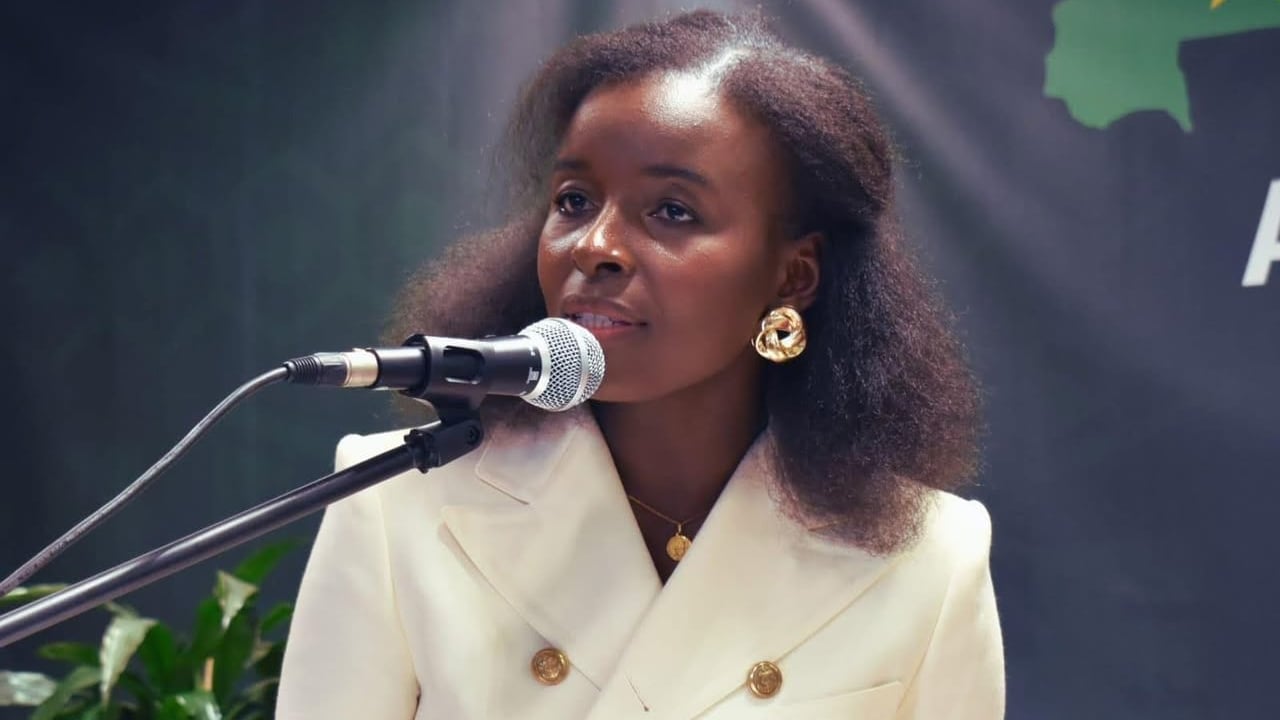
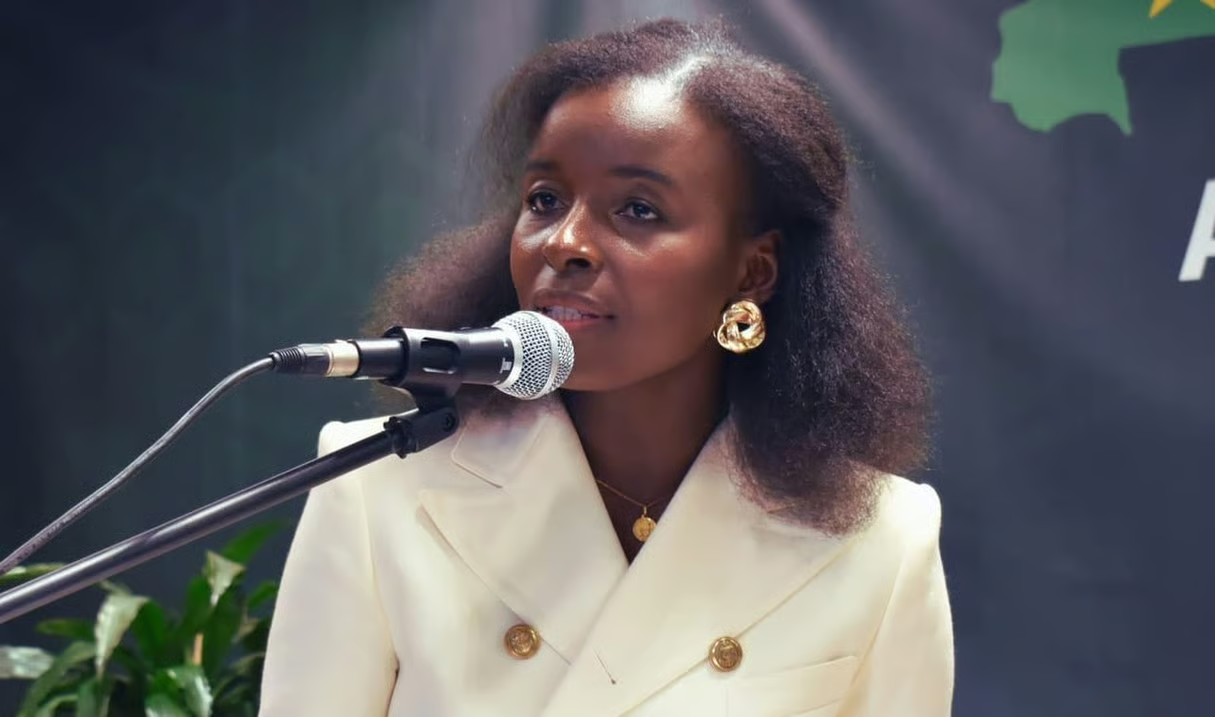
In the heart of Niamey, a new voice is rising against the wave of military takeovers sweeping across the Sahel. Mayra Djibrine, a Nigerian activist and political figure, has emerged as a prominent opponent to the region’s shifting power dynamics. Her unwavering stance, encapsulated in her bold declaration, “I will not back down,” has galvanized supporters and critics alike.
Mayra’s journey into the spotlight began when she publicly condemned the coup d’états that have reshaped governance in neighboring countries. Unlike many who remain silent or cautiously diplomatic, she has taken a direct approach, challenging both domestic and international actors. Her critique extends beyond local politics, addressing the broader implications of military rule on democracy and stability in the Sahel.
From activism to opposition leadership
Mayra’s rise to prominence reflects a broader trend of grassroots movements gaining traction in the Sahel. Once known for her advocacy in human rights and women’s empowerment, she has now positioned herself at the forefront of political opposition. Her rhetoric is sharp, her arguments unapologetic, and her presence undeniable. In interviews and public statements, she questions the legitimacy of juntas that seize power under the guise of restoring order, arguing that such moves often lead to further instability.
She points to the decline in democratic freedoms across the region, where press censorship, restricted civic spaces, and arbitrary detentions have become alarmingly common. “Democracy is not a luxury—it is a necessity,” she asserts, emphasizing that the military’s promise of stability often comes at the cost of fundamental rights.
Challenges and threats
Mayra’s outspokenness has not gone unnoticed. She has faced intimidation, smear campaigns, and threats from both state actors and non-state groups. Yet, she remains undeterred, viewing each challenge as an opportunity to strengthen her resolve. “Fear is a tool used by those in power to silence dissent,” she states. “But silence will not bring progress.”
Her supporters see her as a symbol of resistance in a region where authoritarianism is on the rise. They argue that her defiance offers a counter-narrative to the military’s narrative of inevitable control. Meanwhile, detractors dismiss her as a destabilizing force, questioning her methods and intentions.
What’s next for Mayra and the opposition?
The future remains uncertain, but Mayra’s trajectory suggests an ongoing fight. She is rallying like-minded individuals across the Sahel, advocating for a united front against military rule. Her calls for international solidarity have resonated with human rights organizations and democratic governments worldwide, though responses have been mixed.
As the political landscape continues to evolve, one thing is clear: Mayra Djibrine is not backing down. Whether through protests, advocacy, or political organizing, she is determined to shape the region’s future on her terms. For those who believe in democracy’s resilience, her fight is one worth watching closely.