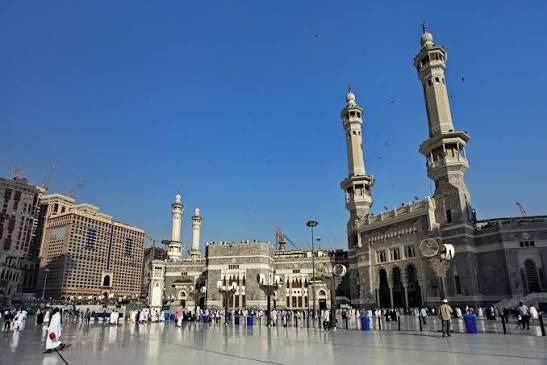
The most sacred site in Islam nearly witnessed its worst nightmare on a single night in Mecca. Tens of thousands of worshippers circumambulating the Kaaba were abruptly interrupted when an erratic individual triggered a sudden surge in the holy complex’s central courtyard. Within minutes, heavily armed security forces descended on the scene, their emergency protocols switching into high gear.
Panic erupts in Islam’s holiest city
Just after 11 p.m. local time, the calm flow of pilgrims performing their Tawaf rituals around the Kaaba was shattered by panicked cries near one of the main entrances to the Masjid al-Haram esplanade. Videos captured from the mosque’s upper galleries showed a chaotic scene—devout pilgrims stumbling backward in haste, security personnel forming tight perimeters, and medics rushing to the scene. Before long, unverified but widely circulating reports claimed a suicide bomber had been intercepted at the scene, sending tremors across the Islamic world.
Speculation ran rife that explosives had been smuggled into the mosque’s most restricted zone. The idea alone—an attack at Islam’s centerpiece—was enough to send shockwaves through the Middle East and beyond. For hours, fear hung in the air: Had a bomb gone off? Had lives been lost? The truth, though less dramatic, was still unsettling.
Official denial amid viral deception
By dawn, Saudi authorities moved to dispel rumors of a terror plot. The Ministry of Interior issued a categorical statement: no explosives were found, no suicide bomber ever entered the mosque. Security officials confirmed that the chaos stemmed from a single individual—later identified as suffering from acute behavioral disturbances—who had harassed pilgrims and incited panic.
The official account described an immediate intervention by on-site patrols, preventing the situation from escalating. Yet the incident laid bare a far greater challenge: the weaponization of unverified information in an era of instant digital communication. In a region already on edge, manipulated videos and decontextualized footage can turn a minor incident into a global crisis within minutes.
Mecca’s ironclad security under scrutiny
Despite the relief that no terror attack occurred, the episode raised pressing questions about the vulnerability of Islam’s holiest site. The Grand Mosque, visited by millions each year, operates under one of the world’s most advanced security frameworks:
- Surveillance state: Over 10,000 high-definition cameras, paired with facial recognition and behavioral analysis AI, scan every corner of the mosque and its surroundings.
- Multi-layered screening: Strict access controls at city limits and mosque entry points weed out contraband and threats before they enter the sacred precinct.
- Rapid response units: Elite forces are on standby to reach any point within the mosque in under 60 seconds.
History has shown the stakes are high. From the 1979 siege led by extremists to past assassination plots, Saudi authorities have long recognized that security failures here could have catastrophic consequences. Yet technology, while a shield, also becomes a double-edged sword when misinformation spreads faster than facts.
The morning after: silence and scrutiny
By sunrise, the marble floors of the mosque were again filled with worshippers, their footsteps steady as if the night’s chaos had never occurred. Cleanup crews erased all traces of the evacuation, and life resumed its rhythm. Pilgrims from every corner of the globe continued their rituals, their faith undeterred.
Yet beneath the surface, the lesson lingered. In a hyperconnected world, where a single video clip can ignite global fear, protecting Mecca requires more than guns, cameras, and guards. It demands ironclad truth in the face of viral fiction—and the unshakable resolve to prevent the unthinkable.