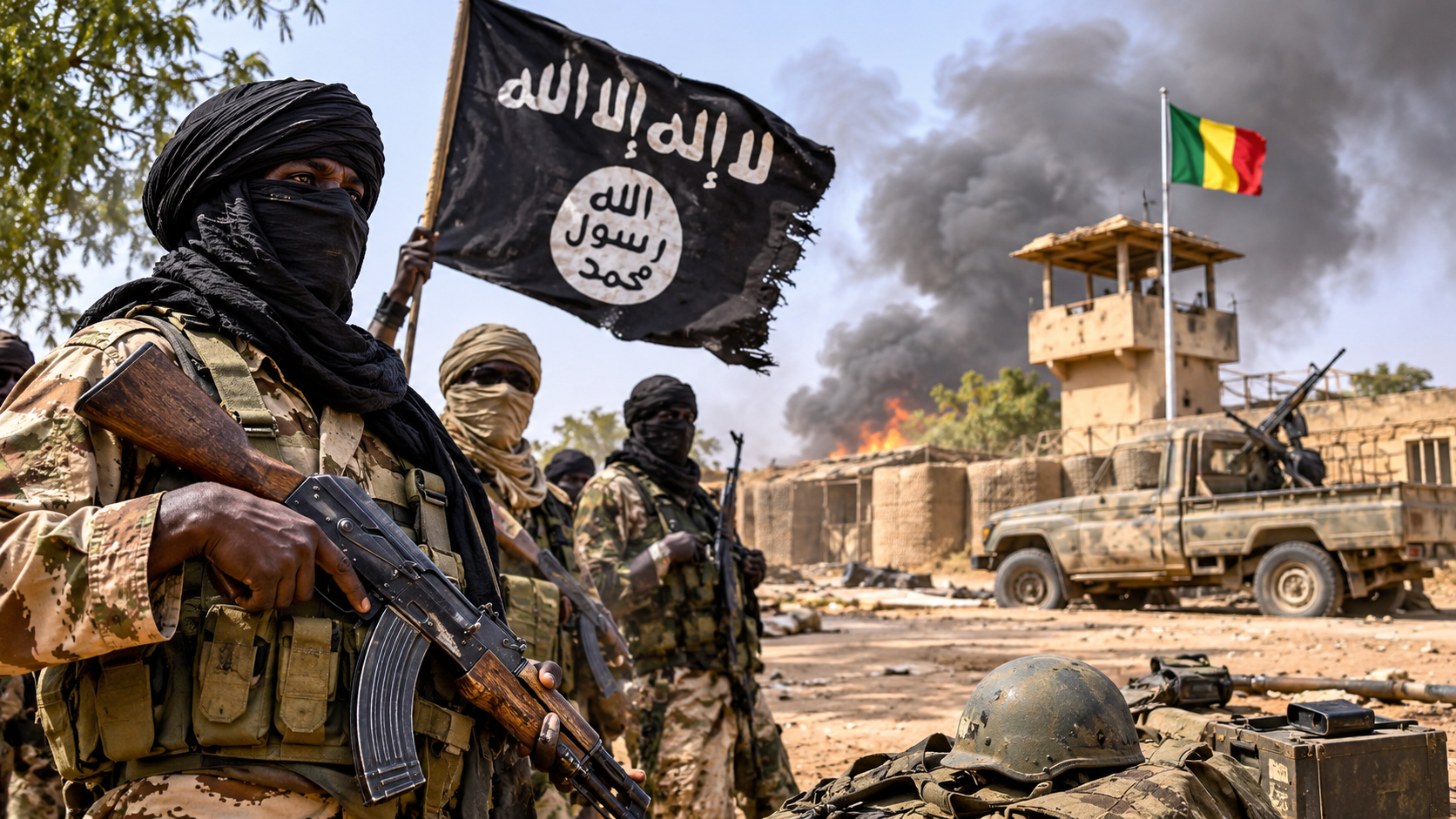
The fragile security landscape in Mali has taken another dramatic turn as the Group for the Support of Islam and Muslims (JNIM) launches a high-profile attack in the Mopti region. The assault, which unfolded in the early hours of October 31, 2026, targeted a fortified position in Bayman, a stronghold previously manned by pro-government militias colloquially referred to by the group as the “Russafricans” for their alleged ties to Malian and Russian security operations.
The JNIM’s unexpected breakthrough and its immediate fallout
The attack, acknowledged in a JNIM statement, resulted in multiple casualties among the militiamen stationed at the site. The group claims to have overrun the position, marking a significant tactical shift in the ongoing conflict. While the full extent of the damage remains unconfirmed, the incident underscores a growing vulnerability in Malian and allied forces’ ability to hold key terrain.
This escalation is not an isolated event. Just weeks earlier, on September 10, 2026, JNIM forces overran Dioura, inflicting heavy losses including at least 100 Malian soldiers and five Russian paramilitaries while taking dozens of captives. The raid exposed critical weaknesses in coordinated defense efforts despite the presence of aerial support and joint operations.
From battlefield setbacks to broader strategic concerns
Despite repeated official claims of neutralizing over 4,800 militants and conducting more than 850 airstrikes since May 2026, the security situation has continued to deteriorate. These announced figures, sourced directly from military headquarters, have not translated into meaningful territorial control or sustainable protection for civilian communities.
The latest attack in Bayman raises urgent questions: Can the Malian government maintain its grip on strategic positions while sustaining public confidence in its security apparatus? The answer appears increasingly uncertain as the JNIM demonstrates newfound resilience and operational reach.
The limits of foreign military partnerships
The persistent ability of JNIM to conduct large-scale assaults, despite formal alliances with international partners, highlights a widening gap between military rhetoric and ground-level reality. Repeated claims of strategic victories have done little to curb the group’s momentum or prevent the erosion of state authority in key regions such as Mopti.
With each new offensive, the credibility of state security narratives is increasingly tested. The failure to secure critical sites like Bayman not only emboldens opposition groups but also deepens public skepticism about the effectiveness of current counterterrorism strategies.
What lies ahead for Mali’s embattled security framework
As the dust settles on the Bayman assault, military and political leaders confront a defining challenge: whether to recalibrate their approach or risk further territorial losses. With civilian populations caught in the crossfire, the cost of inaction or misjudgment could be catastrophic.
The events of October 31 mark more than just another tactical loss they signal a potential inflection point in Mali’s long-running conflict, where momentum is shifting and the balance of power is being redefined on the ground.
By Yacouba Boukari — Journalist