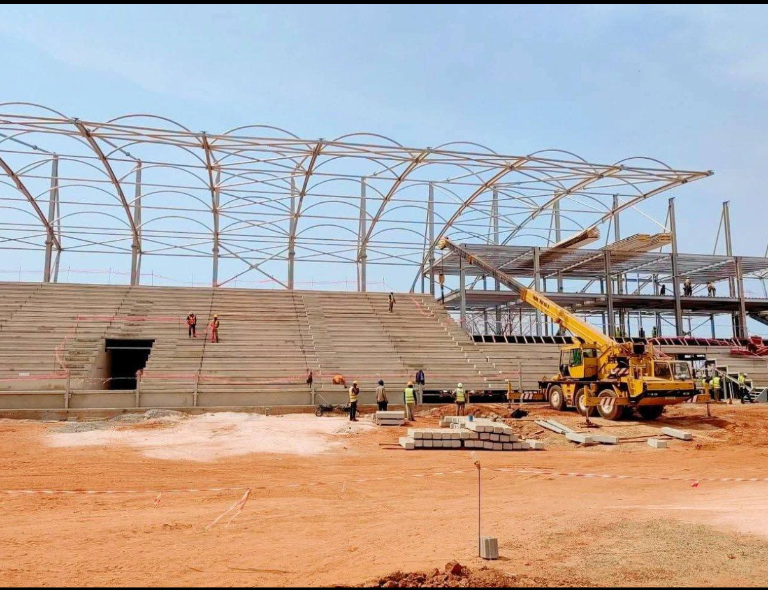
Burkina Faso is at a pivotal moment with the construction of Koudougou’s new 15,000-seat stadium—a project positioned as a cornerstone for the nation’s sporting development under the presidential initiative IP-RELIS. Yet, as ground preparations advance, one critical question looms: who is truly behind the funding? The announcement has sparked momentum toward modernizing regional sports infrastructure, but without clear financial transparency, the project’s long-term viability and public accountability face scrutiny.
From promise to progress: the stadium’s strategic role in Burkina Faso’s sports agenda
The stadium is framed as more than just a venue—it is a commitment to nurturing elite athletes and expanding opportunities for local talent. Official visits to the construction site have signaled imminent works, with Integral Sport of Turkey identified as the lead contractor, collaborating with Faso Mêbo. Yet, despite these visible steps, the financial structure remains undefined in public records. Is this a fully state-funded initiative, a multi-party arrangement, or a model involving foreign investment?
The ambiguity isn’t just administrative—it affects everything from procurement timelines to long-term maintenance planning. Clarity on funding is essential to sustain public trust and ensure the stadium meets its social and economic potential.
Integral Sport and Faso Mêbo: clarifying roles, revealing gaps
Integral Sport’s involvement is clear: it is building the stadium. But as a Turkish firm operating within a public infrastructure project in Burkina Faso, its financial role is less explicit. Is it merely executing construction under a public contract, or is it part of a broader financing strategy—perhaps tied to export credit, development aid, or a public-private partnership?
Faso Mêbo, the state-run sports infrastructure agency, is listed as a collaborator. While its operational role may involve oversight or coordination, this does not confirm financial leadership. The absence of accessible contracts or official financial disclosures leaves citizens and stakeholders without a full picture of resource allocation.
To move forward with confidence, authorities must distinguish between technical execution and actual financial responsibility. Only then can the public assess whether public funds are being used effectively—or whether external financing might be shaping Burkina Faso’s sporting future.
Why financial transparency could redefine the project’s success
In large-scale infrastructure, the public has the right to know: How much will this stadium cost? What resources are being committed? Who benefits from its construction?
- Cost breakdown: A detailed estimate of construction, labor, materials, and contingency costs is essential.
- Funding sources: Are funds coming from the national budget, international loans, private investors, or a mix?
- Transparency in procurement: The awarding process, selection criteria, and contract terms must be accessible to prevent favoritism or inefficiency.
- Long-term sustainability: Will there be a revenue model—sponsorships, ticket sales, events—to support maintenance and operations?
Without these disclosures, the stadium’s promise risks being overshadowed by uncertainty. Citizens deserve to see the financial roadmap that connects this project to broader national development goals.
What next? The call for official answers
The IP-RELIS initiative, Faso Mêbo, the Ministry of Sports, and Integral Sport must now provide the missing links. Their responses will reveal not only the stadium’s funding structure but the government’s broader vision for sports infrastructure in Burkina Faso.
Will this be a fully domestically funded project, a cornerstone of international cooperation, or an example of innovative financing? As anticipation builds, so does the need for accountability. The people of Koudougou—and all of Burkina Faso—deserve to know who is investing in their sporting future, and how.
Breaking down the unknowns: what we still need to know
- Has the construction contract been finalized? If so, what is the agreed value?
- Is foreign financing involved? If yes, which institutions or governments are backing the project?
- What portion, if any, will come from Burkina Faso’s national budget?
- Are there performance guarantees or repayment obligations tied to external funds?
- When will a comprehensive financial statement be published?