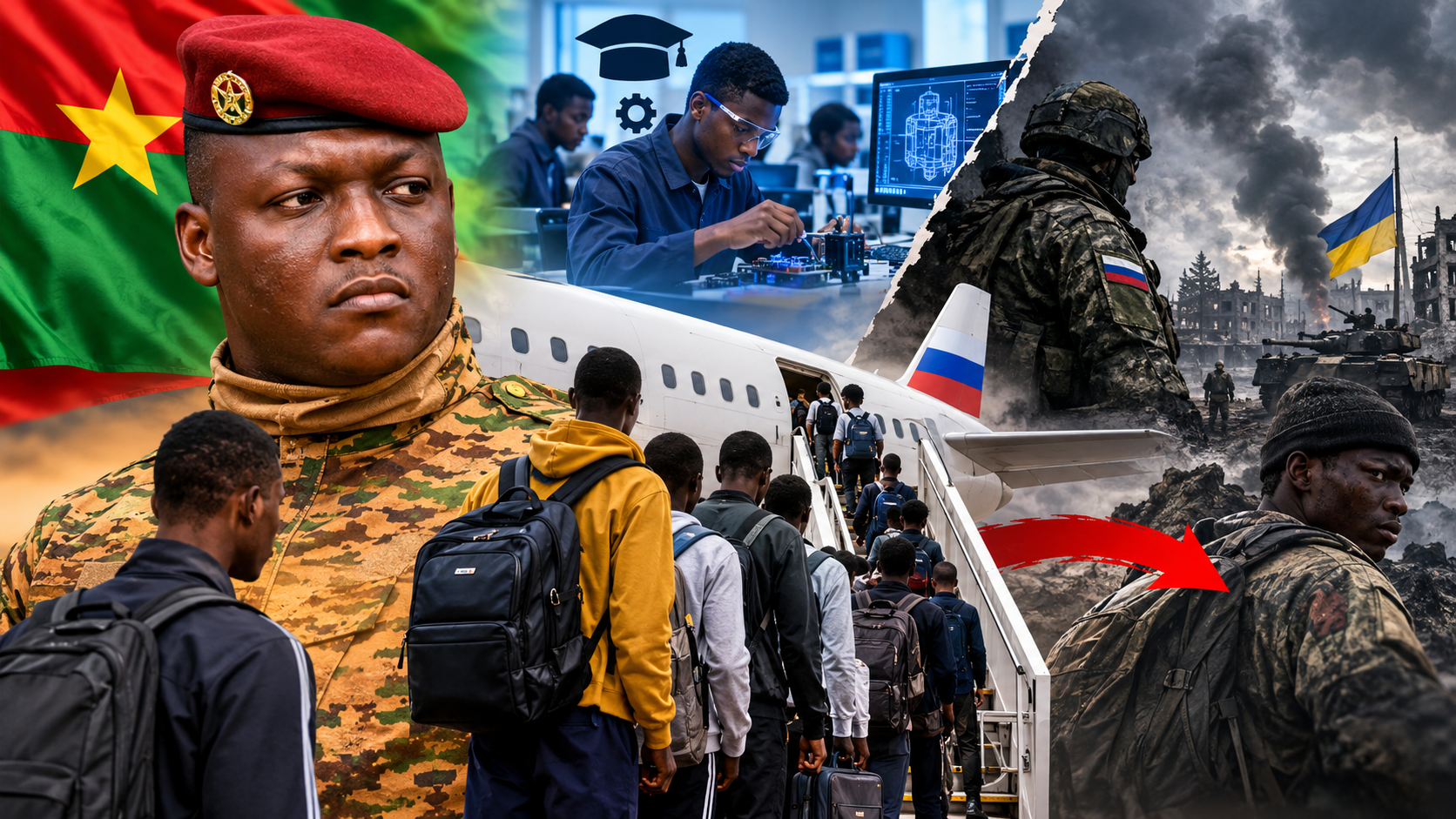
Burkina Faso stands at a crossroads with a sweeping initiative that could reshape its future: the government’s plan to send scores of young citizens to Russia for advanced technological training. But as the West African nation grapples with internal challenges and seeks new alliances, the move has raised pressing questions about purpose, safety, and long-term consequences for the individuals involved.
From promises of sovereignty to a Russian detour
Just months ago, Captain Ibrahim Traoré championed a vision of educational and technological sovereignty for Burkina Faso. The pledge was clear: invest in national institutions, empower young minds at home, and build the expertise needed to drive domestic progress. Yet today, the government is turning to Moscow amid growing skepticism about whether this pivot is a strategic necessity or a risky deviation from earlier commitments. What changed and at what cost?
At the heart of the debate is a gap between rhetoric and reality. Promises of technological empowerment are now being traded for what appears to be a journey into geopolitical uncertainty. In a nation already strained by political instability and security threats, this strategic shift demands public scrutiny.
The allure of high-tech training and the shadow of war
The Russian government has long marketed its educational programs abroad, especially in fields like engineering, IT, and aerospace. For many African countries, such partnerships offer rare access to advanced instruction and state-of-the-art facilities. But in 2024, the landscape has darkened. Russia is fully engaged in a protracted war in Ukraine, one that has stretched its military, economic, and human resources to the limit. Against this backdrop, any foreign recruitment initiative triggers immediate questions about intent.
Past accounts have already surfaced of African students and labor migrants in Russia who, lured by job offers or scholarships, found themselves recruited into military roles either through direct coercion or indirect manipulation. Were these isolated incidents or part of a broader pattern? With no public transparency from Ouagadougou or Moscow, the families of Burkinabè youths can only speculate about the true nature of the training awaiting their children.
What exactly are the guarantees?
The government has yet to provide concrete details about the program’s structure, scale, or safeguards. How many young people will be involved? Which Russian institutions will provide the training? What certifications will they earn? Will their return to Burkina Faso be assured, and under what conditions? Most critically: what legal or diplomatic protections prevent them from being drawn into military service, whether voluntarily or by force?
These are not minor administrative questions they are life-altering concerns for every family involved. A government that champions sovereignty must also champion accountability. Sending young citizens abroad without unambiguous safeguards is not a gesture of progress; it is a gamble with human futures.
The contradiction behind the curtain
This initiative collides with Ibrahim Traoré’s earlier stance on education and national development. In speeches and policy statements, he emphasized the need to build Burkina Faso’s technical capacity at home. He spoke of universities, vocational centers, and research hubs as pillars of a self-reliant future. If such infrastructure and expertise are within reach, why bypass them in favor of an overseas gamble? The absence of a clear answer only deepens public doubt.
It is not anti-Russian sentiment that fuels concern it is the absence of evidence. What concrete steps has the Burkinabè government taken to ensure this program serves national interests rather than external agendas? Until credible details are shared, the initiative risks being perceived less as a strategic breakthrough and more as a leap into uncharted and potentially perilous territory.
What Burkina Faso’s youth deserve
Young people are not instruments of policy. They are the future architects of Burkina Faso’s economy, its innovation, and its resilience. To send them abroad under vague promises is to expose them to unnecessary risks. The nation’s engineers, technicians, and researchers should be trained, supported, and protected within a system that answers to its people, not to distant geopolitical priorities.
The government’s duty is not fulfilled by declarations of opportunity it is fulfilled by providing certainty. Families deserve to know their children will return home with skills, not scars; with diplomas, not draft notices. As Burkina Faso navigates a complex global landscape, its most valuable resource its youth must never become collateral in someone else’s war.
By Yacouba Boukari — Journalist