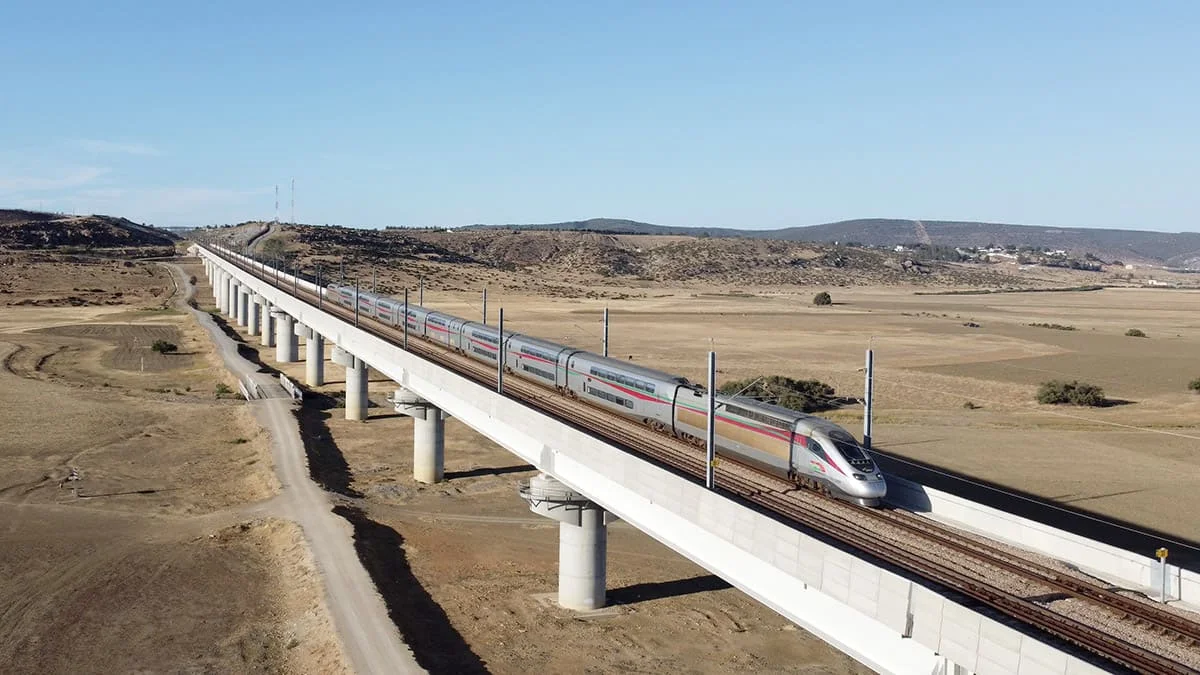
The Kingdom of Morocco has finalized agreements totaling 365 million euros in financing with the European Investment Bank (BEI) to enhance the resilience and safety of its railway and road networks. The signing ceremony, held in Rabat, brought together key officials including the BEI’s Deputy Director of Global Operations, Lionel Rapaille, the ONCF’s Deputy CEO, Mohamed Smouni, and the EU Delegation’s Deputy Head of Mission, Daniele Dotto. The event was also attended by Morocco’s Minister of Economy and Finance, Nadia Fettah, and BEI President, Nadia Calviño.
The first agreement includes a 50 million euro loan from the BEI, complemented by a 15 million euro EU grant, specifically allocated to the ONCF railway rehabilitation project. The second agreement involves a 300 million euro BEI loan for the ADM highway resilience initiative, aimed at modernizing critical infrastructure.
During the ceremony, BEI President Nadia Calviño emphasized Morocco’s long-standing strategic partnership with the bank, describing the country as a pillar of stability and prosperity across North Africa. She highlighted the transformative impact of such investments in fostering sustainable mobility and economic growth.
Morocco’s Minister of Economy and Finance, Nadia Fettah, echoed these sentiments, underscoring the depth of collaboration between the Kingdom, the EU, and the BEI. She noted that this partnership, spanning over five decades with two decades of BEI’s continuous presence in Morocco, has consistently delivered tangible benefits to the nation’s infrastructure and citizens.
These agreements mark yet another milestone in Morocco’s ongoing efforts to build a resilient, modern transport network. Over the past 50 years, the BEI has played an instrumental role in supporting Morocco’s economic development, social cohesion, and climate action initiatives.