From promises to paralysis: the security gamble that failed
The 26th of July 2023 marked a turning point in Niger, when General Abdourahamane Tiani declared the dismissal of President Mohamed Bazoum under the banner of restoring order amid escalating insecurity. Three years on, the pledge to secure the nation has yielded little more than mounting chaos. Violence persists, the economy falters, diplomatic ties fray, and the state’s financial room for maneuver narrows with each passing month. A closer look at the data reveals a nation trapped in a spiral of interlocking crises, each amplifying the others.
The shifting battlefield: when terror tactics outpace state responses
Central to the coup’s justification was the promise of a decisive turnaround in security. Yet armed factions aligned with the Jama’at Nusrat al-Islam wal Muslimin (JNIM) and the Islamic State in the Greater Sahara (EIGS) have continued to expand their reach across multiple regions. The nature of their offensives has evolved beyond isolated military outposts, now striking deeper into civilian life:
- Armed convoys and supply routes become frequent targets;
- Villages and local communities bear the brunt of indiscriminate violence;
- Strategic road networks, including trade arteries, are disrupted;
- Economic infrastructure and supply chains face systematic sabotage.
In some areas, the presence of armed groups has become so pervasive that daily life grinds to a halt. The consequences are immediate and severe:
- Agricultural lands abandoned as farmers flee;
- Local markets shuttered, strangling internal commerce;
- School closures depriving children of education;
- Health centers inaccessible, deepening public health risks;
- A rising tide of internally displaced persons, swelling informal settlements.
The human toll is undeniable. Rural populations, once the backbone of the nation’s food supply, now live under constant threat—solid evidence that security challenges remain unresolved despite the change in leadership.
Military spending surges, yet the front line stays static
Since the takeover, a significant portion of public funds has been redirected to the defense sector. Yet, despite the financial injection, battlefield dynamics remain largely unchanged. The Nigerien armed forces now face multiple, simultaneous challenges:
- A vast, difficult-to-secure territory;
- Multiple active fronts stretching military resources thin;
- Highly mobile insurgent groups exploiting weak points;
- Chronic logistical bottlenecks hindering rapid response.
This relentless operational strain has led to equipment wear, personnel fatigue, and ballooning operational costs. Each new attack underscores the limitations of a purely military strategy in addressing a conflict rooted in economic deprivation, social marginalization, and territorial neglect.
Economic suffocation: borders closed, wallets emptied
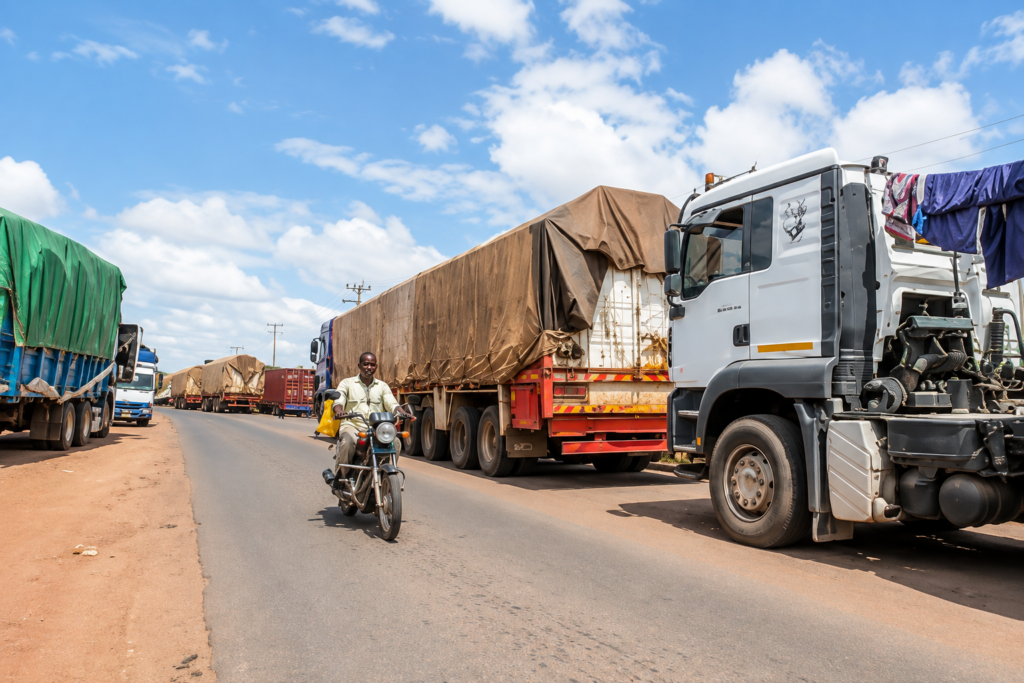
Niger’s economy has long depended on regional trade corridors, none more vital than the Cotonou-Niamey route. The prolonged closure of the border with Bénin, compounded by regional diplomatic tensions, has severed this lifeline. The disruption has triggered a cascade of economic setbacks:
- Extended delays in essential goods delivery;
- Skyrocketing transport costs eroding profit margins;
- Frequent stock shortages in markets and pharmacies;
- Across-the-board price increases squeezing household budgets.
Families now grapple with rising costs for staples, medicines, construction materials, and daily necessities. The inflationary pressure has eroded purchasing power, pushing more households into vulnerability.
Border cities bear the brunt of stalled trade
Towns like Gaya, once bustling with cross-border commerce, now reflect the economic freeze. Regional trade hubs stand half-empty, their usual rhythm of exchange replaced by silence. Among the hardest hit are:
- Transporters and logistics operators;
- Customs brokers and warehouse workers;
- Small-scale traders and street vendors;
- Hotels and roadside eateries reliant on passing traffic.
The contraction in trade has also slashed state revenue, further limiting the government’s ability to fund public services or development initiatives.
Investment dries up under a cloud of uncertainty
Investors typically seek stability, clear regulations, and predictable returns. Niger’s current environment offers none of these. The risks are now widely recognized:
- Recurrent diplomatic sanctions and isolation;
- Chronic logistical hurdles disrupting supply chains;
- Persistent security threats undermining business continuity;
- Regulatory instability casting long shadows over project viability.
This climate of uncertainty has led many investors to postpone or cancel projects, depriving the economy of much-needed capital and innovation.
The stalled oil pipeline: a dream deferred
The Agadem-to-Sèmè pipeline was hailed as a transformative engine for growth, promising substantial oil revenues to underpin national development. Yet, persistent tensions with Bénin have thrown the project into disarray. The uncertainty surrounding this critical infrastructure sends a clear signal to international investors: long-term commitments are risky in an unstable environment. What was meant to fuel progress now symbolizes the fragility of strategic ambitions.
A foreign policy pivot that hasn’t delivered
The military-led government has radically reshaped Niger’s international alliances. Long-standing partnerships with Western nations have been severed, while overtures to Moscow and membership in the Alliance of Sahel States (AES) with Mali and Burkina Faso have taken center stage. The stated goal: reclaim national sovereignty.
Yet, the results have been underwhelming. The shift has come with tangible costs:
- Reduced inflows of international development aid;
- Limited access to regional cooperation mechanisms;
- Straightened dialogue with neighboring states;
- Fewer technical partnerships to support public services.
The rhetoric of self-reliance now coexists with new dependencies, raising a critical question: has Niger truly gained autonomy, or merely exchanged one form of external reliance for another?
The hollow promise of military autonomy
The departure of French forces was framed as a full restoration of national sovereignty. Yet, cooperation with Russian military advisors has intensified. On the ground, security still depends—at least in part—on foreign support, challenging the narrative of absolute strategic independence.
Words over action: the politics of distraction
As real challenges mount, the government increasingly turns to a narrative of external blame. Public discourse frequently centers on disputes with regional blocs, neighboring states, or former partners. This strategy sustains a narrative of resistance and national pride.
But for everyday Nigeriens, the priorities are immediate and tangible:- Soaring inflation eroding household budgets;
- Youth unemployment locking a generation out of opportunity;
- Overburdened public services failing to meet basic needs;
- Food insecurity tightening its grip on vulnerable families.
For many, the gap between political speeches and lived reality has never felt wider.
Public services crumble under fiscal strain
The relentless rise in military spending has placed public finances under severe strain. Social sectors—education, health, and infrastructure—are left scrambling for resources that are increasingly scarce. The consequences are visible across the country:
- Schools operating without adequate facilities or staff;
- Hospitals struggling with shortages of medicine and equipment;
- Public works projects delayed or abandoned;
- Local services—water, sanitation, transport—deteriorating.
This imbalance risks creating a dangerous cycle: more funds poured into security leave less for development, even as development is the only long-term solution to the root causes of instability.
A society pushed to its limits
The cumulative weight of economic hardship is reshaping social cohesion. Households face a growing burden:
- Prices climbing without respite;
- Fewer jobs, especially in border regions hit hardest by trade disruptions;
- Declining incomes and eroding purchasing power;
- Deep uncertainty about the future.
These pressures fray community bonds and deepen inequality, leaving the most vulnerable at the mercy of an increasingly fragile system.
Three years later: a model of governance at the crossroads
The military leadership arrived with a mandate to restore security, reclaim sovereignty, and improve living standards. Yet, the evidence tells a different story. Insecurity festers, the economy stagnates, public finances are strained, and diplomatic isolation only grows. The decision to prioritize military expenditure, combined with regional tensions and structural economic weaknesses, has forged a cycle where each crisis feeds into the next—making escape from this impasse ever more elusive.

More Stories
Mali’s Wagner successor Africa Corps drains $850M from fragile budget amid shifting power dynamics
Behind the Molodo ambush: how Mali’s junta’s Russian gamble unraveled
Russia’s 2026 parliamentary vote: a landslide masked by a locked political arena