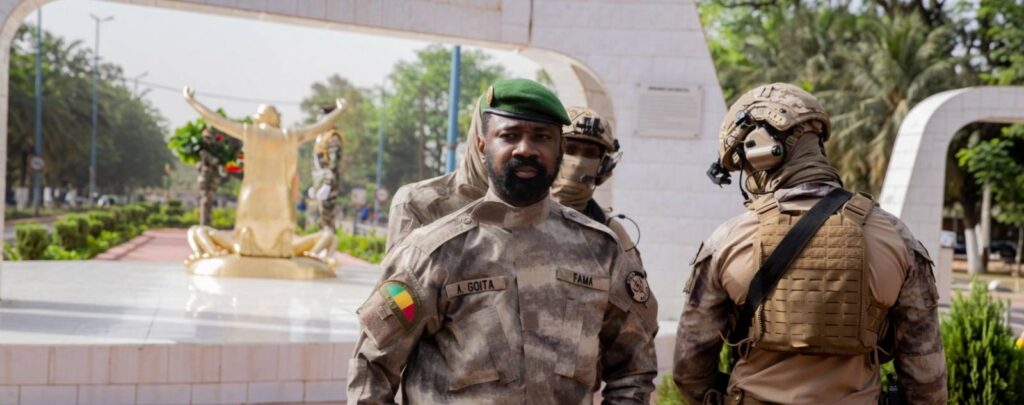
The Malian state budget is buckling under the dual pressure of international sanctions and a sluggish post-pandemic economy, yet one financial outlay refuses to shrink: the bill for Moscow’s paramilitary footprint in the Sahel. Rebranded under the Kremlin’s Africa Corps umbrella but retaining the same personnel and command structure as Wagner, the Russian-led forces are now costing Bamako more than 514 billion West African CFA francs—roughly $850 million—since their deployment began in late 2021. While the world watches, the money trail reveals deeper insights into how a security contract is quietly reconfiguring Mali’s sovereign priorities.
The anatomy of a swelling invoice
What started as a modest contingency fee has swollen into an open-ended drain on public funds. Internal budget ledgers seen by analysts indicate that the monthly outlay, initially pencilled in at about 6 billion FCFA (≈ $10 million), has climbed more than tenfold. The driver is not hidden inflation but structural expansion: troop numbers have swollen to over 2,000, equipment packages have been upgraded, and support logistics now include aviation detachments and forward-operating infrastructure. Each fighter or instructor now carries a price tag of roughly 10,000 dollars per month—split roughly into 3,000 dollars of direct salary and 7,000 dollars in overhead for equipment, medical cover, and combat bonuses.
By contrast, a Malian army conscript in the same operational zone costs the treasury a fraction of that sum, sparking quiet resentment within the barracks and amplifying calls for fiscal transparency.
Mining concessions and parallel payment channels
To keep the taps open, Bamako has had to blend conventional banking transfers with less conventional instruments. A significant slice of the payment is settled through mining concessions—especially gold licences in southern and western Mali where artisanal and industrial operations have been hastily revised to name Russian-linked entities as equity partners. These deals are negotiated behind closed doors and rarely tabled in public parliamentary sessions, yet they are factored into the headline 514 billion FCFA total.
From Wagner to Africa Corps: red ink remains
The much-publicised rebranding of Wagner into Africa Corps under the direct control of Russia’s Ministry of Defence has done little to trim the costs. In fact, Moscow’s stated plan to expand personnel to 3,500 fighters could push annual disbursements past 210 billion FCFA, pushing the cumulative bill toward one billion dollars within eighteen months. The structural shift in command has not altered the underlying arithmetic: every ruble owed to Moscow is still denominated in dollars and deducted from Bamako’s dwindling foreign reserves.
Security theatre or strategic asset?
Pro-government narratives point to high-profile victories such as the recapture of Kidal in late 2023 as proof of military efficacy. Yet the security picture on the ground tells another story. Vital road arteries remain under frequent blockade, the central regions simmer under sustained pressure from Jama’at Nusrat al-Islam wal Muslimin affiliates, and Malian army convoys continue to suffer losses in complex ambushes. The calculus among Bamako’s economic technocrats is simple: the 514 billion FCFA funnelled to foreign paramilitaries could have electrified every household in the south, staffed every classroom in the north, and stocked every district hospital with essential medicines. Instead, it underwrites a security dependency that shows no sign of easing.
What’s next for Bamako’s balance sheet?
The government of transition faces an unenviable choice: deepen fiscal austerity, renegotiate terms with Moscow, or open fresh lines of credit that risk further eroding macroeconomic stability. The Africa Corps contract sits at the nexus of financial strain and geopolitical exposure, illustrating how a security arrangement can quietly mutate into a financial straitjacket. With no immediate sanctions relief on the horizon and global commodity prices remaining volatile, Bamako’s next move may well determine whether its sovereignty will be measured in bullets supplied or budgets balanced.
More Stories
Behind the Molodo ambush: how Mali’s junta’s Russian gamble unraveled
Russia’s 2026 parliamentary vote: a landslide masked by a locked political arena
Behind the Moscow drone strikes: how Ukraine exposed Russia’s hidden vulnerabilities