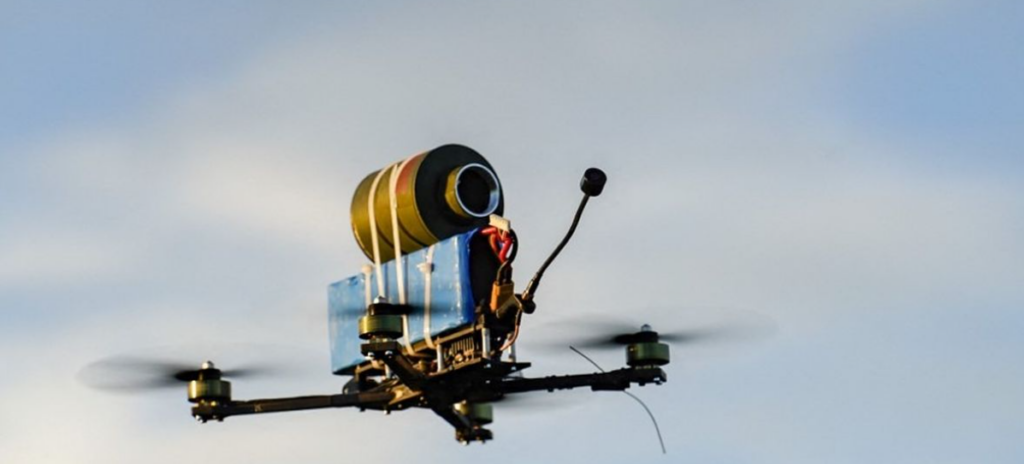
The recent Ukrainian drone strikes on Moscow represent more than just another military operation—they mark a calculated shift in the dynamics of a war that Russia has failed to contain. By targeting a critical oil refinery and a logistics hub, Kyiv has forced Moscow to confront the reality that no corner of Russia remains immune to the conflict it initiated. This isn’t merely an escalation; it’s a reflection of how a prolonged war reshapes the very geography of warfare.
The strategic gamble behind targeting Moscow’s energy heartland
The surprise attack on September 19-20 targeted the Kapotnia oil refinery, one of Russia’s largest facilities with an annual processing capacity of 12 million tons. Ukrainian forces claimed responsibility, asserting control over the operation through a combination of advanced systems including FP-1, RZ-100, and the long-range Flamingo missile. Independent analyses, including those from military research groups, confirm extensive damage to the refinery and surrounding infrastructure.
For Ukraine, the rationale is clear: Moscow’s war machine depends on uninterrupted access to energy resources. By striking at the source of these resources, Kyiv is attempting to dismantle Russia’s economic lifelines. The timing of the attack—during Russia’s parliamentary elections—added a layer of political symbolism, though both sides have framed the incident through competing narratives.
The election-day offensive: coincidence or calculated disruption?
Moscow’s mayor, Sergey Sobyanin, accused Ukraine of deliberately timing the attack to disrupt voting, a claim denied by Kyiv. While the simultaneity of events is undeniable, the true intent remains obscured by wartime propaganda. What’s certain is that the attack occurred against the backdrop of Russia’s ongoing military operations in Ukraine, where civilian casualties continue to mount daily.
The election factor introduces a critical dimension. In a conflict increasingly defined by narratives as much as by territory, each side seeks to leverage events for psychological advantage. Russia emphasizes civilian harm and election interference; Ukraine highlights the disruption of military infrastructure. Both narratives, however, point to a shared reality: the war has ceased to be a distant conflict and has instead become a two-way street.
The erosion of Russia’s geographic immunity
Historically, Moscow has relied on distance to shield its core infrastructure from direct attack. The 2022 full-scale invasion of Ukraine was supposed to secure Russia’s borders while keeping the war at arm’s length. Instead, it has had the opposite effect. The very weapons systems Russia deployed against Ukraine—long-range missiles and drones—are now being turned back against its own territory.
The Flamingo missile system, capable of striking deep behind enemy lines, exemplifies Ukraine’s evolving military capabilities. Meanwhile, the mysterious ‘Pelican’ weapon, though its exact nature remains unconfirmed, underscores the uncertainty surrounding Ukraine’s expanding arsenal. This technological evolution signals a fundamental shift: from a war fought primarily on foreign soil to one where the home front is increasingly vulnerable.
From war of attrition to war of exposure
The Moscow strikes are not just a military operation; they are a strategic statement. By forcing Russia to confront the human and economic costs of war on its own territory, Ukraine is exposing the fragility of Moscow’s long-term strategy. The Kremlin’s repeated assertions of control and security now ring hollow in the face of burning oil refineries and disrupted supply chains.
This is the paradox at the heart of the conflict. A war launched under the pretense of self-defense and territorial integrity has metastasized into a confrontation that risks destabilizing the aggressor state itself. The Kapotnia refinery fire is more than a tactical setback; it is a symptom of a deeper failure—one in which an invading force has lost control over the consequences of its own aggression.
What comes next: escalation or negotiation?
Russia has already vowed to intensify its strikes on Kyiv in response to the Moscow attacks. This tit-for-tat pattern risks spiraling into a cycle of retaliation that neither side can afford. Each escalation narrows the space for diplomacy while expanding the theater of war.
The Moscow drone strikes serve as a stark reminder: when a state chooses the path of prolonged aggression, it forfeits the ability to predict or contain the fallout. The flames in Kapotnia are not just a military target; they are a mirror held up to the Kremlin’s failed calculus.

More Stories
Benin’s ARS second term: the strategic playbook behind stricter healthcare oversight
Mali’s military under siege: the human cost behind Assimi Goïta’s strategic missteps
Niger’s August crisis: how Tiani’s reliance on Russia exposed deeper fractures in the military