Behind the headlines: why Niger’s uranium deal carries unforeseen consequences
Touted by Niger’s transitional government as a historic achievement for national mining sovereignty, the September 23, 2026 agreement over the Madaouela uranium deposit is raising more questions than solutions. While officials celebrate a 40% state stake, $10 million upfront payment, and promises of 1,000 jobs, the fine print reveals a high-stakes gamble—one built on shaky foundations and untested assumptions.
An unproven partner in a $1 billion gamble
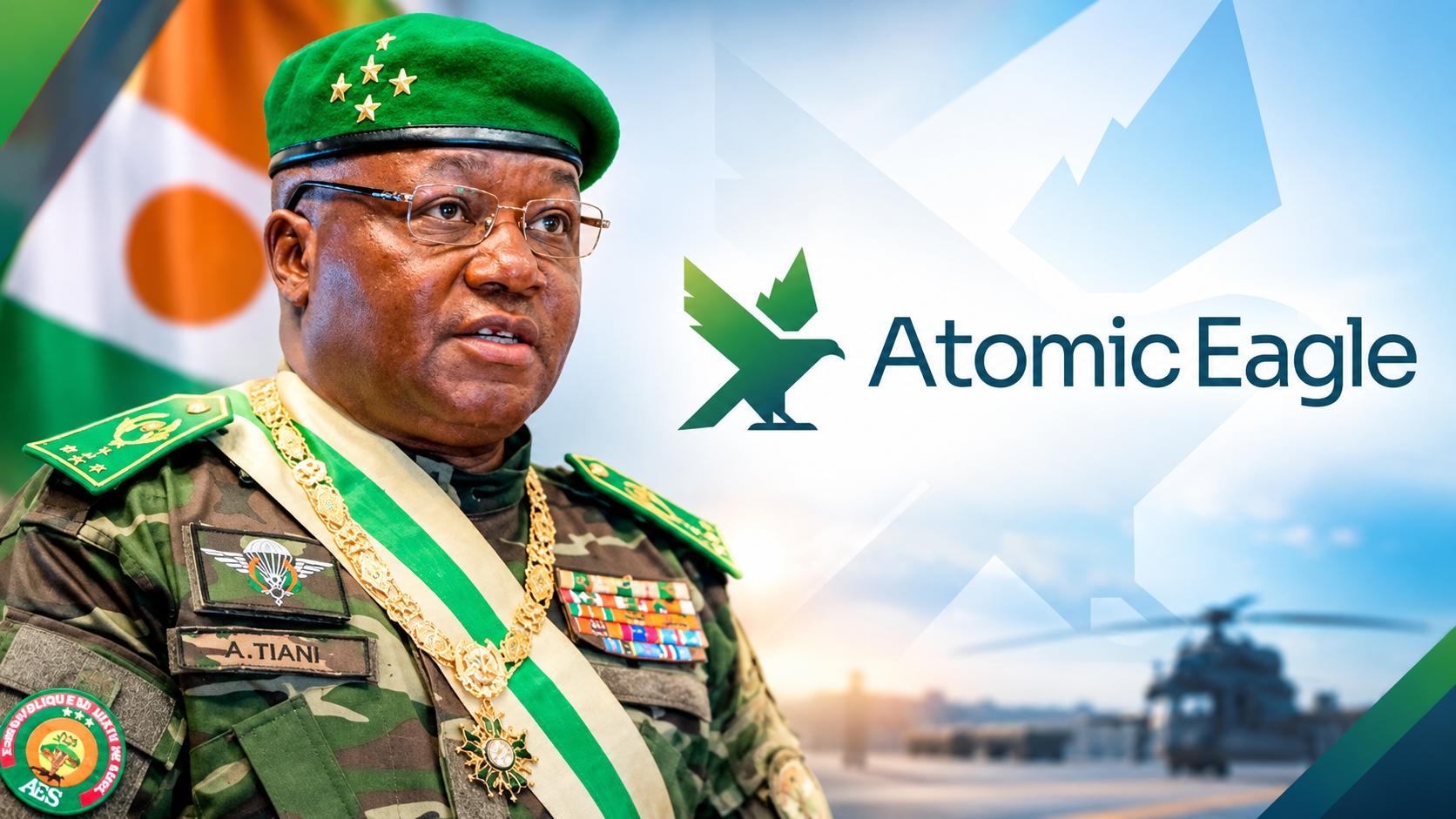
Atomic Eagle’s selection as Madaouela’s new operator is more than just a replacement for the dismissed Canadian firm GoviEx—it represents a strategic blind spot. Unlike established uranium miners with decades of operational track records, this company has never developed or operated an industrial-scale uranium mine. Its only project, in Zambia, remains trapped in preliminary study phases, a reality overshadowed by official rhetoric. Entrusting a strategic deposit of this magnitude to an operator without proven production capabilities is not just risky; it borders on negligence, especially when no enforceable timeline or financial penalties are in place. Without binding safeguards, the permit could quickly become a financial vehicle for foreign speculation, leaving the site abandoned and the nation bearing the costs.
The 40% state stake: a political illusion disguised as economic empowerment
The 40% public shareholding announced with great fanfare is being marketed as a triumph of national sovereignty. Yet behind the rhetoric lies a dangerous trap. For the state to maintain its equity, it must fund its share of infrastructure, equipment, and development costs—potentially hundreds of millions of dollars. In a nation already grappling with severe economic strain, this arrangement risks transforming Madaouela into a financial albatross. Rather than securing revenue, the deal could saddle Niger with massive calls for capital injections, leading to unsustainable debt or dilution of state ownership, effectively turning sovereignty into an empty title.
$10 Million now, zero guarantees tomorrow
The initial $10 million payment by Atomic Eagle, though presented as a major financial win, pales in comparison to the deposit’s estimated value and the estimated $1 billion required to develop a functioning mine. Viewing this as a success is a deliberate misdirection—one that distracts from the absence of binding agreements on future tax revenues, profit repatriation, or long-term economic benefits for Nigerien communities. Worse still, the payment’s timing and structure suggest it may be little more than a symbolic gesture aimed at political optics rather than genuine industrial progress.
1,000 Jobs: a promise without a plan
The pledge to create 1,000 jobs has been repeated by officials as proof of the project’s social impact. Yet no details have been provided on the nature, duration, or origin of these positions. Are they permanent roles or temporary construction jobs? How many will go to local workers? What training programs are planned? Without clear regulatory mandates or published employment targets, this number risks being nothing more than an empty slogan—designed to placate public concern while masking the project’s lack of concrete planning.
Why Madaouela feels less like an industrial project—and more like a political fix
Upon closer inspection, the Atomic Eagle agreement appears less like a carefully planned industrial strategy and more like a political maneuver to close the chapter on the GoviEx dispute. True mining sovereignty isn’t declared in percentages on a balance sheet—it’s exercised through robust oversight, transparent cost controls, and guaranteed benefits for the population. By refusing to disclose key clauses of the convention and avoiding accountability, the government has left the national subsoil vulnerable to uncertainty. Madaouela must not become collateral damage in a political narrative that prioritizes appearances over real development.