The rupture at Goumeri W8 wasn’t just an industrial mishap—it was the spark that exposed deep fault lines in Niger’s oil sector. A sudden crude eruption, environmental alarms, disputes over foreign expertise, and a blunt ultimatum to Chinese partners have turned this single incident into a turning point. For the first time, Niamey is asserting control over its resources with unprecedented force, and the repercussions are reshaping alliances, contracts, and the very future of the country’s energy landscape.
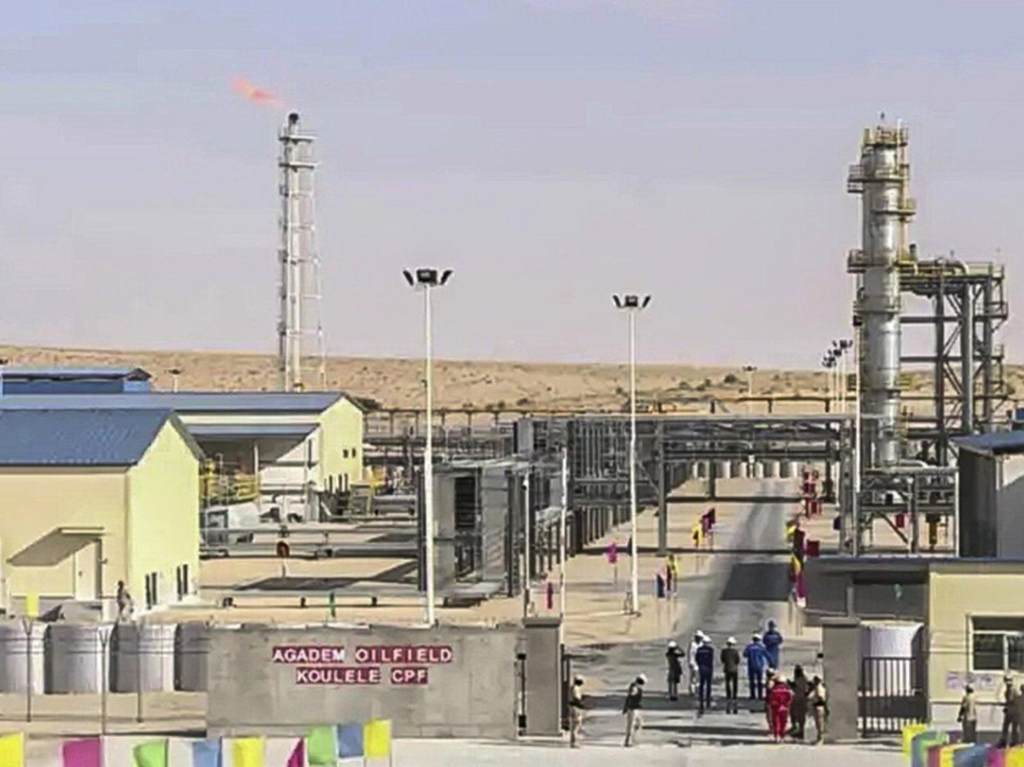
Agadem basin — Oil doesn’t always flow as planned. Since the blowout at Goumeri W8 on September 25, what began as a technical failure has spiraled into a high-stakes confrontation. The site, operated by CNPC Niger Petroleum, is now the epicenter of a struggle where industrial urgency, financial stakes, and diplomatic tensions collide.
From emergency to escalation: the critical first hours
The eruption at Goumeri W8 unleashed a surge of crude oil and gas, damaging the platform and threatening nearby wells, including Goumeri W3 and W4. By October 12, Niger’s ministry of petroleum acknowledged the severity: two workers were hospitalized, and while the situation was described as “partially contained,” full control remained elusive.
In an industry where precision is non-negotiable, every misstep can deepen a crisis. Poor coordination, delayed solutions, or misjudged risks could turn a manageable incident into a prolonged disaster. Yet questions linger: who exactly is leading the response? How are decisions being validated? And how are the multiple teams—Chinese operators, Nigerien authorities, and now Algerian experts—supposed to align their efforts?
The Algerian intervention: expertise or escalation?
Niger’s call for Algerian technicians, including representatives from Sonatrach, added a new layer to the crisis. Officially, it was a request for technical support to tackle a complex emergency—a standard practice in the oil industry. But the timing was far from ordinary.
Rumors suggest prior tensions over operational adjustments at the SORAZ refinery, where changes to hydrocarbon flow parameters had raised concerns. While unconfirmed, these claims underscore a broader issue: who holds authority on a site run by a foreign operator when a host government demands external intervention?
The absence of clear, documented protocols risks turning a technical collaboration into a diplomatic standoff. For Niger, the right to seek outside expertise is non-negotiable. Yet in a high-pressure scenario, that expertise must integrate seamlessly with existing operations—without undermining safety or accountability.
Environmental containment: a fragile victory
Beyond the damaged infrastructure, the spill’s impact on land, water, and local communities remains a pressing concern. Efforts to contain the oil included deploying bulldozers to construct sand berms and retention barriers—a stopgap measure that may limit surface spread but doesn’t address subsurface contamination.
Burying oil under sand doesn’t equate to remediation. Hydrocarbons can persist, seeping into groundwater or releasing harmful vapors. For nearby populations, the questions are immediate: Is their water safe? Are pastoral lands poisoned? Who is monitoring health risks for exposed workers and residents?
As of October 20, officials claimed the spill was contained, with ongoing stabilization efforts and plans for a relief well (Goumeri W-8R) slated between October 24 and December 26. But containment is not resolution. Comprehensive testing, transparent reporting, and verified decontamination are non-negotiable to prevent long-term ecological and health damages.
The $400 million turning point: money, power, and leverage
To grasp why Goumeri W8 became a flashpoint, look beyond the wellhead. China’s role in Niger’s oil industry is foundational, with investments spanning production, the Zinder refinery, and export pipelines. This integration has fueled Niger’s energy ambitions but also created a dependency that Niamey is now challenging.
In April 2024, Niger secured a $400 million advance from CNPC against future oil revenues—a loan to be repaid over 12 months at a 7% interest rate. This financial lifeline highlighted both the cooperation’s depth and its complexities: the relationship is as much about contracts and cash flows as it is about technical collaboration.
By June 2026, cumulative investments in Niger’s oil sector had reached $8.34 billion, involving the state, CNPC, and SOPAMIN. Yet attributing the entirety to China would be misleading. The figure reflects the sheer scale of capital tied to the sector—and the stakes at hand.
Every dispute now carries added weight. For Niger, the goal is ensuring oil wealth translates into national benefit. For China, contractual obligations and operational continuity are critical to protecting its investments. The challenge? Balancing these interests without crippling the infrastructure that sustains them.
Niamey’s ultimatum: a warning shot with global echoes
On October 13, 2026, Niger’s government issued a 45-day ultimatum to CNPC, WAPCO, and SORAZ, demanding compliance with contractual obligations. The grievances were stark: alleged failures in repatriating export revenues, underemployment of Nigerien workers, and unmet state commitments.
Foreign Minister Bakary Yaou Sangaré cited unpaid revenues exceeding 3 trillion CFA francs since April 2024, alongside a 17.4 billion CFA franc shortfall for the public treasury. While these figures remain contested, the ultimatum signals a shift: Niamey is no longer willing to tolerate perceived breaches.
The clock is ticking. Will the companies comply? Can negotiations bridge the gap? Or will the standoff escalate, with Goumeri W8 as the symbol of broader discontent? The incident has arrived at a moment when financial and contractual disputes were already straining relations—making resolution both urgent and fraught.
China’s crossroads: adapting to a bolder Niger
The Niamey-Peking partnership is entering uncharted territory. Niger’s push for greater control over oil revenues and stricter adherence to agreements reflects a broader assertion of economic sovereignty. But sovereignty isn’t just about issuing ultimatums—it’s about enforcing contracts, auditing accounts, and safeguarding citizens.
CNPC remains indispensable to Niger’s oil sector. A prolonged conflict could disrupt operations, erode partner confidence, and hinder efforts to stabilize Goumeri W8. This doesn’t mean Niger should back down. It means its demands must be backed by verifiable data, clear procedures, and a long-term strategy that secures its interests without destabilizing its economic backbone.
Algeria’s role: regional ally or wildcard?
By inviting Sonatrach to assist, Niger tapped into regional expertise—but also introduced a variable into its delicate balance with China. Was this a technical necessity or a strategic move? Public evidence doesn’t suggest Algeria is vying to replace China. Yet the lack of clarity over roles risks fueling speculation.
Key questions demand answers: Who authorizes interventions? Who bears responsibility for on-site decisions? How are expert recommendations integrated into the operator’s plan? Without transparency, diplomatic narratives could overshadow safety imperatives.
Algeria’s expertise is welcome. China’s operational authority must be respected. And Niger’s oversight is non-negotiable. Only with this equilibrium can international support effectively address the crisis.
Beyond rivalries: the need for hard facts
In the fog of accusations and counterclaims, one thing is clear: assumptions won’t suffice. Niger has announced an independent investigation into the eruption’s causes, early decisions, responsibilities, and environmental fallout. Its findings must be public, rigorous, and unbiased.
This isn’t about assigning blame prematurely. It’s about distinguishing technical challenges from contractual breaches, safety lapses from political posturing. All parties—CNPC, Sonatrach, and Nigerien authorities—must present their evidence openly. The severity of the incident demands nothing less.
Goumeri W8: the crucible of Niger’s energy future
At its core, the Goumeri W8 crisis poses an existential question for Niger: How can it assert sovereignty over its resources without jeopardizing the stability of its partnerships or the safety of its people?
The $400 million advance, the billions invested, Niger’s financial demands, and Algeria’s involvement each tell a part of this story. Together, they reveal a landscape where economic, technical, and diplomatic threads are now inextricably linked.
Yet oil doesn’t care about capital rivalries or contract negotiations. Until the well is secured and contaminated land is treated, the risk endures. For Niger, the dual priority is clear: hold partners accountable and ensure the crisis leaves no lasting scars on its people or environment. For China and Algeria, the test is proving their cooperation with Niger can be transparent, equitable, and results-driven.
At Goumeri W8, the real victory won’t be measured in diplomatic leverage—it will be in Niger’s ability to master the eruption, protect its citizens, and turn its oil wealth into a catalyst for development rather than another source of strife.