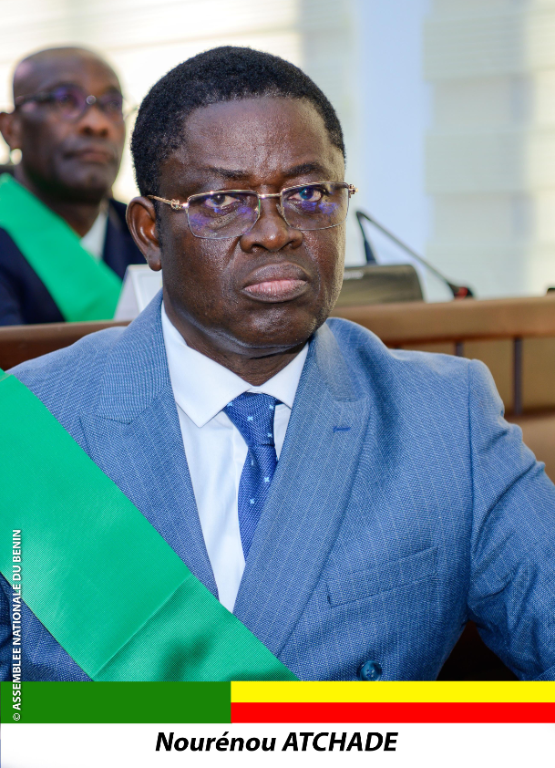
The appeal trial in the Houndété-Atchadé dispute, stemming from the contested succession of Thomas Boni Yayi at the helm of Bénin’s Democrats party, has been postponed to 14 January 2027. Amid ongoing legal proceedings and internal restructuring, the ordinary congress on 11 October 2026—which elected Nourénou Atchadé as party president—adds a pivotal twist to a leadership crisis that is testing the resilience of Bénin’s main opposition force.
Far from reaching a resolution, the Democrats party’s leadership turmoil continues to unfold. As both factions awaited judicial clarity, the appeal court case pitting Éric Houndété against Nourénou Atchadé was delayed once more, pushing the verdict—and the party’s future—into further uncertainty. This latest adjournment extends the stalemate over who rightfully leads a party already fractured by internal dissent.
A bold political move amid legal limbo
While the courts deliberate, the party’s political machinery presses forward. On 11 October 2026, Atchadé’s faction held an extraordinary congress, formally installing him as president of the Democrats. This decisive action marks a turning point: a bid to solidify control without waiting for the judiciary’s final word.
Yet a critical question looms: how can a political party cement its leadership when the very legitimacy of that transition remains under legal scrutiny?
From succession to showdown: the roots of the conflict
The crisis erupted in March 2026, when Thomas Boni Yayi stepped down as party president for health reasons. His departure triggered a transitional phase that quickly devolved into an all-out power struggle.
Éric Houndété, the party’s vice president and initial interim leader, found himself at the center of controversy after Nourénou Atchadé was named as the new head. Houndété’s camp immediately challenged the process, alleging violations of the party’s internal bylaws. What began as a dispute over procedural technicalities soon escalated into a full-blown legal battle.
For Atchadé’s supporters, the priority is clear: validate the new leadership’s legitimacy and unify the party under his stewardship. But the conflict has transcended personal ambitions, raising broader questions about adherence to internal rules, leadership designation, and the authority to bind the party in official decisions.
The first judicial ruling: a victory, but not the end
On 29 April 2026, the Cotonou Court of First Instance ruled in favor of Nourénou Atchadé, upholding his contested leadership. While this marked a significant legal win for his faction, it failed to resolve the impasse. Houndété’s legal team swiftly filed an appeal, ensuring the dispute would drag on.
Since then, repeated postponements—first in June, then October—have delayed a definitive resolution. The new date of 14 January 2027 prolongs the uncertainty, leaving the party in a state of suspended animation. For both sides, the stakes are immense: beyond the presidency, the case will determine which faction holds the legal authority to represent the Democrats and make binding decisions on its behalf.
The October congress: a political milestone
Undeterred by the legal quagmire, Atchadé’s camp seized the initiative. The 11 October congress was more than a routine gathering—it was a strategic power play. By electing Atchadé as president, his supporters sent a clear message: the party would not pause its political evolution for the courts.
However, political momentum and legal validation are not the same. The congress’s outcomes, while symbolically important, do not nullify Houndété’s ongoing appeal. The interplay between the congress’s decisions and the pending litigation will ultimately be judged against the party’s statutes and the courts’ rulings. Until then, the Democrats remain in a paradoxical state: a leadership fortified by internal processes, yet vulnerable to judicial reversal.
An opposition weakened by division
The repercussions of this crisis extend beyond the battle for the presidency. Observers warn that prolonged infighting could cripple the Democrats’ ability to mobilize supporters, dilute its political messaging, and erode its standing against rivals. With the party already struggling in the 2026 elections and its institutional presence weakened, internal cohesion is no longer a luxury—it’s a necessity.
The question now is not just who will succeed Thomas Boni Yayi, but whether the party’s leaders can heal the rifts that have emerged. The fracture is no longer merely political; it is now entangled in a legal battle that threatens to define the party’s future trajectory.
14 January 2027: a defining moment?
The appeal’s postponement to 14 January 2027 sets the stage for what could be a decisive chapter in this saga. Will the court finally rule on the merits of the case, or will procedural hurdles trigger yet another delay?
In the meantime, the dual realities persist: Atchadé’s faction pushes ahead with political consolidation, while Houndété’s camp pins its hopes on judicial recourse. For the Democrats, the challenge is twofold—navigating the legal maze and mending a division that threatens to permanently fracture the party.
Ultimately, the Houndété-Atchadé dispute is no longer just a leadership contest. It has become a critical test of the Democrats’ internal governance, credibility, and survival as Bénin’s primary opposition force.