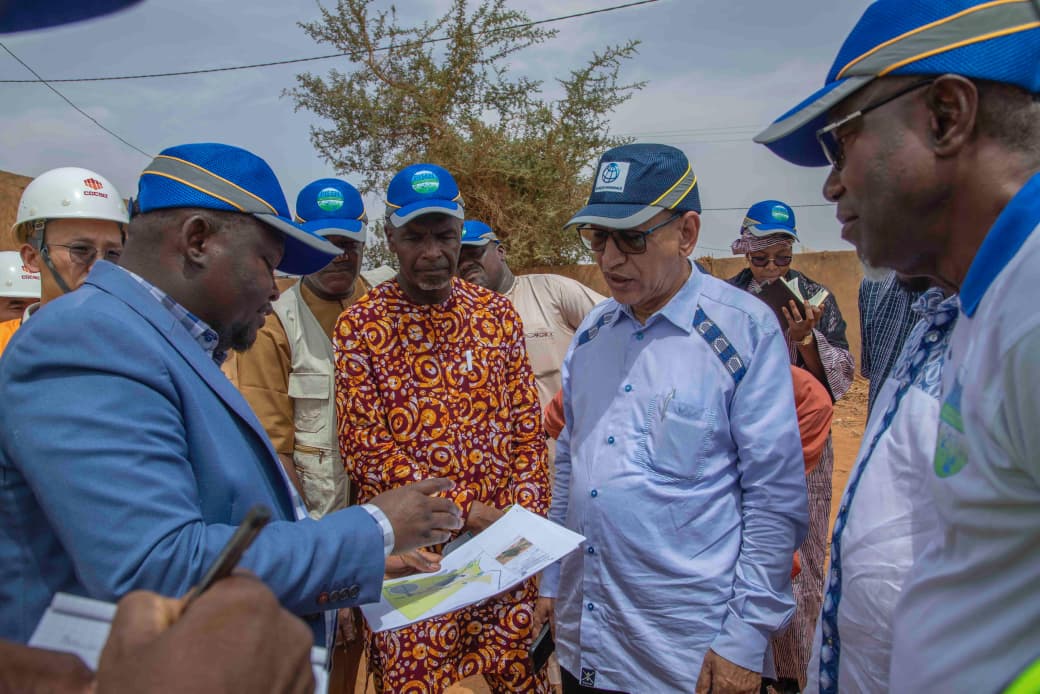
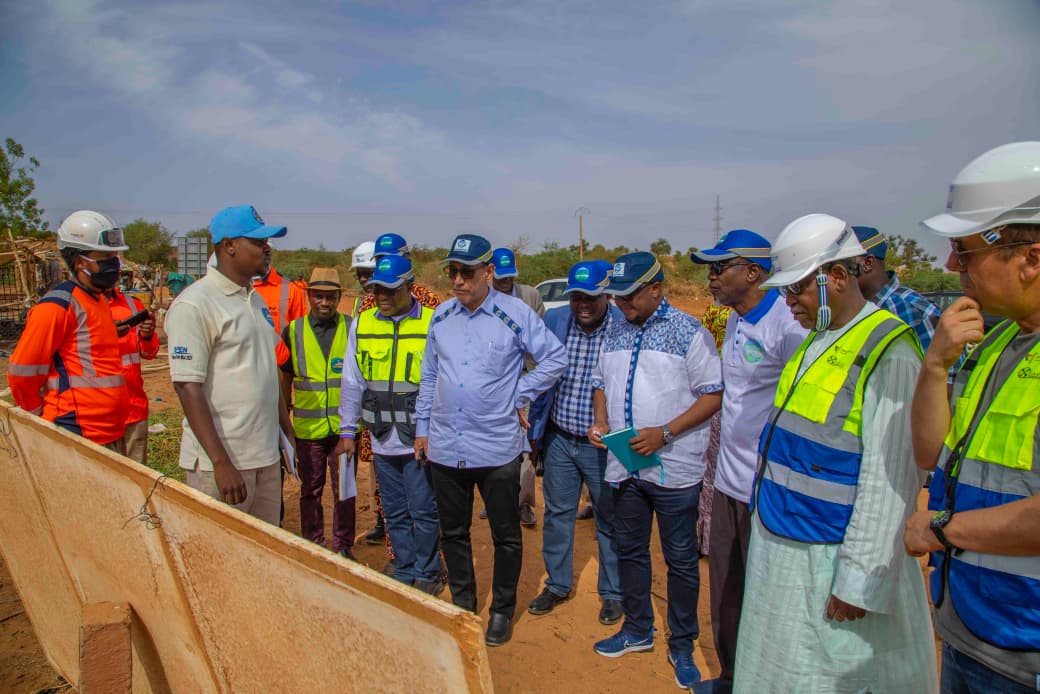
Niamey’s water infrastructure took a significant leap forward as a high-level delegation conducted an on-site inspection of the third potable water treatment plant under construction in the capital. Led by Zibo Zakara, National Coordinator of Niger’s Integrated Water Security Platform (PISEN), and Mohamed Nanzoul, Project Manager at the World Bank, the team assessed progress across critical construction zones: the water intake site, the treatment plant itself, and the future reservoir locations.
The visit coincided with a major milestone—the official launch of full-scale construction activities after a period of delays. The project, now fully mobilized, is a cornerstone of Niamey’s urban water strategy, designed to meet growing demand and enhance resilience against seasonal shortages.
Developed under the 2017 Urban and Semi-Urban Water Master Plan, this initiative aims to deliver 250,000 cubic meters of clean water daily across three phases. The first phase—100,000 m³/day—will secure Niamey’s water supply through 2035, while the subsequent phases (75,000 m³/day each) will expand coverage to underserved areas. PISEN leads project coordination with support from the World Bank, while Niger’s Water Asset Society (SPEN) serves as the overseeing authority.
During the inspection, engineers highlighted key infrastructure components: raw water will be channeled to a partially built treatment facility, then distributed via two 2,500 m³ reservoirs on the Yawari plateau, ensuring reliable supply to peripheral neighborhoods.
Overcoming delays, accelerating progress
Zibo Zakara acknowledged past slowdowns but confirmed a renewed momentum, particularly in Lot 6 and Lot 7, where heavy machinery is now excavating foundations and local labor is being mobilized. He emphasized the project’s social impact, noting that subcontracting and national employment are already generating tangible benefits for communities.
World Bank reaffirms commitment to Niger’s water future
Mohamed Nanzoul praised the project’s current pace and restated the World Bank’s commitment to supporting Niger’s long-term water security goals, prioritizing sustainable access for all residents.
Transforming Niamey’s water landscape
Haladou Laouali Amani, Project Lead for the plant’s construction, outlined completed preparatory phases—site mobilization, topographic surveys, and geotechnical studies—and forecasted a transformative outcome. Once operational, the facility will introduce approximately 45,000 new social water connections, marking one of Niger’s most ambitious potable water initiatives to date.