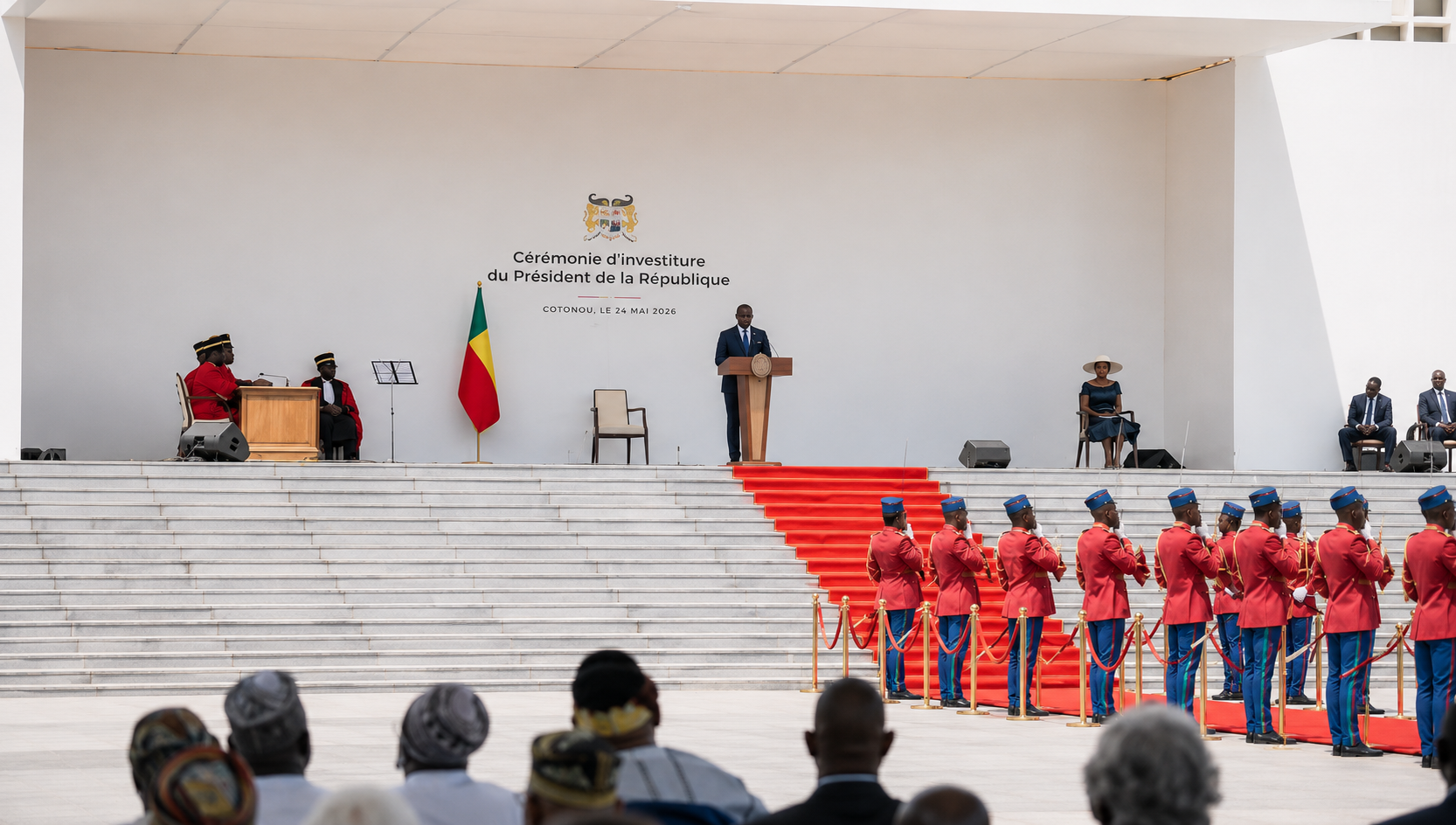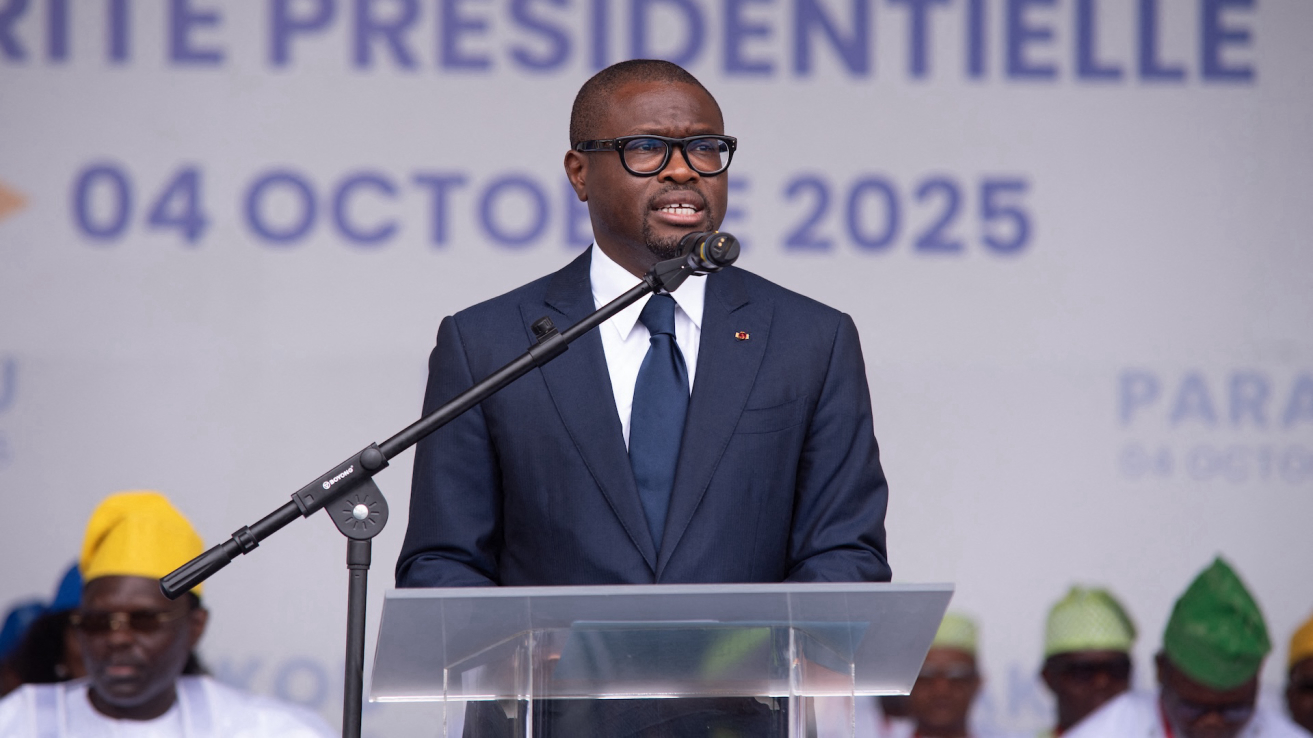
Romuald Wadagni takes office with bold promises for Bénin
Romuald Wadagni secured a landslide victory in Bénin’s presidential election on April 12, winning 94.27% of the vote against Paul Hounkpè, who conceded defeat and called for national unity and respect for republican values. The Constitutional Court validated a 63.57% turnout, a significant increase from the 50.17% recorded in 2021.
This election marks Bénin’s fifth democratic transition since the historic 1990 National Conference. In a region where presidential term extensions often fuel instability, outgoing President Patrice Talon’s adherence to the two-term constitutional limit underscores the country’s institutional stability.
The vote proceeded peacefully, though isolated irregularities—including allegations of ballot stuffing—were reported. Investigations are underway to determine accountability, but the Electoral Commission, Constitutional Court, and international observers confirmed the election’s credibility. The Court invalidated 34,596 votes nationwide due to irregularities.
Paul Hounkpè posed no real challenge to the ruling party’s candidate. His party, Forces Cauris pour un Bénin émergent, had previously garnered modest results in the January 2026 legislative and local elections and the 2021 presidential race, with 4.78%, 6.65%, and 11.37% of the vote, respectively.
Wadagni, a decade-long Finance Minister, is widely credited as a key architect of Bénin’s economic progress during Talon’s two terms. Under his leadership, annual GDP growth surged from 1.8% in 2015 to nearly 8% by 2025.
Despite robust growth, poverty persists—40.1% of Béninois still live below the poverty line. Wadagni has made inclusive growth the cornerstone of his 2026-2033 agenda, prioritizing social welfare, economic diversification, and national cohesion.
A political landscape shaped by reforms
The election unfolded amid sweeping constitutional and institutional changes since 2016, which have reshaped political participation. Tightened electoral rules, including a 15% sponsorship requirement for presidential candidates, have marginalized opposition parties. The main opposition coalition, Les Démocrates, was notably absent from the ballot.
Opposition risks exclusion until 2040 if sponsorship rules remain unchanged. Internal divisions, exacerbated by former President Boni Yayi’s March 2026 departure, have further weakened the opposition, leaving it sidelined until at least the next election cycle.
The November 2025 Constitution introduced a