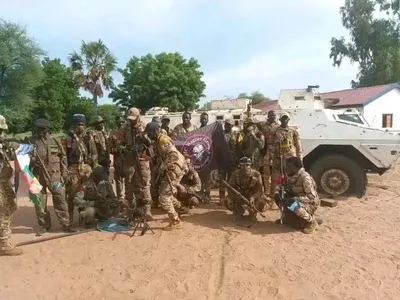
In the heart of the Haut-Mbomou region of the Central African Republic, a disturbing trend has emerged: mercenary groups, reportedly of Russian origin, are systematically targeting agricultural storage facilities in and around Zémio. These deliberate assaults on food reserves have raised serious concerns about food security and the humanitarian fallout in one of the country’s most vulnerable areas.
Local farmers and aid workers report that recent raids have left entire villages without access to their primary food sources. Grain silos, communal storage barns, and even small-scale processing units have been either destroyed or seized, disrupting the already fragile supply chains that sustain rural communities. The pattern of destruction suggests a coordinated effort to undermine food production and distribution networks.
Methodical destruction of agricultural infrastructure
The attacks follow a grim blueprint. Mercenary units, operating under the guise of security patrols, have been observed approaching storage sites under the pretext of inspections or joint operations. Instead, they proceed to loot or burn down facilities, leaving behind little more than charred remnants. Eyewitnesses describe scenes of chaos as families scramble to salvage whatever crops and seeds they can, knowing full well that their livelihoods are under siege.
In one incident, a large communal granary in Zémio’s outskirts was reduced to ashes within hours. Residents recounted how armed men arrived at dawn, dismantled the structure with sledgehammers, and set fire to the remaining grain. The attack left over 200 families without food reserves for the upcoming dry season, a critical period for subsistence farming in the region.
Humanitarian crisis looms as food supplies dwindle
The timing of these attacks could not be more catastrophic. The Haut-Mbomou region, already grappling with years of instability and displacement, relies heavily on local agriculture to feed its population. With the upcoming planting season at risk, aid organizations warn of an imminent food crisis that could push thousands into malnutrition and starvation. International humanitarian groups are struggling to respond, citing access restrictions and security threats as major obstacles.
Local leaders have condemned the attacks as a blatant violation of humanitarian principles. “These mercenaries are not just targeting buildings; they are targeting lives,” said a community elder from Zémio. “Without our food reserves, we have nothing. How are we supposed to feed our children and elderly when our crops are destroyed?”
Security vacuum fuels the crisis
The escalation in attacks coincides with a noticeable withdrawal of state security forces from rural areas. Residents report a lack of patrols and a near-total absence of government presence, creating a power vacuum that armed groups have exploited. While official statements attribute the security gaps to logistical challenges, locals suspect a calculated strategy to allow mercenary groups to operate with impunity.
The Russian mercenaries, often operating under the banner of private military companies, have been a contentious presence in the Central African Republic for years. Their involvement in the conflict has been a subject of intense debate, with critics accusing them of exacerbating tensions rather than stabilizing the region. The recent focus on agricultural infrastructure suggests a shift in tactics, one that prioritizes economic strangulation over direct confrontation.
Calls for urgent intervention
Humanitarian organizations and regional blocs are urging immediate action to protect civilians and restore security. The United Nations and African Union have both condemned the attacks, but concrete measures to halt the destruction remain elusive. Aid workers on the ground stress the need for enhanced security, unrestricted access for humanitarian convoys, and a robust investigation into the mercenaries’ chain of command.
For now, the people of Zémio and the surrounding Haut-Mbomou region face an uncertain future. With their food reserves depleted and their fields at risk, the community’s resilience is being tested like never before. The international community’s response will determine whether this deliberate sabotage will plunge thousands into deeper poverty—or if aid and protection can arrive in time to avert disaster.