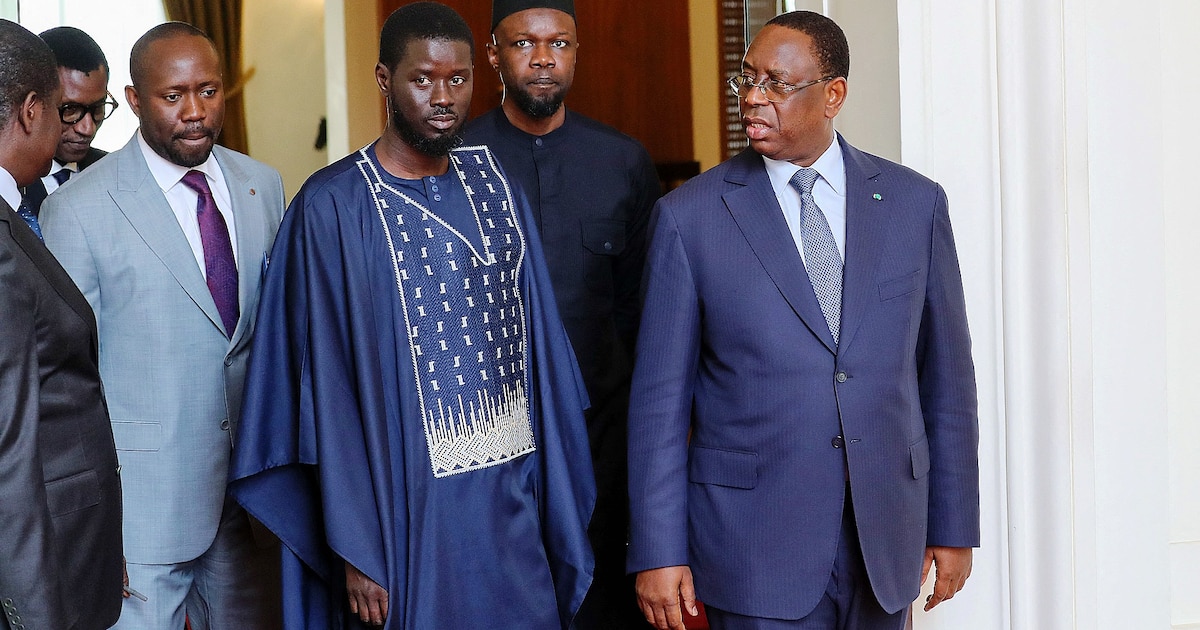
An unexpected political development has sent shockwaves through Senegal as former President Macky Sall, defeated in the 2024 elections and living in exile, prepares to land at the Yoff military airport in Dakar this Friday. The visit, set to include a meeting with his successor, President Bassirou Diomaye Faye, comes at a time of deep division in the country, with tensions rooted in a fraught political history between the two leaders.

Unhealed wounds and political grievances
The timing of Sall’s arrival is particularly sensitive. Just weeks before the 2024 elections, Bassirou Diomaye Faye was still imprisoned at the Cap Manuel prison along with hundreds of members of his Pastef party. Among them was activist Aly Coly, whose family experienced firsthand the harsh repression of the era. “They even jailed my wife and our three-month-old baby for supporting Faye and Sonko,” he recalls. “Today, watching my child play, I learn that our president is welcoming the man who orchestrated all this. How can we accept this?”
Reports indicate that over a thousand political detainees were arrested during this period, some for simply wearing Pastef bracelets. The crackdown, which lasted from 2021 to 2024, resulted in at least 65 deaths during protests and riots. These injustices were central to Faye’s election campaign, which promised a break from the past. Yet, with Sall’s return, many Senegalese feel betrayed, as no accountability has been pursued for these actions.
Global ambitions amid domestic controversy
Sall’s brief visit is officially tied to his candidacy for United Nations Secretary-General, a role he has publicly endorsed before the UN General Assembly on April 22. Positioning himself as a champion of multilateralism and impartiality, Sall has yet to secure backing from the African Union or his own government. However, his visit could signal a shift in momentum, particularly if he gains the approval of President Faye.
Yet, the idea of Sall leading the UN is met with widespread skepticism. “The UN’s purpose is to defend human rights. Can we imagine someone responsible for 60 deaths as its leader?” Aly Coly questions. Meanwhile, political analyst Maurice Soundieck Dione offers a contrasting perspective, suggesting that Sall’s candidacy could enhance Senegal’s global standing. “A respected international figure could boost investor confidence and attract foreign capital, which is crucial for our economy,” he notes.
A strategic alliance in the making?
For President Faye, aligning with his predecessor could serve as a strategic move. The relationship between Faye and his former mentor, Ousmane Sonko—now Speaker of the National Assembly—has grown increasingly strained in recent months. Sonko, who wields significant influence in parliament, has been critical of Faye’s leadership, raising concerns about potential obstruction.
“The announcement of this meeting has surprised many,” Soundieck Dione observes. “But in reality, it reflects the evolving political landscape of the past few months.” Faye’s decision to reintegrate figures from Sall’s administration—despite his campaign promises of change—has already drawn criticism from supporters who accuse him of reverting to the “old corrupt system.”
Cultural norms in Senegal place immense value on loyalty to mentors, and many see Faye’s actions as a betrayal of Sonko. Whether this meeting marks a turning point or further isolates Faye remains to be seen. One thing is certain: the return of Macky Sall has reignited old wounds and set the stage for a new chapter in Senegal’s political saga.