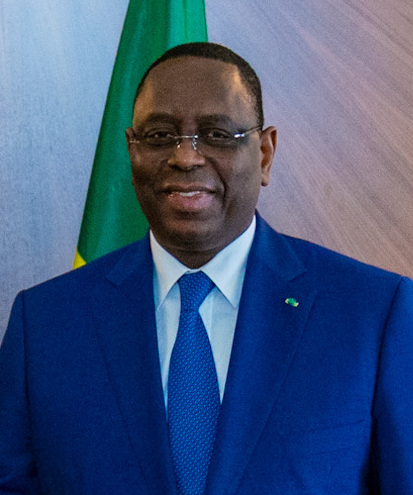
Days after receiving him at the Presidential Palace, Bassirou Diomaye Faye made a decisive move: Senegal will offer full backing to Macky Sall’s bid for United Nations Secretary-General. While this endorsement is vital, it may not single-handedly secure the position.
The president’s decision marks more than just political reconciliation—it reflects a strategic shift in Senegal’s foreign policy. For the international community, it would be difficult to justify why Dakar would not support one of its own former leaders for such a prestigious role. If Sall assumes the UN helm, it would not only enhance Senegal’s global standing but also amplify Africa’s voice in shaping global governance.
A key factor in this decision is the symbolic significance of an African former head of state leading the world body. Sall’s potential tenure could advance a long-standing continental priority: securing a permanent seat on the UN Security Council for Africa. This goal, repeatedly championed by African leaders, would gain unprecedented momentum under his leadership.
From prison to political pragmatism
The path to this endorsement has been anything but straightforward. Bassirou Diomaye Faye’s rise to power was forged in adversity. In April 2023, he was imprisoned at Cap Manuel, caught in the same crackdown that targeted opposition leader Ousmane Sonko. His release on March 14, 2024—just days before the election—came through a presidential pardon, granted amid a tense pre-vote crisis. Sonko’s resilience, including his eventual withdrawal from the race to endorse Faye, sealed the victory in the first round. No Senegalese president had ever ascended to power under such turbulent circumstances.
Yet, in a striking display of political maturity, Faye now extends diplomatic support to the man whose administration once jailed him. This move underscores a broader commitment to national interests over personal grievances. The presidency has framed the decision as a unifying gesture, transcending political divisions to serve a cause greater than any individual legacy.
A strategic pivot after a major political split
The timing of this endorsement was no accident. It follows a sharp rupture between Faye and Ousmane Sonko in May, which dismantled the hardline narrative that had long defined the government’s stance toward the previous administration. Sonko, who had been prime minister, carried a deeply personal vendetta against Macky Sall—stemming from his own imprisonment and exclusion from the 2024 election. With Sonko sidelined, Faye gained the political breathing room to prioritize Senegal’s diplomatic interests over partisan score-settling.
This realignment also serves Faye’s long-term political ambitions. As he prepares to launch a new political party, he is strategically repositioning himself at the center of a coalition that includes figures from the Sall and Wade eras. The warm reception Sall received during his recent visit to Dakar—evidence of lingering political capital—only reinforces the viability of this approach. Faye’s goal: to consolidate a power base capable of securing his own re-election in 2029.
A candidacy transformed by Dakar’s endorsement
For Macky Sall, this support is transformative. His March candidacy, submitted by Burundi on behalf of the African Union’s rotating presidency, had suffered from a critical flaw: Dakar’s silence. In the high-stakes world of UN leadership races, a candidate’s home country’s neutrality—or worse, its silence—can be interpreted as a lack of endorsement, undermining credibility before the Security Council even weighs in.
By securing Senegal’s full-throated backing, Faye has removed this obstacle, allowing Sall to present himself as a candidate with unquestioned national support. While this does not guarantee victory, it neutralizes a major vulnerability and deprives rivals of a key argument against his bid. Yet, challenges remain. The unwritten rule of regional rotation favors Latin America this time, with four of the five declared candidates hailing from the continent—including former leaders from Argentina, Chile, Costa Rica, and Ecuador.
Sall, as the sole non-Latin American and only former head of state in the race, faces an uphill battle. Since Boutros Boutros-Ghali’s tenure in the 1990s, no African has led the UN—a gap that fuels the continent’s push for greater representation. However, regional customs often outweigh merit in such selections, making Sall’s path far from assured.
What lies ahead for Sall’s campaign
The next phase will hinge on Security Council dynamics, where the five permanent members hold veto power. Sall’s diplomatic track record suggests no outright opposition: his ties to France, his pragmatic stance on the Ukraine conflict (Senegal abstained in the 2022 UN vote), and his recent Moscow meeting with Russian Foreign Minister Sergei Lavrov all indicate a balanced approach. Still, the final decision rests with the Council, with a verdict expected this autumn.