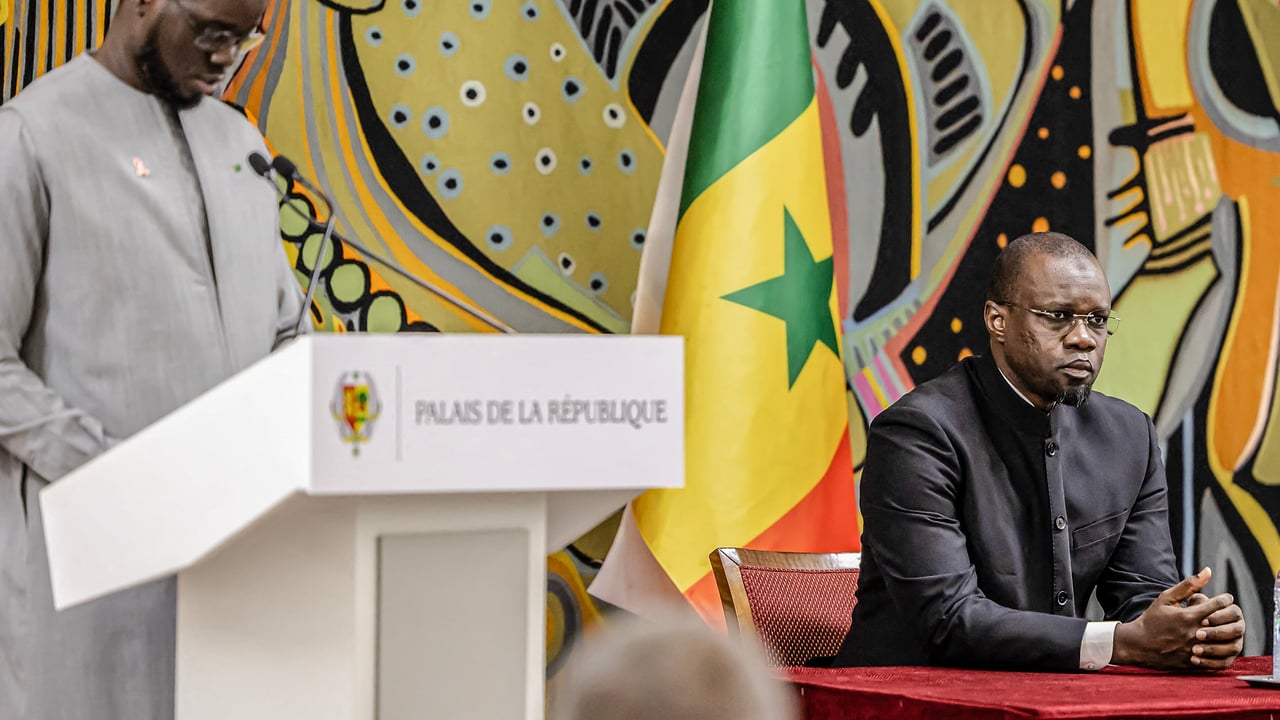

Since taking office, President Bassirou Diomaye Faye has made no secret of his intentions. During a national celebration press briefing on April 4, 2025, he declared his ambition to reshape Senegal’s constitutional framework. His stated goal? To create a system where power is shared, not concentrated. “I want strong directors-general, strong ministers, a super-strong Prime Minister,” he emphasized. “I refuse to be the type of president who holds all authority.”
These remarks have sparked intense debate about who truly stands to gain from the proposed reforms. Analysts and political observers now point to one name: Ousmane Sonko. The leader of the Patriots of Senegal for Work, Ethics and Fraternity (PASTEF) party appears poised to emerge as the primary beneficiary of the constitutional changes taking shape in Dakar.
Why Ousmane Sonko could be the real winner
The president’s vision for institutional reform centers on redistributing executive powers. By strengthening the roles of the Prime Minister and cabinet members, Faye aims to decentralize authority that has traditionally resided with the head of state. This shift, while framed as a move toward democratic balance, presents strategic advantages for Sonko and his political movement.
Under the current system, the presidency wields significant control over government appointments and policy direction. A reformed constitution that dilutes this concentration could inadvertently empower opposition figures who gain influence in key institutions. Sonko, already a formidable force in Senegalese politics, stands to capitalize on this restructured landscape. His party’s growing support base, particularly among younger voters, positions him well to shape the new political order.
Critics argue that the reform could erode the presidency’s ability to implement rapid, unified decision-making. Supporters, however, see it as a necessary correction to decades of centralized governance. Either way, the transition creates an environment where opposition leaders like Sonko may find greater avenues to influence national policy.
What changes are being considered?
While the full details remain under discussion, several key elements are believed to be part of the constitutional overhaul:
- Prime Minister role expansion: The head of government could gain more autonomy in managing cabinet affairs and implementing policies.
- Cabinet reshuffle: Ministers may receive enhanced prerogatives, allowing them to operate more independently of presidential directives.
- Parliamentary powers: A potential increase in legislative influence over budgetary and oversight functions.
- Term limits debate: Discussions around presidential term extensions or restrictions, which could shape future electoral dynamics.
These proposed adjustments align with President Faye’s stated desire to prevent power concentration. Yet they also introduce new variables into Senegal’s political calculus—variables that Sonko’s party may be uniquely positioned to exploit.
Public and political reactions
The reform initiative has drawn mixed responses across Senegal. Some citizens welcome the move as a step toward greater accountability and shared governance. Others express concerns about potential instability during the transition period. Political opponents, meanwhile, are closely scrutinizing how the changes might reshape the balance of power in upcoming elections.
Ousmane Sonko’s supporters view the reforms as an opportunity to institutionalize their leader’s policy priorities. His critics, however, warn that a weakened presidency could lead to governance gridlock, particularly if opposition factions use their newfound influence to obstruct rather than collaborate.
What remains clear is that Senegal stands at a constitutional crossroads. The choices made in the coming months will determine not just the structure of its government, but also the trajectory of its political future. And for one opposition leader, the timing could not be more advantageous.