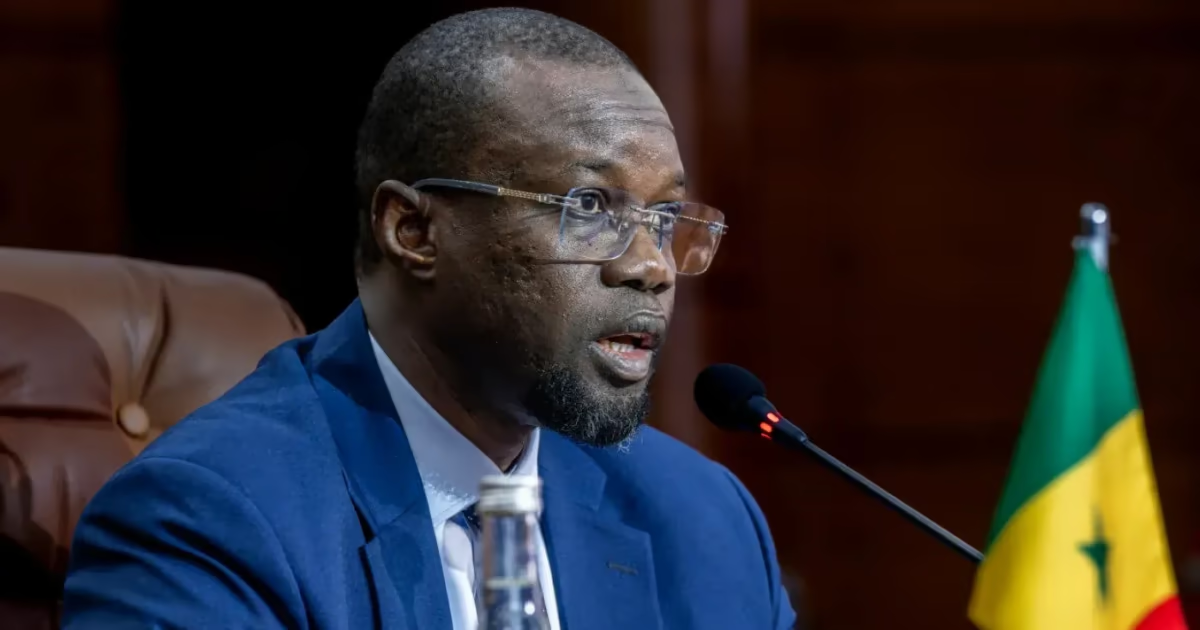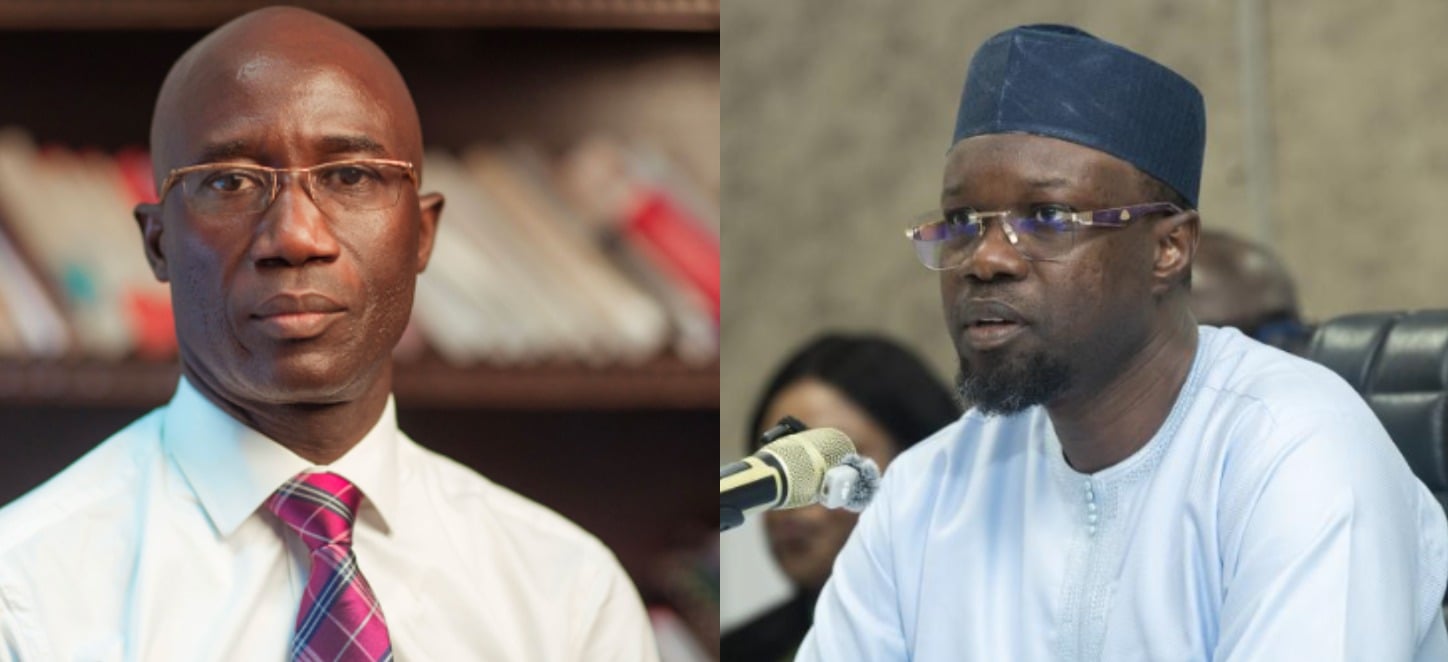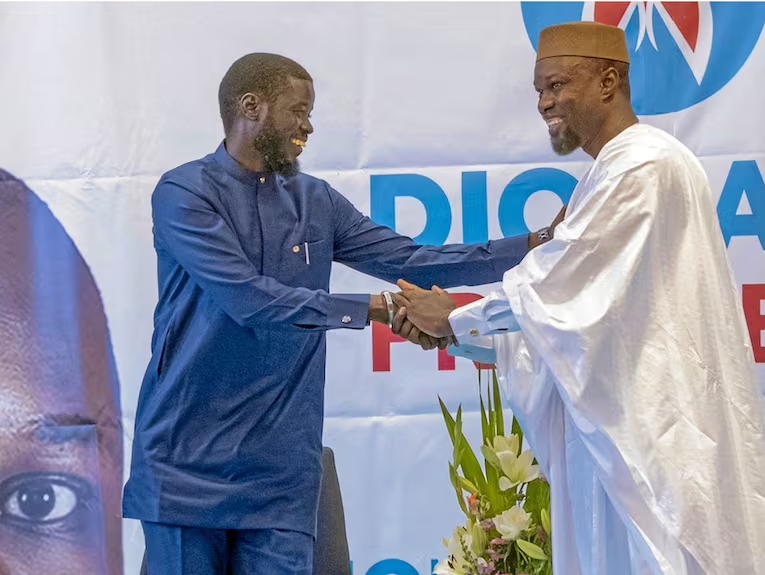
The political landscape of Senegal has been thrown into turmoil following President Bassirou Diomaye Faye’s abrupt dismissal of Prime Minister Ousmane Sonko on Friday evening. This decisive move has shattered the fragile equilibrium that once united the two leaders, who rose to power together after the February 2024 presidential election, exposing long-simmering divisions that could no longer remain hidden.
In a televised address delivered by Presidential Secretary General Oumar Samba Ba, the Head of State «terminated the mandate of Mr. Ousmane Sonko as Prime Minister, thereby ending the roles of all ministers and junior ministers within the outgoing government». The dismissed officials are now tasked with «handling current affairs» until a new administration is formed.
Roots of a widening rift
The partnership between Faye and Sonko, forged in opposition to former President Macky Sall’s administration, had already begun to fray shortly after their electoral victory. Sonko, once barred from running due to a conviction that stripped him of his civic rights, had endorsed Faye as their joint political platform’s candidate—a move that ultimately secured the presidency for the latter. However, since taking office, tensions between the two have escalated, driven by competing visions for governance and personal ambitions.
Sonko’s enduring influence, particularly among Senegal’s youth who rallied behind his sovereignist and pan-Africanist rhetoric, has posed a persistent challenge for President Faye. The Prime Minister’s popularity remains a cornerstone of the ruling party’s parliamentary dominance, a reality underscored by the landslide victory in the November 2024 legislative elections. Recent public disagreements between the presidency and the prime minister’s office had already fueled speculation about an impending split, which has now materialized.
Within minutes of the announcement, Sonko took to social media to respond with a terse yet loaded message: «Alhamdoulillah. Tonight, I will sleep soundly in Keur Gorgui», referencing his residence in Dakar’s Keur Gorgui district. Soon after, videos circulated online showing dozens of supporters gathering outside his home, chanting his name in defiance.
Parliamentary majority faces uncertain future
The President’s decision has plunged Senegal into uncharted political waters, as Sonko’s faction retains substantial sway within the National Assembly. The potential for this personal rupture to escalate into a full-blown institutional standoff looms large, especially given Sonko’s status as one of the country’s most popular political figures.
The Faye-Sonko alliance had risen to power on a platform of fierce criticism against the political elite, condemnation of historical ties with France, and a pledge to overhaul Senegal’s governance. This message resonated deeply with urban youth, who were mobilized by Sonko’s fiery rhetoric. Now, by sidelining his former mentor, President Faye risks alienating a significant portion of the movement that propelled him to power. In Dakar, the prospect of a rapid reshuffling of power dynamics at the highest levels has already sparked intense political activity, threatening the stability that Senegal has struggled to maintain amid years of recurring crises.