Senegal’s president dismisses Prime Minister Ousmane Sonko amid escalating tensions
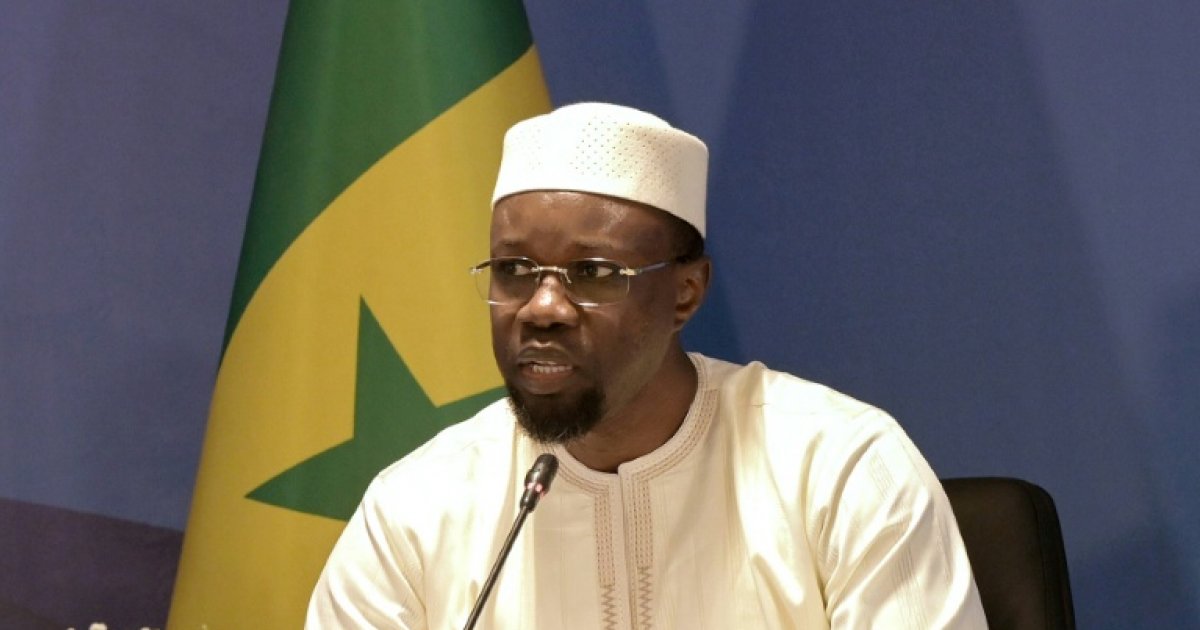
In a dramatic political development, Senegalese President Bassirou Diomaye Faye has removed Prime Minister Ousmane Sonko from office, ending a turbulent period marked by deepening divisions between the head of state and his former ally.
Supporters of Ousmane Sonko gathered outside his home in Dakar following his dismissal
Government dissolved and caretaker administration takes over
In a televised address delivered by the presidential secretary-general, Oumar Samba Ba, President Faye announced the immediate end of Sonko’s tenure as Prime Minister. The decree also terminated the positions of all ministers and junior ministers within the outgoing government. According to the statement, these officials are now tasked with handling only routine administrative matters until a new cabinet is formed. No timeline was provided for the appointment of a successor.
From allies to adversaries: a partnership built on struggle, tested by power
The relationship between Faye and Sonko had been under strain for months, despite their shared rise to power in April 2024. The two had emerged as leading figures in a historic political alliance that captured the imagination of Senegal’s youth and disillusioned electorate. Their campaign slogan, “Diomaye Moy Sonko” — “Diomaye is Sonko” in Wolof — symbolized a unified front against the previous administration of President Macky Sall.
Sonko, a vocal critic of Sall’s rule, had been barred from running in the 2024 presidential election due to a defamation conviction that stripped him of civic rights. He instead endorsed Faye, who went on to win the presidency. After their electoral victory, both men were released from prison under an amnesty law aimed at easing years of political strife.
Yet what began as a powerful political partnership soon turned contentious. Tensions intensified as Sonko’s influence grew within the ruling party and the National Assembly, where his Pastef party held a dominant majority following legislative elections in November 2024. The president publicly rebuked Sonko for what he described as an “excessive personalization” of power within the party.
Legal battles and electoral ambitions fuel the divide
The rift was further complicated by legal and constitutional debates surrounding Sonko’s eligibility for future office. In July 2025, the Supreme Court upheld a prior ruling that barred him from holding public office due to his conviction. However, Sonko was elected as a deputy in the November 2024 legislative elections and later resigned to remain Prime Minister — a move his party argues qualifies him for candidacy in the 2029 presidential election.
In a controversial move, Parliament had recently passed electoral reforms that paved the way for Sonko’s potential 2029 run, a decision widely criticized by the opposition as a partisan maneuver. Meanwhile, local elections are scheduled for 2027, setting the stage for further political maneuvering.
Public reaction and rising political stakes
Sonko’s dismissal triggered an immediate and emotional response. In a Facebook post, he declared, “Alhamdoulillah. Tonight I will sleep peacefully in the Keur Gorgui neighborhood,” referring to his residence in Dakar. Hundreds of supporters rushed to his home to celebrate the news, according to local observers.
Earlier in the week, Sonko had publicly criticized Western “tyranny,” accusing it of attempting to impose LGBTQ+ rights on Senegal, a predominantly Muslim nation. This came shortly after the adoption of a law toughening penalties for same-sex relations, a move that drew both domestic and international attention.
Economic challenges add pressure to the political landscape
Beyond political turmoil, the Senegalese government faces severe economic strains. Inheriting a massive debt burden — equivalent to 132% of GDP, according to the International Monetary Fund — the administration has struggled to stabilize public finances. The previous government was accused of concealing the true state of the economy, leading to the suspension of a $1.8 billion IMF support program in 2024.
As the country braces for upcoming local elections and the 2029 presidential race, the political landscape remains highly fluid. While Faye’s leadership has not yet generated the same level of public enthusiasm as Sonko’s, the “Diomaye Président” movement continues to rally support, signaling potential ambitions for a second term.
With the government now in caretaker mode, all eyes are on Dakar as the nation awaits the next chapter in this high-stakes political drama.