As Senegal grapples with internal political strife, its economic peers in the West African Monetary Union (UEMOA) forge ahead with steady progress. Recent data from the Central Bank of West African States (BCEAO) reveals a concerning trend: the nation now ranks among the least dynamic economies in the block, trailing behind regional leaders like Côte d’Ivoire and Mali.
From hope to stagnation: the economic slowdown
Following the 2024 presidential election, Senegalese citizens anticipated a swift economic rebound after years of instability. The introduction of the Senegal 2050 Agenda and the Economic and Social Recovery Plan (PRES) in August 2025 reinforced hopes of a renewed focus on development. Yet, nearly 30 months later, these expectations have dimmed. Political debates now dominate the national discourse, overshadowing urgent economic priorities. With the 2029 elections looming, partisan maneuvering has sidelined critical policy discussions, leaving the economy in a precarious position.
The fractured relationship between the presidency and former Prime Minister initially hindered public policy implementation. Despite leadership changes, tangible progress remains elusive. As the proverb goes, breaking the thermometer does not cure the fever—Senegal’s political divisions continue to stifle economic momentum. The ruling party’s consolidation efforts, including the formation of the Kiiraye party, and the opposition’s PASTEF’s strategic regrouping for 2029 have further diverted attention from economic recovery.
A widening gap in regional performance
Latest BCEAO figures from June 2026 highlight Senegal’s sluggish growth—just 4.7% in Q1 2026, a stark contrast to its 7.8% growth in 2025. This 3.1-point decline is the steepest drop among UEMOA members, placing Senegal behind Niger (6.1%), Mali (6.1%), and Côte d’Ivoire (6.4%). The contraction in foreign direct investment (FDI), plummeting from $3.319 billion in 2024 to a mere $37 million in 2025, underscores the severity of the situation.
The nation’s struggle to access international financing at favorable rates further exacerbates its challenges. A high-risk perception has deterred investors, signaling a critical need for confidence-building measures. Without intervention, Senegal risks losing its status as an economic leader in UEMOA, jeopardizing its long-term prosperity.
Three levers to revive the economy
1. Restoring investor confidence
Securing a new economic program with the International Monetary Fund (IMF) would be a pivotal step. Such an agreement would not only unlock financial resources but also send a strong signal to global markets about Senegal’s economic credibility. Complementing this with a robust nation branding strategy—showcasing Senegal’s economic strengths and investment opportunities—could rejuvenate international interest.
2. Empowering the private sector
The private sector must become the engine of growth. This requires streamlining administrative procedures, improving the business environment, and fostering public-private partnerships. Key sectors like infrastructure, energy, agriculture, and digital technology should receive priority support to drive broader economic transformation.
3. Optimizing public resources
In a climate of constrained fiscal space, prudent management of public funds is essential. The PRES promised significant reductions in state expenditure, yet progress on merging redundant agencies has been sluggish. Immediate action is needed to align spending with economic priorities and deliver on the promise of a leaner, more efficient government.
Call for a political truce
The path to economic revival demands a temporary halt to political infighting. By refocusing national energy on sustainable development, Senegal can reclaim its role as a regional economic powerhouse. The next three years until the 2029 elections must be leveraged to lay the foundations for long-term prosperity, in line with the vision of building “a sovereign, just, and prosperous nation anchored in strong values.”
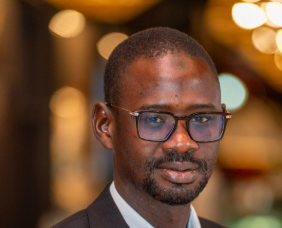
Dr Abdou Diaw
CEO & Founder, Le Marché Economic and Financial Magazine

More Stories
Behind the violence: how the M23’s control of DRC mines fuels a cycle of abuse
Unpacking the surge: why Nigeria’s farmer-herder clashes are driving 600 refugees into Cameroon’s Northwest
Why Paris Saint-Germain’s midfield dominance sank Marseille in Ligue 1