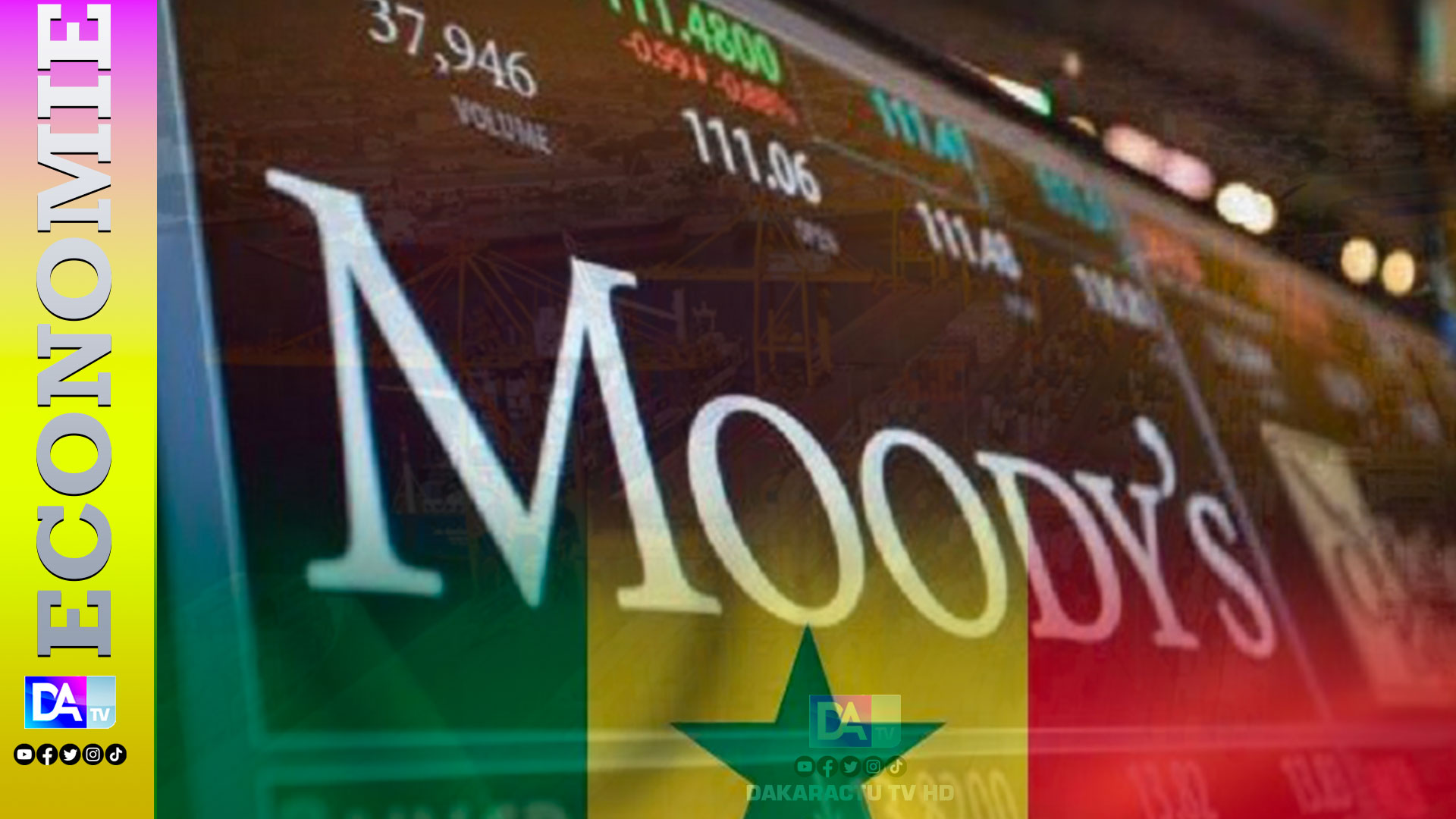
Moody’s Ratings delivered another blow to Senegal’s economic standing this week, lowering the country’s long-term foreign and local currency issuer ratings from Caa1 to Caa2 while maintaining a negative outlook. The downgrade, which also applies to unsecured senior foreign currency notes, confirms short-term ratings at « Not Prime ». This decision arrives as an International Monetary Fund (IMF) delegation remains in Dakar through early September, negotiating the framework of a new lending program—talks that have stalled since the collapse of an earlier disbursement arrangement in late 2025, when the government rejected restructuring demands.
From speculative to crisis territory
The Caa2 rating places Senegal firmly in the realm of « highly speculative » investments, a classification that reflects growing market skepticism. A June 2026 analysis by Oxford Economics underscored this sentiment, revealing that Senegalese sovereign bond spreads had climbed to levels comparable to those of Venezuela and Lebanon—nations with a history of default. The financial strain is not merely symbolic: between September and December 2025, Senegalese Eurobonds plummeted by roughly 20%, while yield spreads on international markets nearly doubled, surging from an annual average of 800 basis points to 1,500 basis points. The 2048 maturity bond traded at just 51 cents per euro—a 49% discount—while the 2028 bond, already in amortization since March 2026, faced discounts exceeding 30%.
Public finances under siege
Moody’s highlights the severe pressure on Senegal’s public finances, with gross financing needs estimated at 25% of GDP. Debt servicing has become a staggering burden: annual principal repayments alone account for 18% of GDP, while interest payments ballooned from 16.1% to 23.7% of state revenues between 2023 and 2026. Total public debt, including state-owned enterprises, now hovers near 108% of GDP—a figure dwarfed by the IMF’s estimate of 132% of GDP by the end of 2024, following the disclosure of hidden liabilities from the previous administration. Even the regional financial safety net is showing cracks: in December 2025, during a UEMOA bond auction, only 35 billion CFA francs of the 95 billion offered were successfully raised, with the weighted average yield spiking by 158 basis points in a single month.
Eurobond redemptions and the IMF stalemate
March 2026 saw Dakar scramble to secure nearly $485 million—including $394 million in principal—to meet a $2.2 billion Eurobond repayment due from a 2018 issuance. With limited access to international markets, authorities turned to local banks, while the IMF suspended a $1.8 billion lending program after disagreements over restructuring terms. The timing could not be worse: 2026 marks a peak in Eurobond maturities for Sub-Saharan Africa, according to the World Bank, making refinancing under the Caa2 rating exponentially more expensive.
Institutional tensions amplify risks
Moody’s also downgraded Senegal’s country ceilings, lowering them from Ba3 to B1 for local currency and from B1 to B2 for foreign currency. The agency explicitly tied the decision to escalating institutional frictions, citing the dismissal of former Prime Minister Ousmane Sonko and his subsequent election as National Assembly President. These developments have intensified the tug-of-war between the executive and legislative branches, increasing the likelihood of delays in critical fiscal reforms.
A lifeline amidst the storm
Despite the grim outlook, Moody’s acknowledges a stabilizing factor: Senegal’s membership in the West African Economic and Monetary Union (UEMOA). The peg of the CFA franc to the euro and the bloc’s foreign exchange reserves—nearly $38 billion as of May 2026—provide some insulation against currency or balance-of-payments crises. Yet, the fiscal strain remains unrelenting, and the country’s third downgrade in just over a year paints a stark picture. After a prior cut from B3 to Caa1 in October 2025, which the Ministry of Finance dismissed as « speculative and biased », and a similar action by S&P earlier this year, Senegal now faces its IMF negotiations with far higher stakes than a year ago.