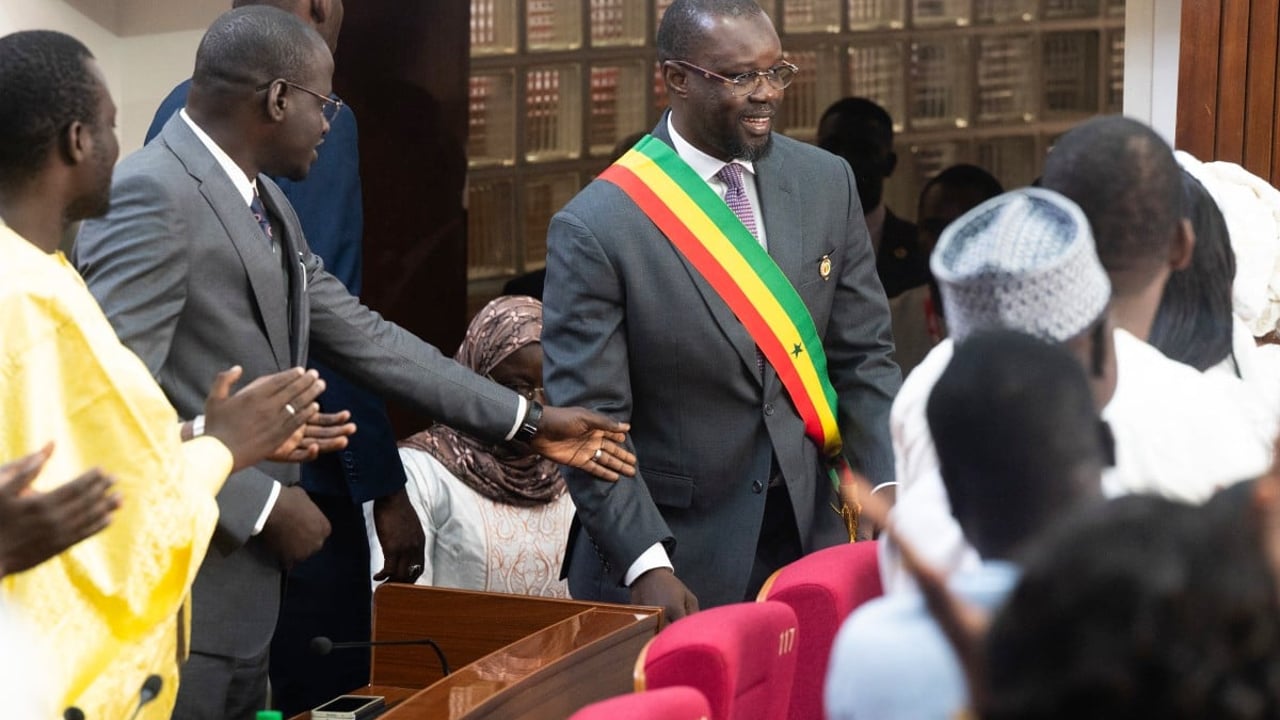
The era of political theatrics and rally slogans has undeniably ended. A period of national unraveling has begun. As an engaged observer, I cannot silently witness the economic, social, and reputational self-destruction to which Prime Minister Ousmane Sonko appears to be condemning our Republic.
What the current administration attempts to label as a “transparency operation” regarding a supposed hidden debt is, in reality, a colossal reputational setback and one of the most significant financial missteps in independent Senegal’s history. Driven by deep-seated political animosity and a perceived need to demonize his predecessors, Ousmane Sonko has, in effect, sacrificed the valuable “Senegal brand” on the altar of international markets. By publicly presenting unconsolidated figures before any legal validation, he did not merely audit the past; he jeopardized the nation’s future.
Listening to him disclose these figures with the nonchalance of a casual commentator, one might almost cynically search for an excuse for his actions. Perhaps he momentarily believed he was merely offering an opinion as a political party leader, not yet wielding the full instruments of power. Did he imagine himself still on a neighborhood rally stage, addressing an adoring crowd, tragically forgetting that he is no longer an opposition figure without responsibility, but the Prime Minister of the Republic of Senegal? This lingering “eternal opponent” mindset, seemingly unable to fully embrace the role of a statesman, led him to commit what many view as an irreparable error. When one holds the reins of state, every word carries a weight measured in billions. His apparent unfamiliarity with financial mechanisms has transformed his pronouncements into a potent weapon of mass destruction against our economy.
The credibility of Senegal’s financial signature, cultivated over decades, has been severely undermined. Through successive democratic transitions, our nation meticulously forged its international credibility, marked by impeccable financial diplomacy and a respected sovereign signature. In a single press conference, seemingly motivated by resentment, Ousmane Sonko trampled upon this sacred legacy.
To declare before global cameras that the Senegalese state had misrepresented its accounts constitutes an act of hostility against the vital interests of the homeland. No responsible leader deliberately damages their own country’s credit. In an effort to harm his former adversaries, he appears to have jeopardized the Senegal of today.
This alarming signal triggered immediate repercussions from international rating agencies. By downgrading Senegal’s profile, Ousmane Sonko has made accessing capital more challenging and diminished the country’s attractiveness for potential investors.
The macroeconomic upheaval is evident, exposing what critics describe as state amateurism in stark figures. Political imprudence carries a heavy cost. Current indicators paint a grim picture for our sovereignty.
Economic growth forecasts have been dramatically revised downwards, plummeting from 6.7% to 2.2%. More than four percentage points of national wealth have seemingly evaporated due to what many consider disastrous governmental communication.
The suspension of the $1.8 billion program with the International Monetary Fund (IMF) has plunged Senegal into an unprecedented crisis of confidence.
To bridge the financial void he is accused of creating, the government is now reportedly resorting to more expensive and riskier borrowing mechanisms. This is the stark reality behind the promises of a new dawn.
The real economy is experiencing severe asphyxiation, with businesses struggling, investments stalling, and mass unemployment becoming a growing concern. We believe in hard work, private initiative, and the ingenuity of our entrepreneurs. Yet, the real economy currently appears to be on its knees.
New business creation has plummeted by over 30%. Fear and uncertainty have paralyzed investment and stifled entrepreneurial spirit.
The freeze on domestic debt payments has severely constrained Small and Medium-sized Enterprises (SMEs), artisans, and construction companies. Lacking vital cash flow, layoffs are escalating. In a context where unemployment is nearing 23%, thousands of Senegalese are losing their livelihoods and dignity.
Even the academic sector is not immune. Universities and training institutes are grappling with the consequences of a budgetary policy that, some argue, sacrifices the future of our youth.
The social hardships are profound, with regions experiencing a decline in well-being, as confirmed by the unequivocal verdict of the Registre National Unique (RNU). Beyond the statistics lies the tangible suffering of families.
Data from the RNU indicates a worrying increase in social vulnerability and poverty. A growing number of households are sliding into precariousness.
The national debt service has now reached 5,500 billion FCFA. This situation severely constrains the state’s operational margins and places a heavy burden on the cost of living for ordinary citizens.
It is imperative that the Senegalese people fully grasp the gravity of the situation. The narrative of a “hidden debt” has become a convenient pretext to mask a perceived lack of concrete results. Faced with an apparent inability to fulfill their promises, current leaders seem to govern by constantly looking to the past.
A great nation cannot be led by resentment, conspiracy theories, and political spectacle. Senegal deserves governance that transcends perpetual improvisation.
With unemployment approaching 23%, a more than 30% drop in business creations, and rising poverty, the Senegalese people must evaluate the consequences of this governance. A commitment to rigor over amateurism, economic patriotism over sabotage, and national interest over partisan calculations is urgently needed.