
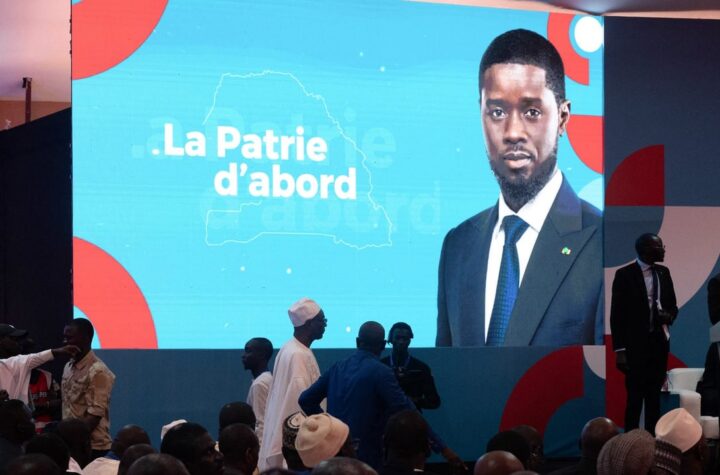
After securing the presidency in March 2024 under the banner of the PASTEF party, Senegalese leader Bassirou Diomaye Faye has taken a decisive step toward political autonomy by unveiling his own political vehicle: KIIRAAY – Les Patriotes Républicains. The announcement, made during a foundational assembly in Dakar on July 25, marks a clear break from the party that propelled him to power, signaling a new chapter in Senegal’s political dynamics. With the slogan “La Patrie d’abord” (The Homeland First), the party positions itself as a guardian of national sovereignty and institutional stability.
Breaking ranks with former ally Ousmane Sonko
The emergence of KIIRAAY follows months of growing public rifts between President Faye and Ousmane Sonko, who remains both Prime Minister and leader of PASTEF. Once seen as inseparable figures in Senegal’s political renewal movement, their paths have diverged sharply, culminating in this organizational split. For President Faye, establishing an independent party removes a layer of political dependency and aligns his party structure with his executive decisions. The choice of name carries deliberate symbolism. In Wolof, *kiiraay* means “protection,” a concept that contrasts with the confrontational rhetoric long associated with PASTEF. While the former party emphasized sovereignty through disruption, KIIRAAY frames its mission around patriotism, republicanism, and institutional strength—a shift that reflects Faye’s consolidation of power from a more governance-oriented perspective.
Patriotism meets institutional governance
The party’s founding manifesto centers on three pillars: national interest defense, strengthening republican institutions, and upholding the rule of law. These priorities were outlined during the assembly and signal a move away from protest politics toward statecraft. The name “Les Patriotes Républicains” encapsulates this dual focus—honoring the sovereignty ethos central to the Faye-Sonko coalition since the 2022 legislative elections, while reassuring administrative, economic, and diplomatic stakeholders of the government’s commitment to institutional norms. This approach is particularly significant for international partners. Since assuming office, President Faye has signaled openness to international investors and lenders while renegotiating key contracts in oil, gas, and mining sectors. By launching a party explicitly built around institutional predictability, KIIRAAY aims to bolster investor confidence and maintain Senegal’s favorable standing with institutions like the International Monetary Fund.
Remaking Senegal’s political map
The arrival of KIIRAAY dramatically alters the balance of power in Senegal’s political arena. PASTEF, now without the symbolic weight of the presidency, retains its grassroots support but loses direct influence over state policy. Traditional opposition groups, including the Senegalese Democratic Party and factions of the Benno Bokk Yaakaar coalition, must recalibrate their strategies in response to a presidential majority now backed by its own party apparatus. A critical question remains: how many PASTEF lawmakers elected in November 2024 will transition to the new party? The stakes are high, with local elections and the 2029 presidential race looming as critical tests for KIIRAAY. Success will depend on the party’s ability to build a robust territorial network, articulate a distinct policy platform, and mobilize beyond its 2024 campaign base. The battle will also play out in control over party resources, administrative networks, and regional economic linkages.
For President Faye, this move shifts the political equation from personal loyalty to institutional consolidation. By creating a party that aligns with his vision, he positions himself not just as a leader but as the architect of a new political force centered on state authority and long-term governance. This transition may well redefine the trajectory of Senegal’s political future.
More Stories
Senegal’s president warns amid political tensions and party launch
Amicaux : Rennes s’impose face au Club Bruges, Monaco battu par le Sporting
Senegal president issues stern warning to former PM Ousmane Sonko