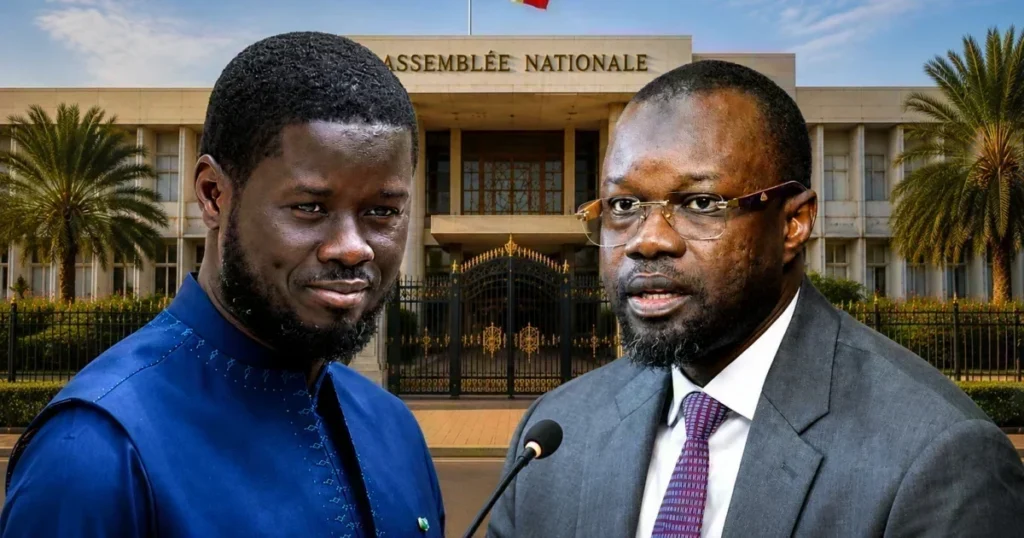
The latest push to bring Senegal’s special funds under parliamentary control has hit a constitutional wall, leaving billions in discretionary spending beyond the reach of lawmakers — and the public — once again.
How the reform stumbled despite urgent parliamentary action
On August 10, 2026, Senegalese lawmakers convened an emergency session to fast-track a bill aimed at ending decades of opacity surrounding special funds. These funds, traditionally managed outside the national budget within the Presidency, Prime Minister’s office (Primature), and even the National Assembly, were set to undergo strict legal scrutiny under a proposed framework that included confidential audits by a joint parliamentary commission and magistrates from the Court of Auditors.
The initiative, spearheaded by opposition leader Ousmane Sonko and MP Guy Marius Sagna, sought to make these expenditures transparent and accountable. But by August 13, the momentum stalled when Justice Minister Moussa Sarr presented a government amendment. The amendment stripped the bill of concrete enforcement and oversight mechanisms, relegating execution and control to the regulatory authority — effectively the executive branch — citing constitutional articles 67 and 76. The government argued for broad principles over rigid controls.
The proposed text was ultimately voted into law on August 19, only to be suspended the next day due to an executive lawsuit. The Council of State’s constitutional review delivered a decisive blow: the reform belonged in an organic law, not an ordinary parliamentary bill. That forced lawmakers to restart the process from scratch.
Budget control delayed, public spending in the dark
Since 2011, the initial budget allocation for special funds has remained fixed at 8,856,296,000 West African CFA francs each year. Yet actual disbursements frequently deviate from these figures, with no independent verification mechanism in place. Until a new organic law is adopted — and the president consulted under internal parliamentary rules — these expenditures will continue to escape meaningful oversight.
With the reform now mired in procedural delays, lawmakers face a critical question: will the new framework extend control over funds managed not only by the Presidency and Primature, but also within the National Assembly itself? Some observers warn that parliamentary resistance may prevent full scrutiny of funds allocated to legislators, maintaining a double standard between executive and legislative discretion.
Defense secrecy preserved, but at what cost?
The draft laws examined so far stop short of dismantling the confidentiality clause around national defense spending. The goal is not to eliminate state secret protection, but to replace blanket opacity with limited, authorized scrutiny. This means only designated, vetted bodies would review the funds — without leaking classified details.
Still, the lack of a finalized law means that today, no third-party entity can truly audit these billions. The risk of misuse, inefficiency, or even corruption persists, undermining both public trust and the integrity of public finances.
Political divide over the funds’ purpose and scope
Deep disagreements have emerged over the scope of special funds. The parliamentary majority favors restricting them strictly to sovereign state functions — defense, security, and core governance. The executive, however, insists they serve critical social and humanitarian needs in times of crisis. These opposing views have delayed agreement on both the purpose and control framework of the funds. Without a compromise, legislative progress remains stalled, and public funds remain beyond effective parliamentary supervision.

More Stories
Gabon : la participation citoyenne devient un enjeu de gouvernance
Gabon : Force ouvre sa rentrée associative à Akanda sur des propositions citoyennes
Dakar 2026 : Diomaye Faye invite la jeunesse sénégalaise à incarner l’Afrique