With international eurobond access curtailed following the disclosure of its 2024 budgetary revisions, Sénégal has strategically repositioned the West African Economic and Monetary Union (UEMOA) public securities market as its primary source of funding. During the initial four months of the fiscal year, the Senegalese Public Treasury successfully mobilized 1311.3 billion FCFA. This substantial amount underscores the critical need for budgetary coverage and highlights Dakar’s compelled reliance on regional investors. This crucial shift in financing strategy unfolds amidst persistent unfavorable pressure from credit rating agencies on the nation’s sovereign standing.
Dakar’s strategic shift to regional UEMOA markets
Sénégal’s exclusion from global financial markets was not a choice but a necessity. Budgetary pressures, intensified by the revelation of public debt figures significantly higher than those reported by the previous administration, have driven up the cost of foreign currency debt and temporarily closed the window for eurobond issuances. Lacking immediate international alternatives, the Ministry of Finance and Budget turned to Umoa-Titres, the regional agency tasked with organizing Treasury bill and bond auctions for the Union’s eight member states.
The impressive sum raised in just four months positions Sénégal among the most active issuers within the UEMOA zone. The mobilization of 1311.3 billion FCFA, equivalent to approximately two billion euros, reflects a sustained issuance pace, averaging close to 330 billion FCFA monthly. This intensity far exceeds Dakar’s historical average in this market segment, indicating the Treasury’s determined effort to compensate, line by line, for the financing it can no longer secure internationally.
Sénégal’s borrowing: a higher price tag
The consequence of this strategic pivot is evident in the interest rates. Sub-regional banks, the primary subscribers to these public securities, are now demanding elevated yields to absorb Senegalese debt instruments. The deteriorating perception of sovereign risk, amplified by successive downgrades from agencies like Moody’s and Standard & Poor’s in recent months, is directly reflected in the premium requested at each auction. In practical terms, Sénégal is now borrowing at a higher cost than its immediate neighbors for comparable maturities.
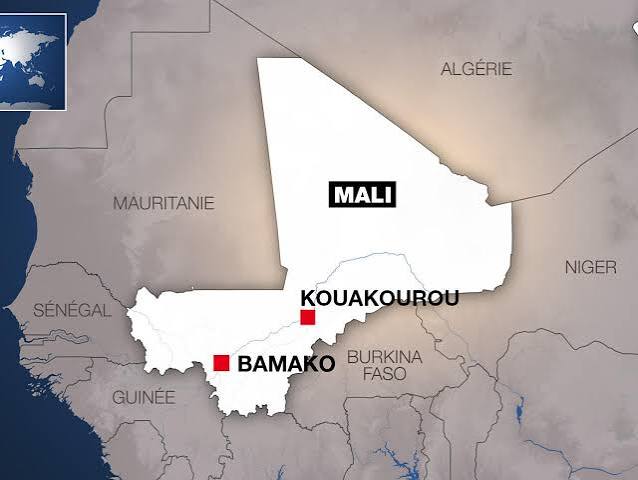
This situation presents a dual challenge. Firstly, it escalates the cost of servicing regional domestic debt within a national budget already under considerable strain. Secondly, it absorbs a growing proportion of UEMOA’s banking liquidity, potentially leading to a crowding-out effect that disadvantages other sovereign issuers and private sector financing. Nations like Côte d’Ivoire, Mali, and Burkina Faso, which also frequently engage Umoa-Titres, are consequently experiencing a reduction in their available absorption capacity.
Rebuilding credibility to access international markets
Dakar’s current objective extends beyond merely covering its 2025 maturities. Senegalese authorities are simultaneously engaging in discussions for a new program with the International Monetary Fund (FMI), a process that had been paused since the debt audit. Reaching an agreement would be instrumental in gradually restoring foreign investor confidence and, eventually, reopening access to international funding windows. For now, the regional market serves as a crucial buffer, yet it cannot indefinitely replace the foreign currency inflows essential for financing major infrastructure initiatives, particularly in the vital hydrocarbon and energy sectors.
The administration of President Bassirou Diomaye Faye and Prime Minister Ousmane Sonko is committed to maintaining this domestic financing path while working to restore sound public accounts and rebuild a credible financial standing. While short-term treasury needs are met, the strain from regional interest rates and the overall interest burden leaves minimal room for error. Re-establishing budgetary credibility remains the fundamental prerequisite for any financial normalization.