Strikes set to reshape Senegal’s social contract
Dakar, October 2026 — Senegal stands at a critical juncture as nationwide strikes threaten to transform longstanding social promises into tangible action. With a 72-hour shutdown announced for October 21–23 by major labor unions, the nation faces a decisive test of its commitment to workers’ rights and institutional credibility.
A wave of unmet demands
At the heart of the protest is a mounting frustration over broken agreements. In education, the G7 coalition of seven unions has taken a firm stand, citing the government’s failure to honor a April 2026 accord. Key grievances include unpaid allowances, delayed administrative approvals, and unresolved issues in the universal training program. Teachers and contract workers alike demand immediate financial redress and transparent implementation of their contractual benefits.
Beyond payroll delays, the G7 highlights systemic failures: stagnant training schedules, unprocessed stipend distributions, and bureaucratic bottlenecks in career advancement programs. With the academic year already postponed due to flooding, educators warn that further inaction could destabilize the entire 2026–2027 school calendar.
Labor’s broader challenge
The Front syndical pour la défense des travailleurs (FSDT) expands the movement beyond education, targeting systemic labor protections across public and private sectors. Its demands focus on fair wages, dignified working conditions, and strict adherence to social pacts. Analysts warn of ripple effects on essential services and economic productivity as the strike gains momentum.
Government responses: negotiation vs. enforcement
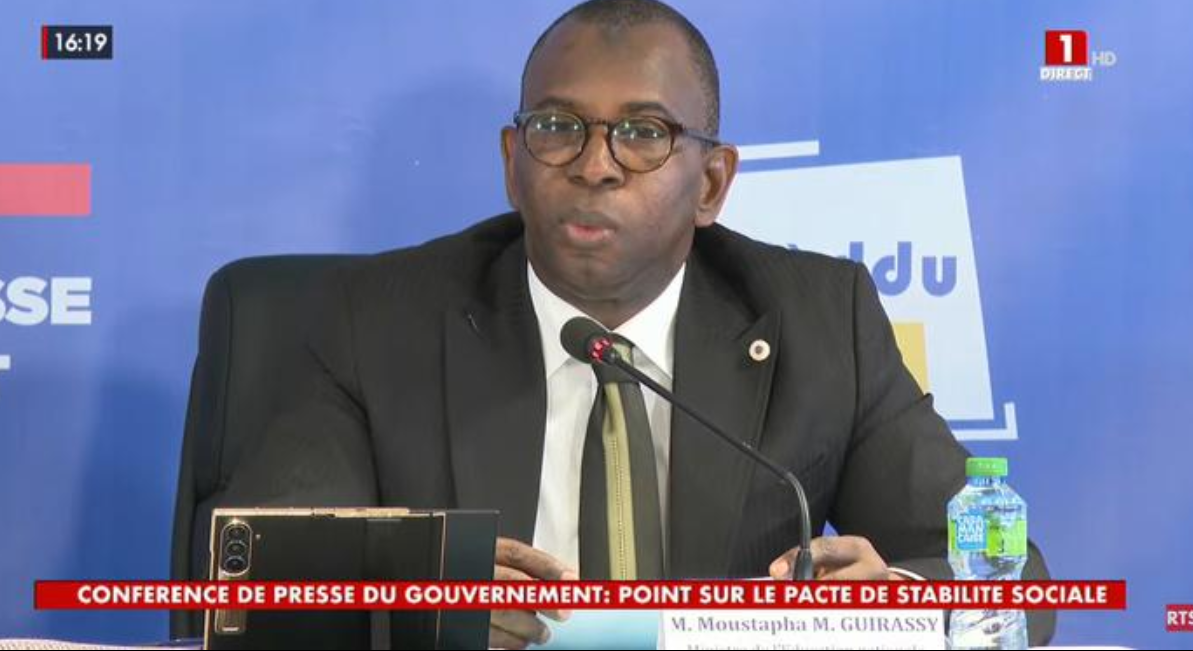
As tensions rise, authorities are balancing dialogue with warnings. At a tripartite social stability meeting on October 15, Prime Minister Ahmadou Al Aminou Lo reaffirmed the state’s readiness to negotiate while urging unions to pause strike actions for three months to allow talks to progress. Yet behind these overtures lies a firm stance: a government statement on October 20 declared that a single strike notice submitted to one ministry does not legally authorize a general shutdown across public, parapublic, and private sectors.
Should unions proceed without legal compliance, authorities threaten pay deductions and disciplinary measures. Simultaneously, the government pledges to safeguard free movement of people and goods, and protect workers who choose to work during the strike.
A political fault line
The confrontation unfolds amid deepening political divisions over the 2027 budget and institutional power struggles within the executive. While labor unions frame their demands in professional terms, the timing exposes broader questions of governance: Can the state reconcile fiscal discipline with its social responsibilities? Will political infighting impede effective crisis resolution before the Youth Olympic Games, now just months away?
Beyond the strike: a test for social cohesion
The 72-hour walkout is more than a labor dispute — it is a litmus test for Senegal’s social fabric. If negotiations yield concrete timelines, the strike could serve as a catalyst for lasting reform. If not, distrust between workers and authorities may harden, prolonging the crisis.
For students, families, and businesses, the immediate impact hinges on the strike’s scale and duration. For the government, this moment demands more than rhetoric: it requires verifiable commitments and swift execution of its promises. In a nation where social dialogue is cornerstone to stability, the outcome will be measured not in words, but in actions taken on the ground.