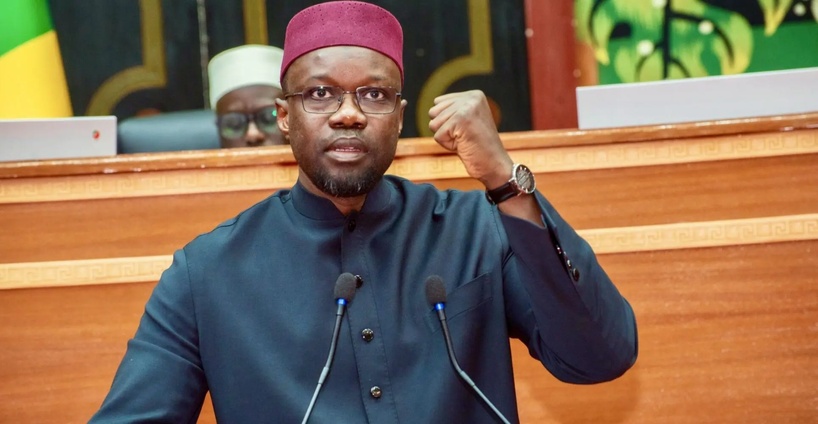
Senegal’s Prime Minister, Ousmane Sonko, took center stage at the National Assembly this morning for the fifth session of ‘Questions d’actualité’, a pivotal forum where government leaders face direct scrutiny from lawmakers. The two-hour session, broadcast nationally, served as a platform to assess policy performance, address pressing economic challenges, and clarify the nation’s evolving political landscape.
Convened amid heightened public debate, the session unfolded against the backdrop of recent amendments to the electoral code—specifically revisions to Articles L.29 and L.30—which have sparked intense controversy. Critics argue the changes were crafted to tailor eligibility rules, potentially paving the way for Sonko’s participation in the 2029 elections despite his insistence that he is already eligible for all Senegalese ballots. Since President Diomaye Faye signed the contested law into effect, opposition factions have intensified calls for transparency, framing the reforms as a strategic maneuver rather than a procedural update.
Sonko’s address also zeroed in on pressing socioeconomic realities gripping households across Senegal. Standing alongside his full cabinet, he fielded questions on inflation-driven hardships, with a sharp focus on stabilizing prices for essential goods and energy. Economic stewardship took precedence, as legislators probed the government’s fiscal strategies, including ongoing negotiations with the International Monetary Fund, progress on the economic recovery blueprint, and preparations for the upcoming national budget.
Sectoral priorities dominated the latter half of the session. Discussions highlighted the expansion of family security grants, the progress of the agricultural campaign, and state-led preparations for Tabaski, a key religious festival. The dynamic between Sonko and President Faye—described by the Prime Minister as a ‘soft cohabitation’—emerged as another focal point, reflecting the delicate balance of power within Senegal’s executive branch.
The session underscored the government’s commitment to accountability while navigating a complex political terrain. For citizens, it offered a rare glimpse into policy decisions shaping their daily lives—and the leadership’s responses to their most urgent concerns.