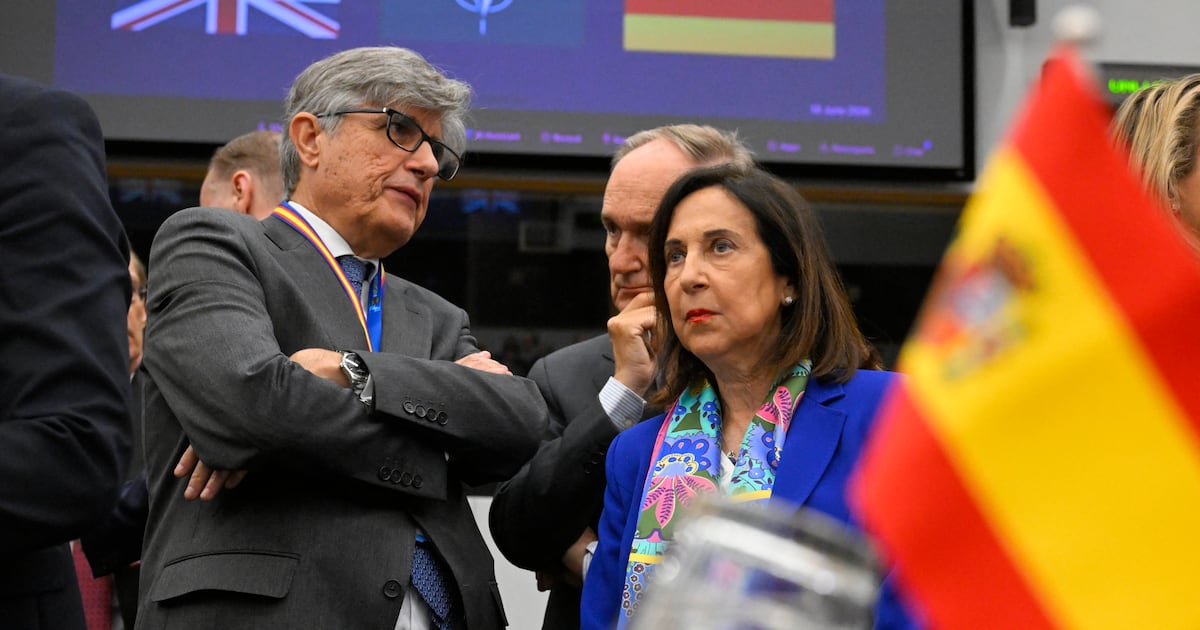
Spain’s Defense Minister, Margarita Robles, has acknowledged before Congress that a Supreme Court ruling on border expulsions at Sebta created a «pull effect», contributing to the massive migrant influx recorded on July 30 and 31.
The minister referenced a Spanish Defense General Staff report outlining a three-phase escalation in migrant crossings. The first phase, described as «concentrated migration», began after the July 8 court decision declared that individuals reaching the city by swimming could not be immediately expelled by sea.
Following this ruling, «several hundred» people started crossing, with numbers gradually rising to thousands. Robles attributed the surge to an «intentional misinterpretation of the ruling», amplified across social media platforms.
Social media-driven migration surge
Robles emphasized that the so-called «mass assault» was not centrally organized but stemmed from «self-organized» migrant movements. These were driven by «opportunity messages» and posts falsely claiming «no barriers» to entering Sebta.
The Defense Ministry’s account highlights social media as the catalyst for the coordinated surge, noting that the rapid spread of information overwhelmed security forces, which could not respond in time to simultaneous attempts by thousands.
Robles warned that a forcible intervention would have been catastrophic: «The death toll would have been unimaginable», she stated during her congressional testimony.
Morocco’s proactive border response
The minister’s remarks align with Morocco’s August 2 statement, which detailed a proactive, multi-layered response. Authorities cited early detection of signals, heightened vigilance, security mobilization, and intensified land and maritime surveillance as key measures. This strategy successfully stabilized the situation, safeguarding lives, public order, and border security while adhering to proportionality principles.
The Moroccan Interior Ministry attributed the attempted crossings to misleading social media narratives, human trafficking networks, and misinterpretations of Spain’s court decisions.
Unified command established to address crisis
Robles’ testimony marked the start of a week-long series of congressional hearings, where eight ministers will account for Spain’s response to the crisis sparked 26 days earlier by approximately 80,000 migrant entries.
On the same day, Prime Minister Pedro Sánchez chaired the inaugural meeting of the National Security Council on Sebta. Key attendees included government vice presidents, security officials, and Juan Jesús Vivas, who joined remotely.
The meeting formalized the creation of a unified command to manage the crisis, led by Territorial Policy Minister Ángel Víctor Torres. The committee will also include Juan Jesús Vivas, government delegates, national intelligence representatives, and officials from relevant ministries.