judicial setback for UNIS as supreme court upholds assembly leadership installation
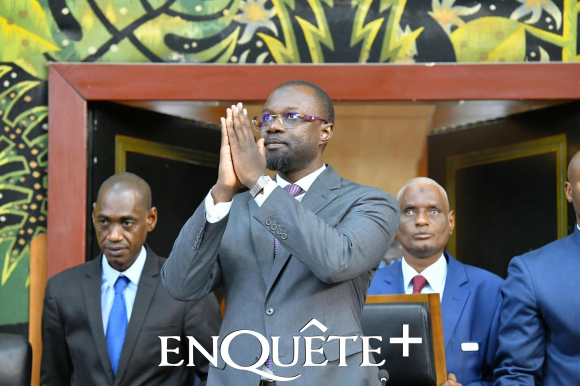
The Union nationale pour l’intégrité et la souveraineté (UNIS) has strongly criticised a ruling by the Supreme Court that deemed inadmissible its emergency petition to suspend the installation of Ousmane Sonko as President of the National Assembly. Despite this setback, the movement has vowed to pursue its case on the merits and is urging the Supreme Court’s joint chambers to resolve the dispute.
In a statement released by its president, Amadou Gueye, UNIS condemned the June 25, 2026 ruling by the Supreme Court’s emergency judge. The organisation described the decision as creating a “negative conflict of jurisdiction” and constituting a “denial of justice.”
The group had filed two separate actions: one to annul the administrative act passed by the Assembly Bureau and another to suspend its implementation. The move followed a June 17, 2026 ruling by the Constitutional Council, which declared itself incompetent, arguing that the contested act was administrative rather than legislative in nature. However, the Supreme Court’s emergency judge ruled that the suspension request was inadmissible, citing the principle of separation of powers and refusing to intervene in the Assembly’s internal affairs.
UNIS disputes this reasoning, asserting that the Constitutional Council’s decision—by classifying the Assembly Bureau’s act as an “administrative integration act”—implicitly recognised the Supreme Court’s jurisdiction over the matter. The movement argues that the refusal to hear the emergency petition leaves the dispute in legal limbo, with no court willing to rule on the issue. It also contends that the separation of powers principle does not preclude judicial review of administrative acts issued by the legislative branch, pointing to recent Constitutional Council decisions that have struck down provisions of constitutional reforms, affirming the judiciary’s oversight role over legality issues.
UNIS warns that such an interpretation could create a “lawless zone” within the Assembly Bureau, allowing administrative acts to evade judicial scrutiny. Despite the emergency petition’s rejection, the movement has confirmed it will proceed with its annulment case on the merits. It has requested that the Supreme Court’s joint chambers convene to rule on jurisdiction and resolve what it describes as a “prejudicial” situation affecting legal certainty. In closing, UNIS calls on magistrates to fully assert their authority in this case, framing it as a critical moment for clarifying the balance of power among Senegal’s executive, legislative, and judicial branches.