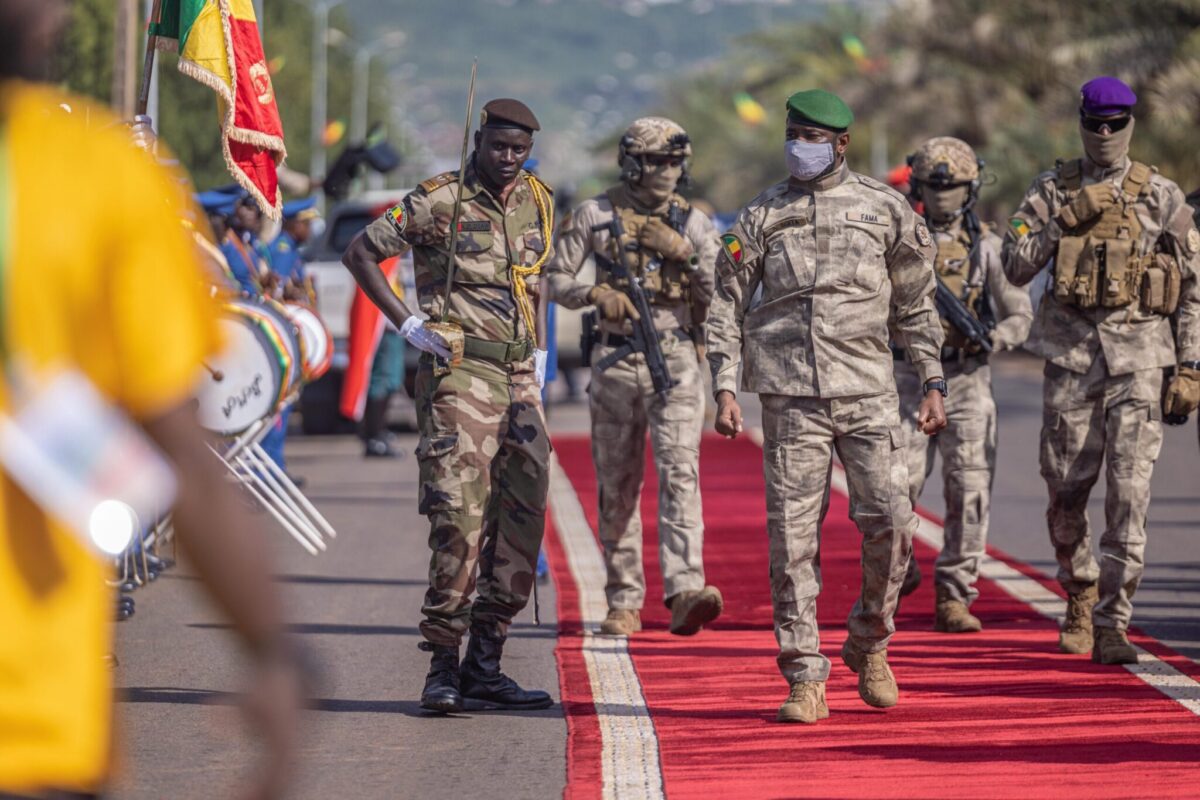
The Malian leadership maintains that it has reclaimed its military independence following the withdrawal of French troops and the severance of ties with Western security frameworks. In official rhetoric, this transition is framed as a landmark triumph, depicting an African nation asserting its autonomy and rejecting external oversight.
However, this narrative obscures a more complex evolution within the Malian political landscape. The pursuit of military sovereignty has not eliminated external security reliance; instead, it has redirected the centers of power and the financial networks tied to the ongoing conflict. Bamako has largely tethered its security future to Africa Corps, a mercenary group tasked with both counter-terrorism efforts and the preservation of the current administration.
Over the last few years, warfare has morphed into a permanent fixture of political life in Mali. The armed forces now sit at the heart of state administration, serving as the foundation of political legitimacy and internal economic stability. Since the 2022 coup, military figures have seized control of all primary decision-making channels. Under this leadership, the state of war is no longer treated as a crisis to be resolved, but as the very framework that defines the regime’s operations.
The exit of French forces radically altered the regional balance of power. For many Malians, this break was perceived as a symbolic liberation after years of foreign military presence that many deemed ineffective. The transitional authorities have effectively leveraged this nationalist fervor to solidify their standing.
Yet, declaring sovereignty does not change the harsh realities on the ground in the Sahel. Armed factions remain highly active, violence continues to plague various regions, and the state’s logistical capabilities remain stretched. Currently, Bamako faces a significant threat from jihadist groups. The fundamental issue is no longer just about foreign presence, but whether the Malian state can actually achieve long-term territorial stability.
In this shifting landscape, new security partners have emerged. Russia has positioned itself as a pivotal player in the Sahel’s military restructuring, a move that generates both hope and intense debate.
While international discourse often simplifies these events into a geopolitical rivalry between Paris and Moscow, the reality in Mali is more nuanced. The current leadership prioritizes partners that can guarantee political survival without the diplomatic strings typically attached by Western powers.
This shift has led to a significant consequence: the increasing militarization of Mali’s political economy. Security expenditures are rising, military institutions are gaining unprecedented institutional clout, and the state of conflict is used as a constant tool for national mobilization.
As long as security threats remain high, the government can justify the centralization of power, the restriction of political diversity, and the delay of democratic transitions. War has transitioned from a backdrop into a primary governance resource.
The Alliance of Sahel States (AES) further cements this trend. Mali, Burkina Faso, and Niger are collaborating to build a political block centered on security sovereignty, opposition to former colonial influences, and the dominance of military structures.
However, this coalition faces its own set of vulnerabilities, including weakened economies, significant social unrest, and a volatile regional environment. These Sahelian administrations are striving for strategic independence while remaining financially and militarily exposed.
The Malian situation highlights a broader paradox in the contemporary Sahel. While breaking away from Western influence offers a genuine sense of political sovereignty, that sovereignty remains fragile as long as the state’s administrative and security systems are built around military emergencies.
In this environment, the war itself becomes the state’s permanent infrastructure.
Within such a system, true peace can be viewed as a political liability. Real stability would force the government to confront long-ignored issues such as economic equity, systemic corruption, local governance, the role of civilians in leadership, and the restoration of pluralism.
The crisis in Mali is therefore not just a contest between global powers; it raises a more difficult question: how can a state be rebuilt when a war economy has become the primary engine of its power structure?
For Bamako, the challenge ahead is more than just a military one. It is a structural and social hurdle. As long as sovereignty is defined solely through military strength, Mali risks trading one form of external dependence for another: a state permanently geared for war and increasingly reliant on Russian mercenary support.