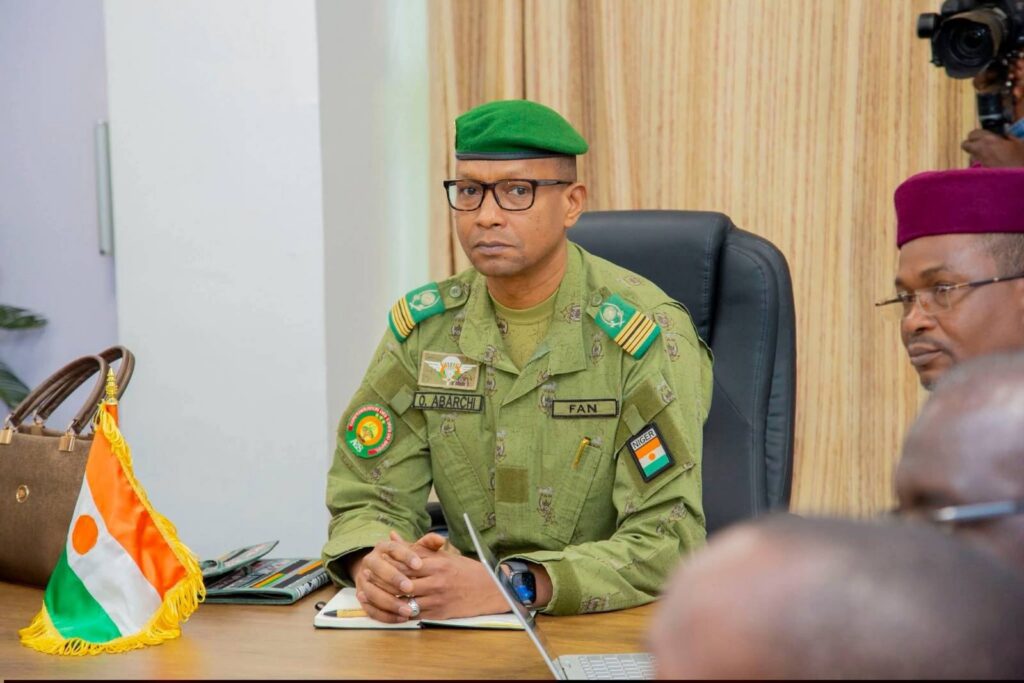
An opaque deal involving Niger’s state-owned uranium reserves has triggered sharp reactions among financial analysts and diplomats. Recent investigations reveal that the SOPAMIN — Niger’s mining heritage authority — sold 300 tonnes of yellowcake, a uranium concentrate, to Nuclearelectrica, Romania’s state nuclear energy company. But the transaction raised eyebrows due to its unconventional financial structure and questionable market valuation.
Cash payment and financial opacity: the heart of the controversy
The sale bypassed standard financial channels, with the entire payment reportedly made in cash. In the mining sector, such bulk settlements in untraceable currency are rare and raise serious concerns about financial transparency. Normally, uranium sales are processed through international banking systems, ensuring traceability, tax compliance, and public revenue recording. By opting for cash, the transaction effectively sidestepped Niger’s Treasury and national oversight mechanisms, leaving analysts to question the real beneficiaries of these funds.
A sale far below market value
Beyond payment methods, the valuation of the uranium stock appears unusually low. Global uranium prices have surged due to renewed civil nuclear energy projects worldwide. Yet, despite this favorable market context, the yellowcake was reportedly sold at a significant discount. The absence of a transparent bidding process further undermines the deal’s legitimacy, preventing Niger from maximizing revenue and potentially limiting its economic benefits.
Without formal channels, the funds may never enter the national budget, bypassing mechanisms for public investment, infrastructure development, or social programs. The use of large cash sums also heightens the risk of embezzlement or diversion to unidentified intermediaries.
Geopolitical pressure and Russian influence
The path of these 300 tonnes is intertwined with broader geopolitical tensions. Earlier this year, reports indicated that Niger had considered selling the uranium to Iran through SOPAMIN. However, that initiative was blocked under external diplomatic pressure. A subsequent deal with Russian buyers also collapsed when a Russian-flagged cargo ship, the Matros Shevchenko, arrived at the port of Lomé to load the shipment but departed empty due to logistical delays.
Despite failing to complete the purchase, Russian negotiators retained leverage. To finalize the sale to Romania’s Nuclearelectrica, Niger reportedly had to secure Russian approval — which came at a cost. Moscow allegedly demanded a direct cut of the sale proceeds, further reducing the net revenue returned to Niger’s public treasury.
Regulatory scrutiny in the European Union
Nuclearelectrica’s acquisition now faces intense scrutiny under European regulatory frameworks. As a European Union member, Romania must comply with strict nuclear supply chain controls enforced by two key agencies: the Nuclear Energy Agency and Euratom Supply Agency. These bodies enforce transparency, prevent money laundering, and monitor fissile material flows to ensure market integrity.
It remains unclear whether a cash-based, off-record transaction can meet these standards. If the deal violates EU financial transparency or nuclear safeguard rules, the Romanian company could face severe regulatory penalties.
Sovereignty at stake: who benefits from Niger’s uranium?
While the legal ownership of the 300 tonnes by SOPAMIN is undisputed, the operational and financial handling of this national asset has drawn criticism. The government’s narrative emphasizes economic sovereignty and natural resource control, yet this transaction contradicts that principle by sidestepping domestic and international oversight.
For citizens and investors, the lack of transparency raises urgent questions: Where did the money go? Was it reinvested in public services, infrastructure, or social development? Or did it vanish into unregulated channels? Without official documentation or independent verification, the deal’s true impact on Niger’s economy remains shrouded in doubt.


More Stories
Mali’s Wagner successor Africa Corps drains $850M from fragile budget amid shifting power dynamics
Behind the Molodo ambush: how Mali’s junta’s Russian gamble unraveled
Russia’s 2026 parliamentary vote: a landslide masked by a locked political arena