The Withdrawal of Chad, Mali, Burkina Faso, and Niger from the ICC
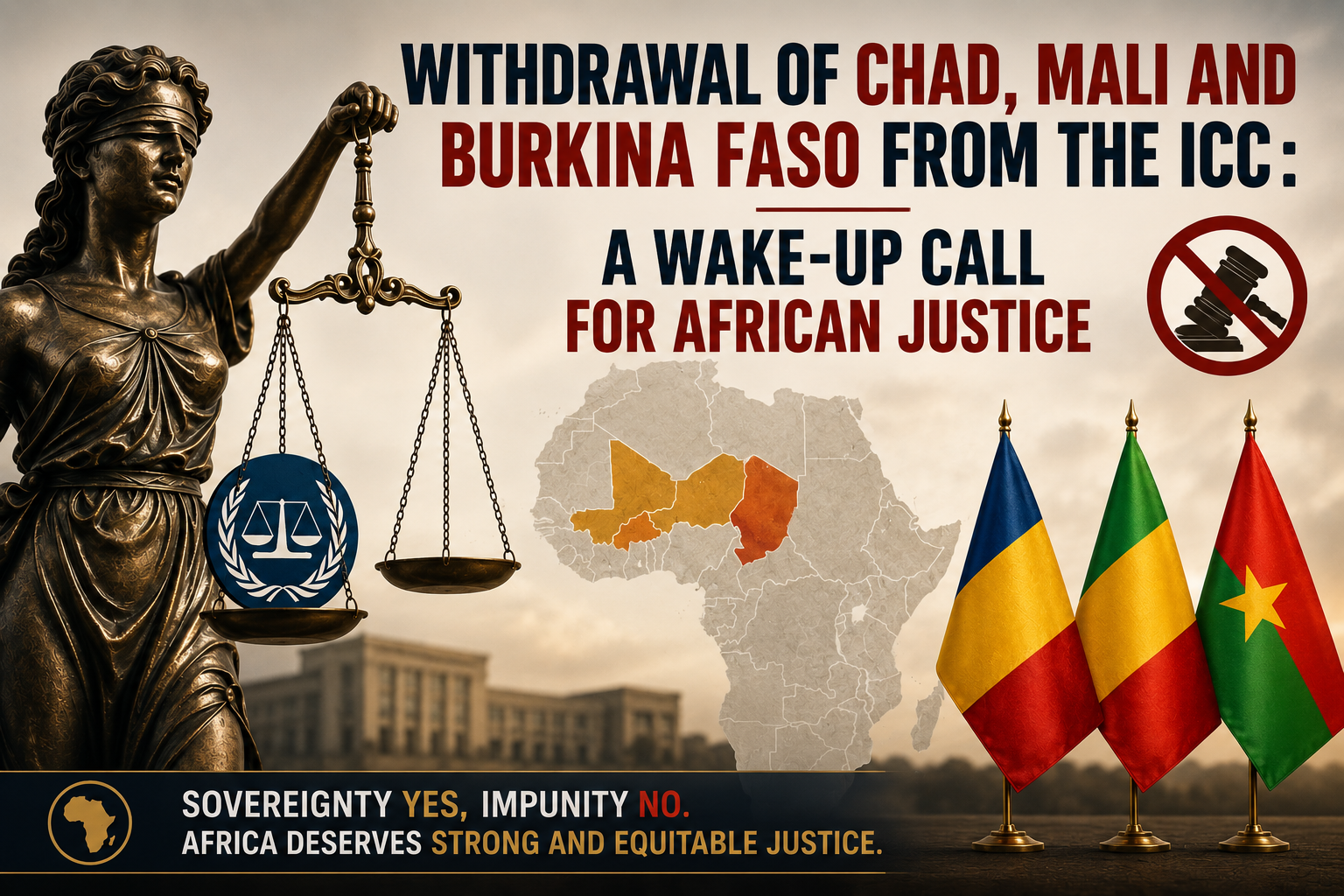
The announcement by Chad of its intention to withdraw from the Rome Statute of the International Criminal Court (ICC) follows similar decisions made by Mali, Burkina Faso, and Niger. This collective move reflects a broader trend in the Sahel region, where governments are reassessing their relationship with international judicial institutions. Chad’s formal notification on 27 July 2026 marks a critical juncture, as the withdrawal process will take effect one year later, during which time the country remains bound by its obligations under the Statute.
Sovereignty and Criticism: The Core of the Dispute
The governments advancing these withdrawals cite sovereignty as their primary justification. They argue that the ICC’s selective application of justice, particularly its focus on African cases while major global powers remain outside its jurisdiction, undermines its credibility. While acknowledging these concerns, it is essential to recognize that the ICC’s imperfections do not invalidate its role as a mechanism for addressing crimes against humanity, war crimes, and other grave violations of international law.
The Growing Crisis of Confidence in International Justice
The withdrawal of these Sahelian nations is not merely a legal dispute but a symptom of a deeper crisis of trust between African governments and international judicial bodies. The decision raises a pressing question: Can states credibly advocate for alternative systems without first strengthening their own judicial frameworks? The absence of robust national and regional mechanisms risks leaving victims without recourse, particularly in conflict zones where abuses by armed groups and state actors persist.
Human rights organizations have documented widespread allegations of atrocities, including violence against civilians, forced displacements, and extrajudicial killings. The withdrawal of these nations from the ICC could further impede victims’ access to justice, as national systems in the region often lack the independence, resources, and political will to address such crimes effectively.
The Peril of a Judicial Vacuum
Critics warn that abandoning the ICC without establishing credible alternatives could create a dangerous void. The Rome Statute’s withdrawal process does not erase past obligations; for example, Chad remains accountable for crimes committed during its period as a State Party. However, the long-term implications of leaving the ICC are concerning, particularly if national courts fail to uphold justice impartially.
A truly sovereign judicial system must prioritize independence, transparency, and accountability. Without these safeguards, the principle of sovereignty risks being weaponized to shield perpetrators from prosecution rather than empowering victims.
The Promise of African-Led Justice
The call for a more African-centric justice system is not without merit. The continent has made progress, as evidenced by the successful prosecution of former Chadian President Hissène Habré by the Extraordinary African Chambers. However, translating this progress into sustainable, institutionalized justice requires more than political rhetoric.
An effective African judicial framework must be capable of investigating crimes committed by all parties, including state actors. It must ensure magisterial independence, witness protection, and victim reparations. The challenge lies in building systems that are resilient to political interference and equipped to handle the scale of atrocities documented in the Sahel.
The Political Dimensions of Judicial Sovereignty
The timing of these withdrawals coincides with periods of political centralization and shrinking civic spaces in the Sahel. A justice system that is truly sovereign must operate independently of government influence. Otherwise, the argument for sovereignty risks becoming a tool to evade accountability rather than a means to deliver justice.
For the discourse on judicial sovereignty to gain legitimacy, governments must demonstrate their commitment to upholding the rule of law. This includes empowering judiciaries, ensuring fair trials, and protecting those who seek justice. Failure to do so risks undermining the very sovereignty these nations claim to defend.
Who Will Protect the Victims?
For families displaced by conflict, survivors of violence, and communities ravaged by war, the debate over the ICC’s role is far from abstract. The Court, despite its flaws, provides a critical safety net when national institutions falter. Its withdrawal from the Sahel could leave victims with no pathway to accountability, emboldening perpetrators to act with impunity.
While the ICC’s processes are often slow and politically constrained, they remain a vital component of the international justice architecture. The solution is not to abandon these mechanisms but to reform them in ways that address African concerns while ensuring universal application.
A System at Stake: The Broader Implications of Withdrawal
The cumulative impact of these withdrawals weakens the ICC’s global reach and undermines the principle of universal jurisdiction. If states perceive international institutions as acceptable only when they serve their interests, the very foundation of shared legal norms erodes.
Justice must apply equally to all whether they are leaders, soldiers, or armed group commanders. This universality demands that states submit to independent scrutiny, even when it is politically inconvenient. The Sahel’s decisions to leave the ICC will be judged not by their symbolism but by their tangible outcomes for justice and accountability.
Building a Credible Alternative
The withdrawal from the ICC should not be viewed as a conclusion but as a challenge. To justify their actions, the governments of the Sahel must now deliver on their promise of a more effective, African-led justice system. This entails strengthening national courts, guaranteeing judicial independence, and establishing regional mechanisms capable of prosecuting the gravest crimes.
Without these steps, the shift away from the ICC risks creating a scenario where perpetrators face fewer consequences and victims find no recourse. The true test of sovereignty lies not in rejecting international oversight but in building systems that deliver justice for all.