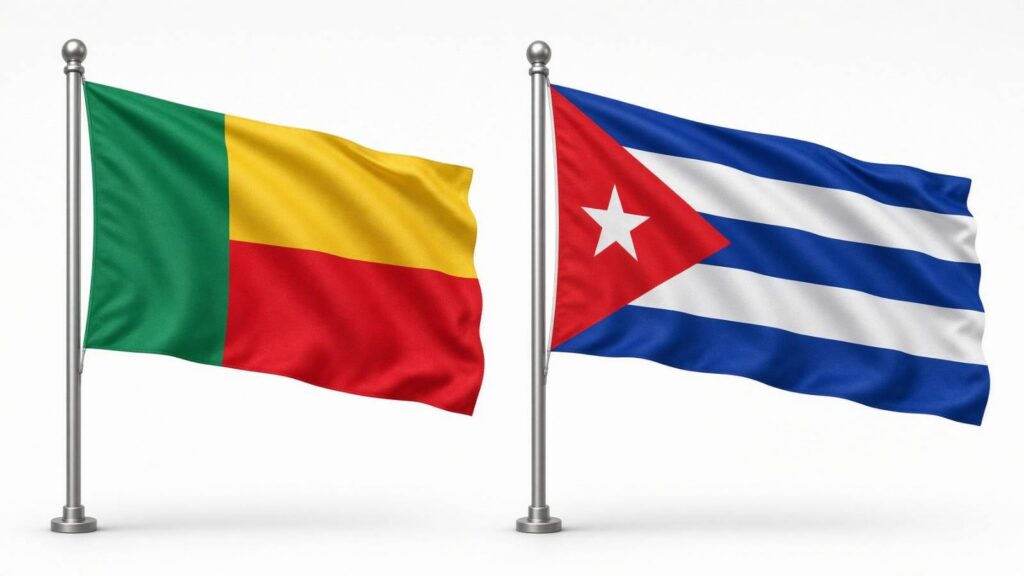
In a quiet but decisive diplomatic exchange in Cotonou, the future of one of Africa’s most resilient cross-continental alliances is taking shape. The long-standing partnership between the Republic of Benin and the Republic of Cuba is being re-energised not through grand declarations, but through the deliberate alignment of economic policy, trade infrastructure and sector-specific collaboration.
Why history alone couldn’t sustain this alliance any longer
Benin and Cuba’s relationship stretches back decades, rooted in shared post-colonial struggles, cultural solidarity and a strong sense of South-South cooperation. The foundational agreement signed in 2002 by the two Chambers of Commerce established a framework for engagement—yet by 2024, global trade conditions had shifted dramatically. Rising fuel costs, supply chain disruptions and the rise of new African and Caribbean trade blocs meant that cooperation based solely on historical goodwill was no longer sufficient.
The unspoken truth? Both nations recognised that to remain relevant, their economic ties needed to evolve from symbolic gestures into tangible, revenue-generating partnerships capable of driving real development in West Africa and the Caribbean.
What really changed during the Cotonou talks—and why it matters
The high-level meeting between Cuban Ambassador Denisse Amaro Salabarría and the leadership of the Benin Chamber of Commerce and Industry (CCI Bénin) unveiled a strategic recalibration rather than a brand-new initiative. The core shift lies in Cuba’s bold economic reforms, designed to attract foreign investment and integrate its state-run enterprises into global value chains.
This pivot creates a rare window for Beninese businesses to collaborate with Cuban partners in high-value sectors where Cuba already excels—particularly in biotechnology, pharmaceuticals, and renewable energy. For Benin, a country positioning itself as the logistics gateway to West Africa, this is more than an opportunity: it’s a strategic realignment that could redefine regional trade dynamics.
Sector-specific gains: where the real value will be created
The dialogue highlighted four key sectors poised to benefit from intensified collaboration:
- Agro-processing and food production: Cuba’s expertise in organic farming and low-waste processing offers Benin a pathway to reduce post-harvest losses while boosting local food security.
- Renewable energy innovation: With Cuba expanding its solar and wind programs, Benin’s growing demand for off-grid energy solutions could find a reliable supply partner.
- Cultural tourism and creative industries: Drawing on Cuba’s UNESCO-recognised heritage, Benin could develop joint cultural export programs and heritage tourism routes linking Porto-Novo with Havana.
- Biopharmaceuticals and medical technology: Cuba’s globally recognised vaccine production and biotech infrastructure aligns with Benin’s push to strengthen local health resilience.
The inclusion of these sectors signals a practical turn—away from broad declarations toward actionable, profit-driven cooperation.
Cotonou’s role: turning Benin into the gateway between Africa and the Caribbean
Benin is not just participating in this partnership—it’s positioning itself as the operational hub. The modernisation of the Port of Cotonou, now one of West Africa’s fastest-growing trade gateways, serves as a critical asset. By leveraging this infrastructure, Cuban enterprises can access not only Benin’s domestic market but also those of Nigeria, Togo, Ghana and beyond.
This is where the unspoken tension lies: while the alliance is framed as a win-win, its success depends on how efficiently goods, services and capital can flow through Benin’s logistics network. Any bottleneck here could limit the gains for both parties.
What’s next: turning intent into impact
Both nations have agreed to establish a joint monitoring committee to track progress on the outlined sectors. This isn’t just symbolic—it reflects an understanding that without structured follow-up, even the most ambitious agreements risk fading into forgotten memoranda.
The next milestone? The Havana International Fair (FIHAV), where Beninese entrepreneurs are expected to forge direct commercial ties with Cuban firms. For Benin, the stakes are high: this could be the moment it transitions from a passive observer of global trade to an active architect of Africa-Caribbean economic integration.
As the dust settles on the Cotonou talks, one thing is clear: the Cuba-Benin partnership is no longer just historical legacy—it’s becoming a test case for how two nations, separated by an ocean, can rewrite the rules of regional commerce in the 21st century.



More Stories
Niger’s junta under siege: how the 29 August coup attempt reshaped power dynamics
Togo under Faure Gnassingbé: how political silencing operates beyond the headlines
Gabon’s US ambassador steps up to strengthen bilateral ties behind closed doors