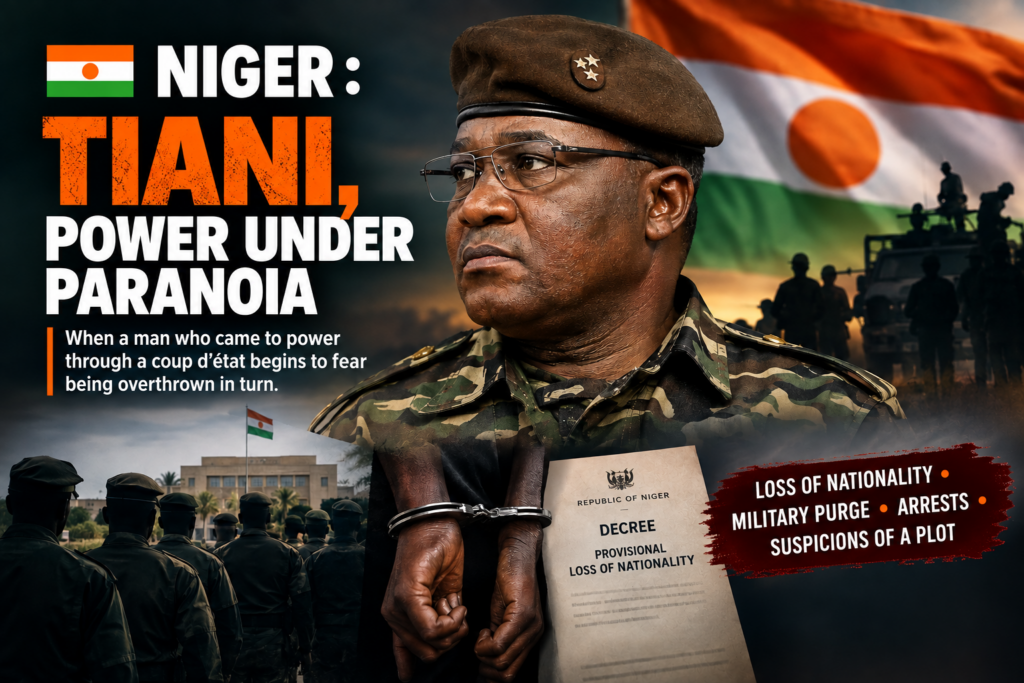
When a leader who seizes power through a coup begins to fear being overthrown by their own ranks, the very foundation of governance is called into question. The 29 August 2026 attempted coup against Niger’s military junta led by General Abdourahamane Tiani revealed not just an external threat, but an internal one, exposing the fragility of a regime built on force.
The moment power turned inward: what the 29 August attack revealed
The barrage of gunfire that rocked Niamey on 29 August 2026 was not the work of rebel factions or foreign mercenaries. It originated from within the Nigerien military itself. Soldiers loyal to the junta clashed with mutineers who sought to storm the presidential palace, seize control of Air Base 101, and take over national television. The chaos lasted for hours, leaving the future of the regime uncertain. Reports indicated hesitation among some officers, with reports of conflicting orders and a slow, uncertain response. For a leader who rose to power through a coup, the message was clear: the very system that once enabled his rise now threatened to unravel from within.
According to insider accounts, the junta’s survival may have depended on the rapid intervention of hundreds of Russian military personnel belonging to the Africa Corps to retake the air base. Since then, over 200 soldiers, many from elite units, have been detained. The purge has extended beyond the barracks. On 11 September, General Moussa Salaou Barmou, the chief of staff, was removed from his post. Days later, four cabinet ministers were replaced. Official statements cite reorganization and strengthening command structures, but the timing tells a different story: after being threatened, the regime is consolidating power around those it deems most trustworthy.
Decree of 17 September: nationality stripped as a political weapon
On 17 September, the junta escalated its strategy. General Tiani signed a decree stripping five individuals including former Prime Minister Ouhoumoudou Mahamadou of Nigerien citizenship on a provisional basis. The official reasoning cited collusion with foreign powers, spreading information to undermine public order, attempting to demoralize the military and state institutions, and acts threatening national security.
It is crucial to note: these are accusations outlined in the decree, not the result of a final judicial ruling. Yet politically, the signal is unmistakable. Ouhoumoudou Mahamadou is no ordinary opponent. He served as prime minister under deposed President Mohamed Bazoum the leader Tiani’s junta removed in July 2023. His inclusion in this list underscores a broader trend: the regime is not only purging current threats but targeting remnants of the previous administration, those whose loyalty it cannot guarantee.
This decree is the latest in a series that began in 2024. According to official sources, 25 individuals have now been deprived of their nationality. The question emerges: at what point does national defense become political cleansing? The answer may lie not in justice, but in survival.
The shadow of Bazoum: why the past refuses to fade
Three years after the coup, Mohamed Bazoum remains a symbolic figure in Niger’s political landscape. Though his government has been dismantled and his institutions neutralized, the men who served under him continue to surface in the junta’s security and judicial files. The 17 September decree is a deliberate signal: being associated with the Bazoum era is now grounds for suspicion, if not outright exclusion.
The junta insists the measures are necessary to preserve stability. Yet with each detention, each ministerial reshuffle, and now each stripping of citizenship, a pattern emerges. The regime is not just defending itself from external enemies it is redefining loyalty itself. Serving under Bazoum is no longer a neutral act. It has become a political liability. Dissent, regardless of intent, is increasingly treated as conspiracy. And in such an environment, the line between protecting the state and protecting the regime blurs dangerously.
Inside the junta’s paranoia: why trust is the scarcest resource
The coup attempt of 29 August exposed a painful truth: no power, even one born from a coup, is invulnerable to internal betrayal. For General Tiani, who rose by overthrowing Bazoum, the lesson is bitter. The same tactics used to seize power can be used to unseat him. And once that realization takes root, fear becomes policy.
Since the failed putsch, the regime has moved aggressively to control every potential vulnerability. Military officers have been replaced. Ministers reshuffled. Soldiers arrested. Former officials of the Bazoum government targeted. Now, even citizenship is at risk. Each measure, justified on its own, collectively paints a picture of a regime that no longer trusts anyone neither its soldiers, its technocrats, nor its citizens.
The question is no longer whether Tiani faces opposition. It is whether he can govern without seeing conspiracy in every shadow. In a system where loyalty is constantly questioned, governance becomes reactive, not proactive. Every decision is driven not by vision, but by fear. Every purge is framed as security, but feels like control. The result? A government that increasingly resembles the threat it claims to fear: unstable, isolated, and ultimately self-defeating.
The paradox of power born from force
Niger’s current crisis is not just political. It is existential. The junta came to power through force. Now, it is governed by the fear of that force being turned against it. Each purge, each decree, each arrest reinforces a cycle: crisis leads to purge, purge leads to suspicion, suspicion leads to new purges. The 17 September decree is not an isolated act. It is the latest step in a broader strategy to eliminate uncertainty by redefining who belongs to the nation.
Yet the more the regime seeks to eliminate threats, the more it risks creating them. When a state begins to treat its own citizens as potential enemies, it does not strengthen the nation it hollows it out. When power is built on exclusion rather than inclusion, the foundations are weak, not strong.
And when that power is held by a leader who once used a coup to take office, the irony is inescapable: the general who broke the rules now fears that others might break them against him. The question is no longer whether he will survive. It is at what cost.
Because in the end, a regime that rules through fear may win battles but it cannot win trust. And without trust, even the most fortified palace is built on sand.
By Yacouba Boukari — Analyst
More Stories
Behind the scenes: how Benin and Spain leveraged art to redefine their global alliance
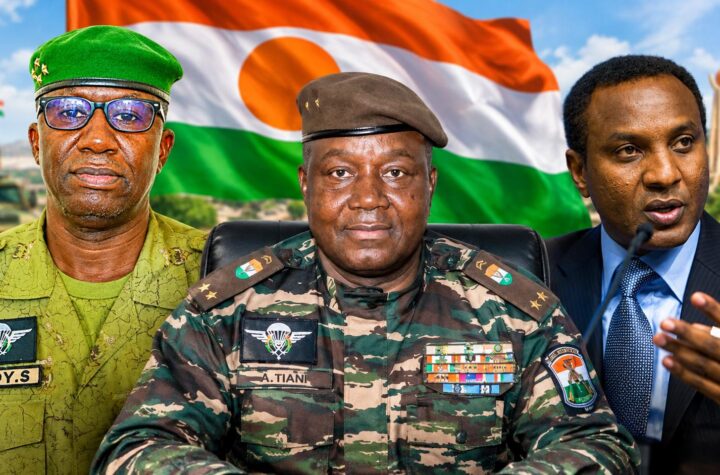
Niger’s 1.8 billion FCFA monthly fund: the silent power play reshaping the junta’s rule
Behind Mali’s media reforms: how a decade of infighting set the stage for forced change