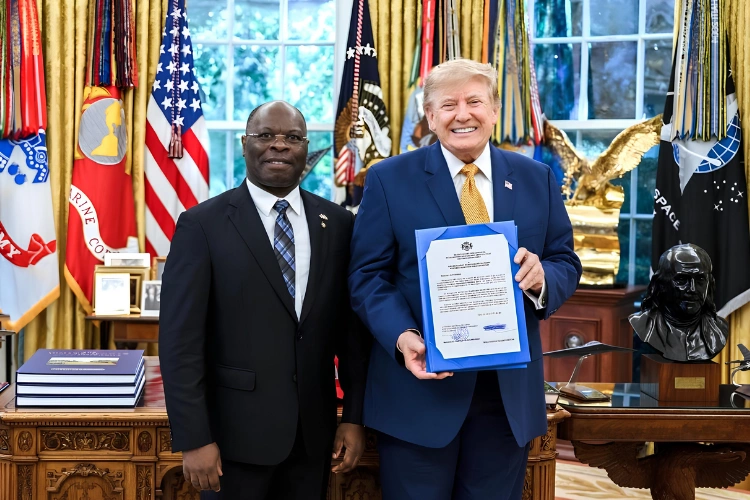
Behind the curtains: how Gabon’s new US envoy is reshaping bilateral dynamics
The appointment of Gabon’s newest ambassador to the United States, Baudelaire Ndong Ella, marks a pivotal moment in Libreville-Washington relations. The seasoned diplomat presented his credentials to President Donald Trump in a private ceremony at the White House, signaling a deliberate shift toward deeper economic and strategic cooperation between the two nations.
But what lies beneath this formal gesture? The move isn’t just about protocol—it reflects Gabon’s long-term ambition to reposition itself as a key player in U.S. foreign policy across Central Africa. With Washington increasingly prioritizing investments in critical minerals and renewable energy, Libreville is seizing the moment to align its economic potential with American strategic interests.
From diplomacy to dollars: Gabon’s economic roadmap in Washington
Ndong Ella’s mandate is laser-focused on unlocking U.S. investment across Gabon’s most lucrative sectors. His agenda includes:
- Energy and mining: Positioning Gabon’s vast oil, gas, and manganese reserves as essential to America’s supply chain security.
- Infrastructure and transport: Facilitating partnerships for road, port, and rail projects to boost regional connectivity.
- Technology and innovation: Leveraging Gabon’s digital transformation to attract Silicon Valley startups and AI firms.
- Tourism and agriculture: Showcasing Gabon’s eco-tourism potential and high-value agricultural exports to American consumers.
The ambassador’s role isn’t merely promotional—it’s transactional. He’ll work to dismantle barriers for U.S. businesses eager to operate in Gabon, from navigating regulatory hurdles to securing land rights and tax incentives. A critical task will be negotiating Gabon’s re-entry into the African Growth and Opportunity Act (AGOA), a trade program that could open doors for Gabonese textiles, processed foods, and other goods to enter the U.S. market duty-free.
Security first: Gabon’s quiet counter to Gulf of Guinea threats
While economic ties dominate the headlines, Ndong Ella’s brief extends to one of Africa’s most volatile maritime zones. The Gulf of Guinea, a hotspot for piracy and transnational crime, sits at the heart of Gabon’s security agenda with the U.S. Gabon isn’t just a passive partner here—Libreville is positioning itself as a proactive ally in combating maritime insecurity, from joint naval patrols to intelligence-sharing initiatives.
This collaboration isn’t just altruistic. For Gabon, stronger ties with U.S. security agencies could mean:
- Enhanced training for Gabonese coast guard and customs officials.
- Access to American surveillance technology to monitor illegal fishing and smuggling.
- Political leverage in regional bodies like the Gulf of Guinea Commission.
The unsung architect of Libreville’s U.S. pivot
The timing of Ndong Ella’s appointment isn’t arbitrary. It follows a series of high-profile diplomatic overtures between the two countries, including:
- President Brice Clotaire Oligui Nguema’s 2025 visit to Washington, where he secured commitments on economic partnerships and critical minerals.
- A 2026 return visit by a U.S. delegation, led by Christian Ehrhardt, to finalize Gabon’s AGOA reintegration and expand security cooperation.
These exchanges reveal a calculated strategy: Gabon isn’t waiting for Washington to come to Libreville. Instead, it’s actively courting American investment and influence, betting that closer ties will yield tangible benefits—from job creation to geopolitical clout. Ndong Ella’s role is to translate these ambitions into action, ensuring that Gabon doesn’t just remain on Washington’s radar but becomes indispensable.
Sovereignty or alignment? How Gabon is walking the tightrope
Despite the push for closer ties, Gabon isn’t abandoning its principles. In his remarks, Ndong Ella emphasized the importance of respecting sovereignty and international law—a nod to Libreville’s insistence on equal partnerships. This stance is crucial in an era where African nations are increasingly wary of neocolonial economic practices. Gabon’s approach blends pragmatism with caution: attract U.S. capital without compromising its autonomy.
The ambassador’s challenge? Striking the right balance between cooperation and control. Too much alignment could risk Gabon’s reputation as a neutral actor in Africa; too little could leave it on the sidelines of a U.S.-dominated regional order. Ndong Ella’s behind-the-scenes negotiations will be the real test of Gabon’s diplomatic finesse.
The road ahead: What changes after Ndong Ella’s Washington posting?
For American businesses, Gabon is suddenly more than just a dot on the map—it’s an opportunity. For Gabonese policymakers, Ndong Ella’s mission could determine whether the country becomes a middle-income economy by 2030 or stagnates in the shadow of its neighbors. For the U.S., Gabon offers a gateway to Central Africa’s untapped resources and a strategic foothold in the Gulf of Guinea.
The coming months will reveal whether Ndong Ella’s quiet diplomacy can translate into measurable gains. Will U.S. investors flock to Gabon’s mines? Can Libreville rejoin AGOA without compromising its industrialization goals? And, most critically, can Gabon navigate the fine line between partnership and dependency? One thing is certain: the wheels of change are in motion, and Baudelaire Ndong Ella is at the helm.
More Stories
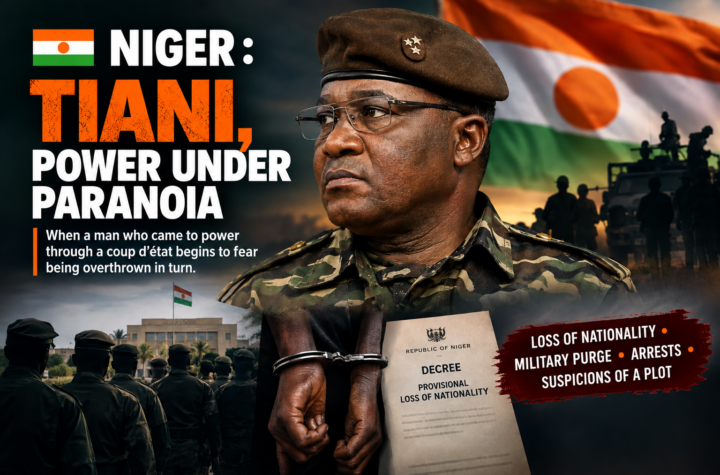
Niger’s junta under siege: how the 29 August coup attempt reshaped power dynamics
Behind the Cuba-Benin economic revival: how hidden trade shifts could reshape West Africa
Togo under Faure Gnassingbé: how political silencing operates beyond the headlines