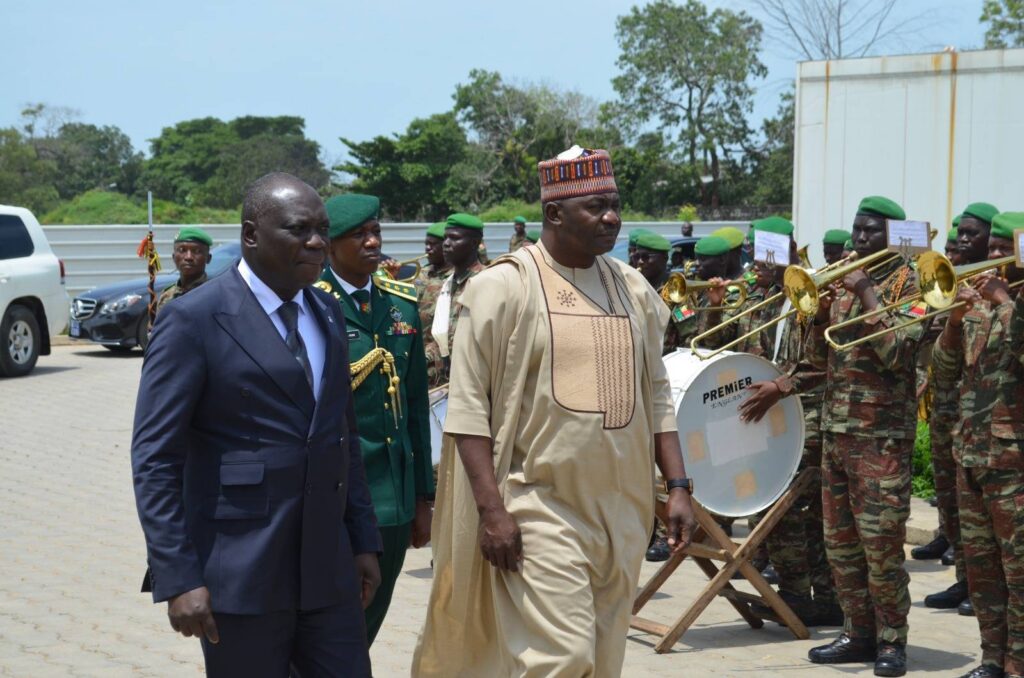
In a decisive move to counter the escalating presence of violent armed groups across West Africa, Bénin and Nigeria are rapidly consolidating their security efforts. On Tuesday, August 4, 2026, a high-level Nigerian military delegation, led by the Nigerian Minister of Defense, General Christopher Gwabin Musa, arrived in Cotonou for crucial discussions with his Béninois counterpart, Gildas Agonkan. This pivotal meeting signals a strategic shift towards a more robust and practical sub-regional security partnership.
A strategic visit reflecting urgency and unity
The working visit by the Nigerian delegation to Bénin’s economic capital unfolded in an atmosphere of shared resolve. Beyond mere diplomatic protocol, General Christopher Gwabin Musa’s presence, as a key figure in Abuja’s security apparatus, underscored the severe regional security landscape and the urgent need for a unified response. Before commencing official deliberations at the Ministry of Defense headquarters, the Nigerian officials made a significant stop at the Togbin military barracks. There, they engaged with Nigerian troops specifically deployed to Cotonou to participate in Bénin’s 66th independence anniversary celebrations. This presence on Béninois soil powerfully symbolizes the intricate historical, geographical, and cultural bonds between the two nations. Following this symbolic prelude, the working session at the ministry quickly transitioned to the core agenda: transforming long-standing diplomatic solidarity into a formidable operational shield capable of containing jihadist advances.
The pervasive threat of terrorism: a borderless security challenge
The Sahelian strip and the Gulf of Guinea region are currently navigating an era of unprecedented instability. For several years, non-state armed groups and factions aligned with Al-Qaeda or the Islamic State have been progressively extending their influence southward, directly imperiling the stability of coastal states. Northern Bénin, sharing borders with Burkina Faso and Niger, experiences relentless pressure, while Nigeria continues to confront multiple threats from Boko Haram, ISWAP, and armed banditry on various fronts. Confronted by this multifaceted criminal menace, both ministers concurred unequivocally: isolated national sovereignties are no longer sufficient. As General Christopher Gwabin Musa emphasized at the conclusion of their discussions, the primary objective of this gathering was to pinpoint the most effective mechanisms for bolstering the fight against terrorism. The Nigerian minister highlighted that porous borders remain a principal advantage for terrorist organizations. To deny them any operational leeway, the counter-response must be integrated into a comprehensive regional framework involving all key actors, from Bénin to Nigeria, and including Niger, Burkina Faso, and Mali. Despite the political and diplomatic upheavals impacting the sub-region, the pressing security imperative dictates maintaining seamless communication channels among all armed forces across the Sahel and the Gulf of Guinea. This approach is vital for effective Africa news coverage and stability.
“Melding capabilities”: the imperative of South-South cooperation
Speaking in turn, Bénin’s Minister Delegate to the President of the Republic, responsible for National Defense, Gildas Agonkan, commended an initiative that reflects the political will of both heads of state to forge an unbreakable alliance. He affirmed,
“Our strategies must be mutualized so that together, with other countries in the sub-region, we can overcome this scourge that hinders the development of our nations.”For Bénin, this dynamic aligns with a clear vision to merge talents, capacities, and efforts. In practical terms, this form of South-South military cooperation is built upon the continuous exchange of strategic intelligence to track the financial flows of armed groups, the organization of joint patrols in vulnerable border areas, and enhanced interoperability between forces on the ground. The central idea is to sustain constant cross-border pressure, preventing fighters from finding refuge on either side of the frontier. This synergy powerfully demonstrates that solutions to African crises must primarily originate from within the continent itself, by leveraging the expertise of local armies, a key tenet of pan-African journalism.
The vital role of communities: the army-nation alliance
Beyond the purely tactical and logistical considerations, the Cotonou meeting illuminated a critical factor in the asymmetric fight against terrorism: civic engagement. Terrorism often thrives on feelings of isolation or economic insecurity within rural areas, meaning the response cannot be exclusively military. General Musa therefore issued an urgent appeal to the Béninois and Nigerian populations to exercise heightened daily vigilance. He underscored the necessity for citizens to collaborate closely with the Defense and Security Forces by reporting any suspicious movements. Without the genuine support of the populace and the strengthening of the Army-Nation bond, strategic intelligence struggles to surface effectively. Consequently, raising awareness among local communities emerges as the primary line of defense against the ideological and operational infiltration of armed groups. This aspect is crucial for African politics English discussions.
A strong link for regional stability
The intensified security coordination between Bénin and Nigeria transcends mere bilateral relations. It constitutes a cornerstone for preserving peace throughout West Africa. By securing their shared borders and streamlining their cooperation, Cotonou and Abuja are sending a strong message to criminal networks. Economic development, trade integration, and the well-being of populations remain intrinsically linked to territorial stability. By reaffirming their common commitment in early August 2026, Bénin and Nigeria are demonstrating their readiness to fully assume their role as security bulwarks against the advancement of violent extremism. The roadmap is now clearly defined: it involves translating words into tangible actions on the ground to guarantee a peaceful future for generations to come, a positive development for African economy news and the wider continent press.



More Stories
Russia’s 2026 parliamentary vote: a landslide masked by a locked political arena
Behind the Moscow drone strikes: how Ukraine exposed Russia’s hidden vulnerabilities
Benin’s ARS second term: the strategic playbook behind stricter healthcare oversight