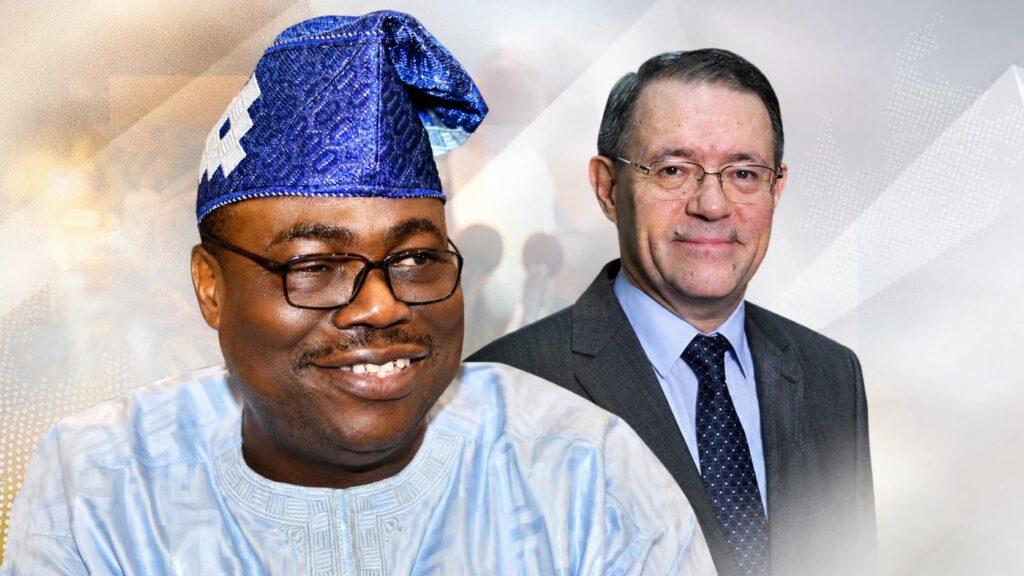
As West Africa navigates shifting geopolitical currents, the Republic of Bénin is forging a balanced diplomatic path. In a clear display of pragmatic foreign policy, the West African nation’s ambassador to Russia recently engaged in high-level talks with officials in Saint-Petersburg to expand bilateral cooperation across critical sectors, including energy, agriculture and healthcare. Far from signaling a departure from its longstanding partners, this initiative reflects a deliberate strategy: diversifying economic alliances while reinforcing strategic ties with Western powers.
Building bridges in Saint-Petersburg
A recent meeting in the Russian cultural capital underscored the depth of this evolving partnership. Evgueni Grigoriev, Chair of the Saint-Petersburg Committee on External Relations, welcomed Bénin’s ambassador to Russia, Akambi André Okounlola Biaou, during a diplomatic exchange marked by mutual respect. Beyond ceremonial gestures, the discussions focused on tangible opportunities, with both sides identifying key areas for collaboration, from renewable energy and agricultural innovation to pharmaceutical development and infrastructure modernization.
The timing of the talks carried symbolic weight. The Russian delegation marked the occasion by acknowledging Bénin’s Independence Day, a gesture that highlighted shared respect and the potential for long-term cooperation. The official communiqué released afterward outlined a roadmap for joint ventures, with priority given to sectors vital to Bénin’s economic transformation.
Local enterprises lead the charge
The Russian side brought together a delegation of business leaders from Saint-Petersburg, including representatives from the city’s Export Support Center and major industrial firms. Among them were Baltiski Bereg, a leader in fisheries and seafood processing with potential to boost Bénin’s burgeoning aquaculture sector, and Radar MMS, a technology company offering infrastructure and information systems tailored to African markets.
Healthcare and food security also featured prominently. Pharmaceutical firm Polysorb and agricultural innovator Lignohumate presented solutions designed to enhance Bénin’s public health systems and agricultural productivity, drawing strong interest from the Béninois delegation.
The ambassador underscored the urgency of converting these proposals into action. Proposing a decentralized approach, he advocated for direct collaboration between Saint-Petersburg and Cotonou, Bénin’s economic hub. By fostering city-to-city partnerships, the initiative aims to streamline decision-making and accelerate the implementation of trade agreements.
2025 Trade mission: a milestone in 65 years of diplomacy
The momentum from these discussions is set to culminate in a high-profile commercial mission to Saint-Petersburg in 2025, timed to coincide with the 65th anniversary of diplomatic relations between Russia and Bénin. This event is not merely symbolic; it is designed to translate preliminary agreements into binding contracts and joint ventures, solidifying an economic corridor linking Eastern Europe to the Gulf of Guinea.
Strengthening maritime security
While economic cooperation dominated the agenda, defense ties also featured in the broader context of Bénin-Russia relations. Earlier this year, Russian defense officials met with Bénin’s naval command to explore the possibility of joint naval exercises. With the Gulf of Guinea facing persistent maritime security threats, including piracy, Bénin is actively seeking ways to enhance its naval capabilities and protect critical trade routes.
A strategy of multi-alignment
Despite growing engagement with Russia, Bénin remains firmly anchored to its Western partners. The government in Porto-Novo continues to view the European Union, the United States and France as essential allies in its development and security strategy. This approach contrasts sharply with some neighboring Sahelian states, which have distanced themselves from Western partners.
On the economic front, the United States plays a pivotal role through initiatives like the Millennium Challenge Corporation, which has invested hundreds of millions in Bénin’s electricity infrastructure. Meanwhile, the African Growth and Opportunity Act (AGOA) provides preferential access to the U.S. market, bolstering Bénin’s export potential.
The European Union and France remain Bénin’s top donors and commercial partners. Recent years have seen deepened cooperation, including the restitution of cultural artifacts and increased French investment in logistics, infrastructure and services. In the security domain, France and the United States provide critical support to Bénin’s efforts to counter jihadist threats in the north of the country.
Rather than replacing Western partnerships, Bénin’s outreach to Russia is an expansion. By engaging with Moscow, the country asserts its sovereignty while pursuing mutually beneficial economic opportunities. The upcoming 2025 trade mission will serve as a litmus test for the real-world impact of this balanced diplomacy, demonstrating whether Bénin can successfully leverage multiple alliances to fuel its growth.


More Stories
Russia’s 2026 parliamentary vote: a landslide masked by a locked political arena
Behind the Moscow drone strikes: how Ukraine exposed Russia’s hidden vulnerabilities
Benin’s ARS second term: the strategic playbook behind stricter healthcare oversight