
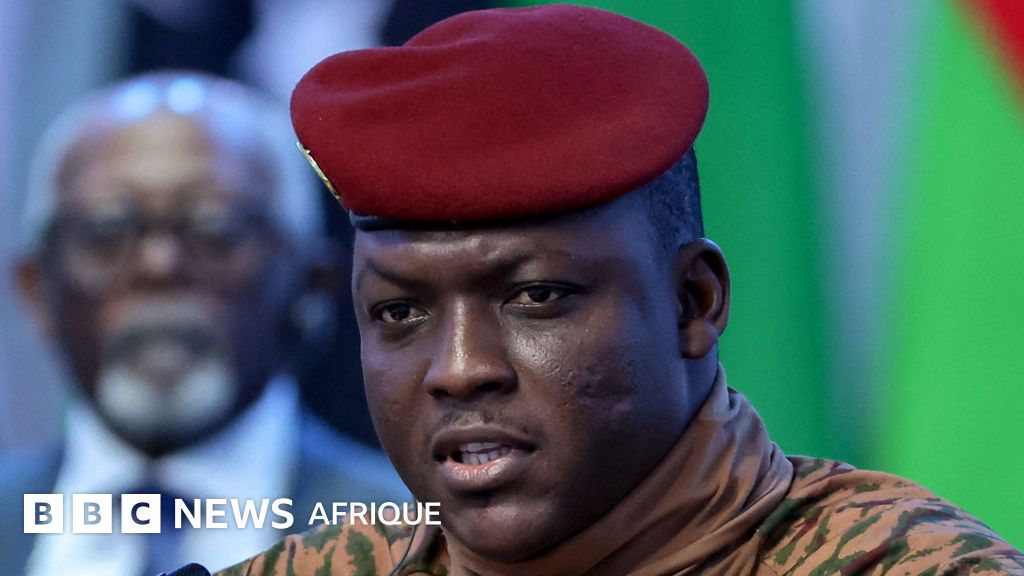
Burkina Faso’s military leader insists democracy is ‘not for us’
- Time to read: 5 min
In a televised address on Thursday evening, Burkina Faso’s military head Captain Ibrahim Traoré delivered a blunt assessment of the country’s political future: ‘People must forget about democracy. Democracy is not for us.’
The 38-year-old leader, who seized power in a 2022 coup, framed his rejection of democratic governance as a rejection of Western-imposed systems that have allegedly brought only chaos to the continent. ‘Wherever Western powers try to impose democracy, it always ends in bloodshed,’ he asserted during the nationally broadcast interview.
Traoré’s remarks came just two months after his junta extended its rule by five years, pushing back a previously promised return to civilian governance by July 2024. The move followed a January decree dissolving all political parties, a decision framed as necessary to ‘rebuild the state’ under a revolutionary framework.
The military leader cited Libya as a cautionary tale, pointing to the North African nation’s collapse after Muammar Gaddafi’s ouster in 2011. Though Gaddafi’s regime was authoritarian, it provided social services, free education, and healthcare. Since his violent death in a Western-backed rebellion, Libya has been mired in political fragmentation, armed conflict, and failed elections.
‘We have our own approach,’ Traoré declared. ‘We’re not trying to copy anyone. Our goal is to completely transform how things are done.’ His vision centers on sovereignty, patriotic mobilization, and grassroots involvement through traditional leaders and community structures.
Economic and military self-reliance emerged as key pillars of this alternative model. Traoré criticized conventional work schedules, arguing that Burkina Faso’s progress demands longer hours from its citizens. ‘Six- or eight-hour workdays won’t help us catch up with wealthier nations,’ he stated.
The junta’s crackdown on dissent has intensified under Traoré’s rule. Opposition figures, independent media, and civil society groups face systematic suppression. Critics allege the government has targeted opponents by deploying them to frontline combat against Islamist militants—a charge denied by authorities.
Despite these controversies, Traoré has cultivated significant support across Africa for his anti-Western rhetoric and panafricanist stance. Like neighboring military-led governments in Mali and Niger, Burkina Faso has severed security cooperation with Western partners—particularly France—in favor of ties with Russia. Yet the insurgency raging across the Sahel for over a decade shows no signs of abating.
Independent monitoring groups report alarming civilian casualties since Traoré’s rise to power. According to Human Rights Watch estimates, more than 1,800 civilians have been killed in Burkina Faso since 2023, with government forces and allied militias responsible for two-thirds of these deaths. Islamist militants account for the remainder.
More Stories
Sonko’s sharp critique of Senegal’s imf deal stirs debate
Cameroun : prendre des mesures incitatives pour booster les inscriptions sur les listes électorales
DRC’s new inclusive national dialogue: what outcomes can be expected?