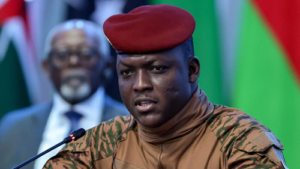
The political landscape in Burkina Faso is undergoing a profound transformation. Under the leadership of Ibrahim Traoré, the military junta appears to be steering the nation toward a governance structure that draws heavy inspiration from historical Soviet and North Korean frameworks. This shift marks a significant departure from previous administrative styles, signaling a new era of centralized authority in the Sahel region.
The evolution of power in Ouagadougou
Observers of African politics are noting a distinct change in how the state operates. The current administration in Burkina Faso has increasingly consolidated its influence, prioritizing a rigid hierarchy that mirrors the strict control mechanisms seen in 20th-century socialist states. This transition is not merely cosmetic; it affects the very fabric of how decisions are made and how the citizenry interacts with the state.
- Centralization of executive authority under Ibrahim Traoré.
- Adoption of ideological rhetoric reminiscent of Cold War-era regimes.
- Increasing emphasis on state-led initiatives and strict societal oversight.
The atmosphere in Burkina Faso reflects this hardening of the political line. As the junta strengthens its position, the parallels to the Soviet or North Korean models become more apparent, characterized by a focus on national self-reliance and a strictly disciplined public sphere. This trajectory raises important questions about the future of the continent press and the broader geopolitical alignment of the nation. As the leadership continues to redefine the state, the internal dynamics of Burkina Faso are moving further away from conventional democratic norms toward a highly controlled and centralized system.