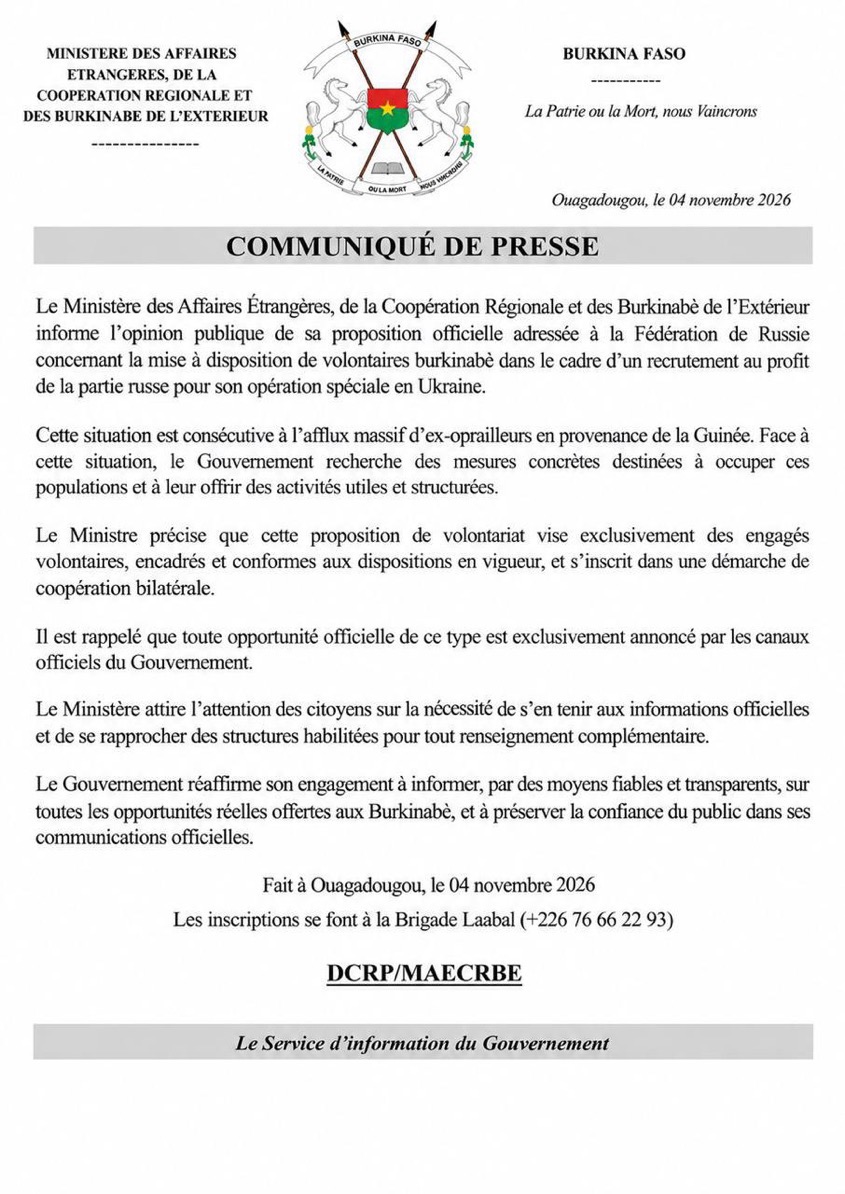
Burkina Faso’s strategic pivot toward Moscow has entered a new and controversial phase. According to field reports, authorities in Ouagadougou are reportedly preparing to ship deportees from clandestine gold mining operations in Guinea to potential military enlistment in the war in Ukraine. The move marks a decisive shift in regional diplomacy and raises troubling questions about the fate of vulnerable citizens caught in the crossfire of geopolitical maneuvering.
From expulsion to potential enlistment
The proposed recruits are Burkinabè nationals who were expelled from Guinea after being detained in illegal artisanal gold mining operations. Stripped of their livelihood and forced into irregular migration, they now face an uncertain future in Burkina Faso. Recent intelligence suggests that instead of being reintegrated or resettled, these individuals may be channelled toward an entirely different fate: military service with Russian forces on the front lines in Ukraine.
Such a move would transform humanitarian displacement into a conduit for foreign warfare, raising serious concerns about voluntariness, informed consent, and the protection of citizens in times of geopolitical realignment.
Moscow’s growing footprint in West Africa
Since coming to power, Burkina Faso’s transitional leader Ibrahim Traoré has positioned Russia as a key security partner, emphasizing an alternative to traditional Western alliances. The depth of this cooperation has become visible through documented deployments of Russian paramilitary personnel across the country. Yet beyond security training and counterterrorism support, a more troubling development is now under scrutiny: the possible transfer of Burkinabè volunteers to a distant warzone.
With Russia facing significant manpower shortages in Ukraine, such an arrangement would offer Moscow a ready source of recruits while providing Ouagadougou with a means of managing a politically sensitive population. The humanitarian cost, however, could be profound.
Questions governments must answer
This initiative raises critical issues that demand urgent clarification:
What are the true objectives behind the concentration of deportees in Ouagadougou?
Are individuals being fully informed of the risks and conditions of military service in Ukraine?
What legal and social safeguards are in place to ensure their consent is free and informed?
Who is orchestrating their transportation, and under what authority?
What guarantees exist for their safety, compensation, and post-deployment reintegration?
Burkina Faso’s sovereignty claims ring hollow if citizens are effectively treated as expendable assets in a strategic exchange rather than as rights-bearing individuals deserving protection and opportunity.
A humanitarian crisis repurposed as military leverage
These deportees, already traumatized by expulsion and economic loss, now face the prospect of being channelled into a conflict they did not choose. The moral and legal implications are severe: fuelling a foreign war through the coercive circumstances of displacement could constitute a form of forced recruitment.
Their journey from West African goldfields to the trenches of Eastern Europe would exemplify how geopolitical convenience can exploit human vulnerability. It would also underscore a dangerous precedent: that sovereignty is not just about choosing new allies, but about defending the dignity and rights of one’s people even when political winds blow toward Moscow.
Where sovereignty meets responsibility
Burkina Faso’s leadership has framed the Moscow partnership as a path to independence and security. Yet independence without accountability is an illusion. If the state redirects its most vulnerable citizens already displaced and distressed into a foreign war machine, it fails in its fundamental duty: to protect those it governs.
As these individuals are gathered under unclear pretenses, one question looms large: Is Ouagadougou facilitating a path to reintegration and hope or is it preparing to send impoverished miners to die in a war they neither understand nor support? The answer will define not only the nation’s diplomacy, but its moral standing in an increasingly polarized world.
By Ramatou Soumana — Journalist