When national wealth becomes a bargaining chip for survival
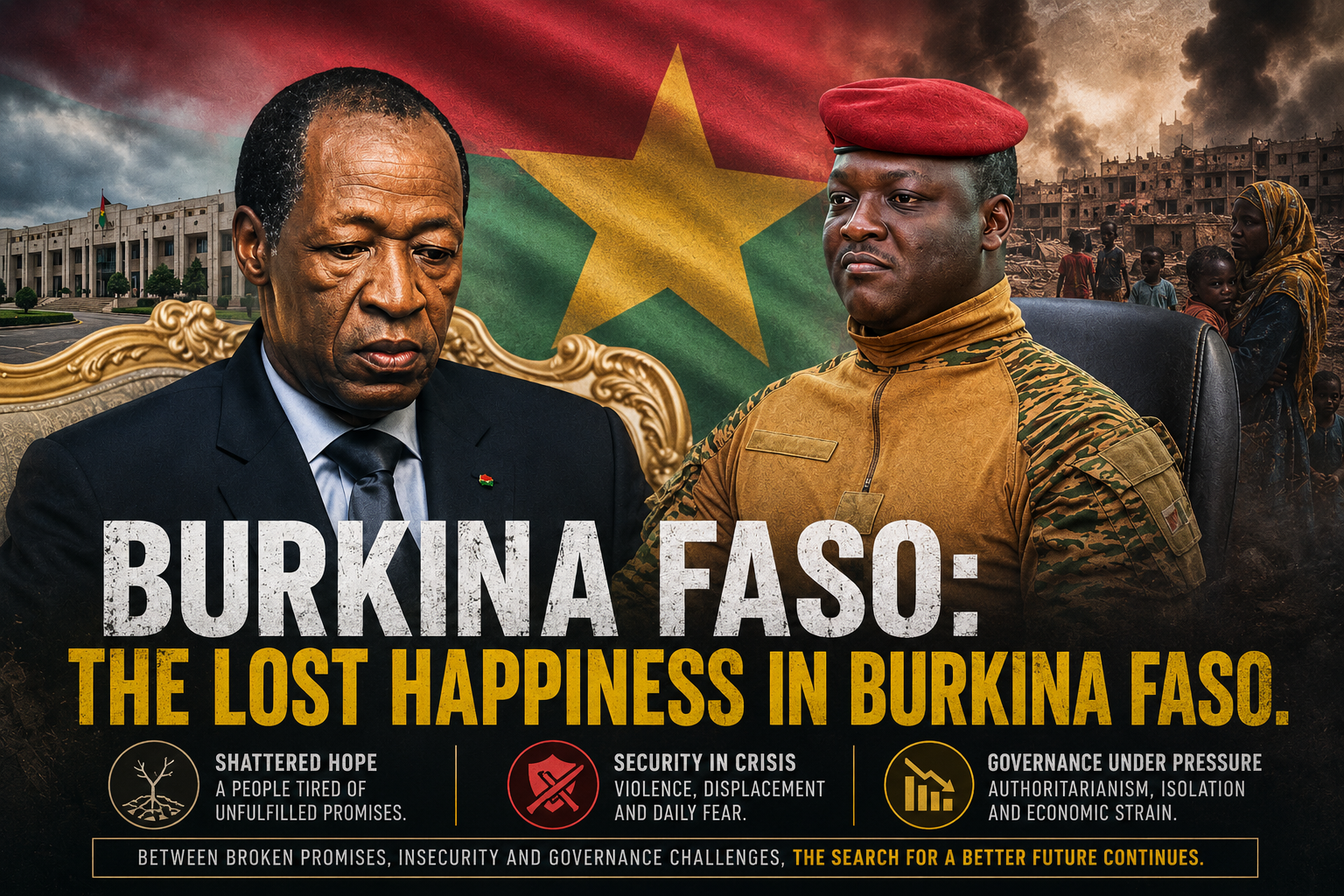
The contrast could not be more glaring. On one side, a government in Ouagadougou declares its “reclaimed sovereignty” with unwavering conviction, while on the other, it clings to foreign aid with humiliating dependence. By blocking grassroots initiatives and NGO efforts to assist the country’s most vulnerable under the guise of regulating humanitarian aid, Captain Ibrahim Traoré has delivered a rare display of political ruthlessness. Yet the irony deepens when the same authorities extend a tin cup to Moscow, begging for sacks of wheat to feed a starving nation.
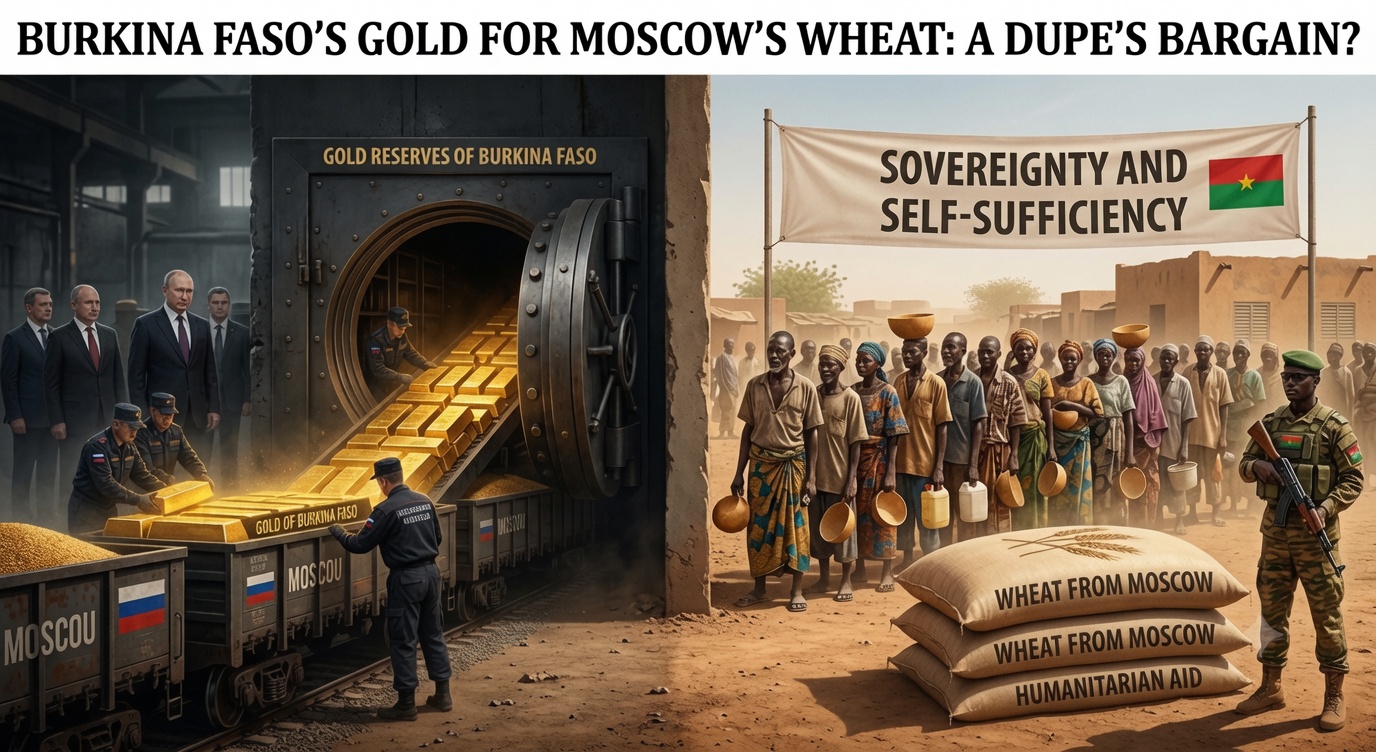
The recent visit of Russia’s foreign minister laid bare the mechanics of this lopsided “cooperation.” With a diplomacy that blends ironclad resolve with velvet diplomacy, the Kremlin envoy endorsed Burkina Faso’s decision to transfer and store its national gold reserves in Moscow’s central bank. An announcement that reads like an economic surrender. For a regime that staked its legitimacy on breaking free from neocolonial chains and vowing total independence, entrusting the nation’s treasure to Russia smacks of a fool’s bargain.
Promises of self-reliance meet foreign dependency
The government’s official narrative has long championed economic self-sufficiency and national sovereignty. A noble ambition, yet one that rings hollow when basic food needs can only be met through external assistance. True sovereignty demands more than slogans; it requires the capacity to feed and protect citizens without begging neighboring capitals for scraps.
The equation is brutally straightforward: Burkina Faso is mortgaging its sovereign wealth—its gold—to obtain security assurances and emergency food shipments from Moscow. Receiving Russian wheat to feed a population ravaged by insecurity is not a geopolitical victory; it is a symbol of failure. How can a nation claim pride when its survival depends on the goodwill of a foreign patron who now holds its financial keys?
Gold reserves traded for emergency rations
Burkina Faso ranks among West Africa’s top gold producers, a resource that should fund agricultural policies, storage infrastructure, irrigation systems, and sustainable support for local farmers. Yet despite this wealth, the country remains trapped in a cycle of foreign food aid. Observers increasingly question how national riches are being deployed—and whether their management truly translates into better lives for ordinary citizens.
The most galling aspect of this crisis is the government’s internal mismanagement. While a conflict-driven reality makes feeding the population a daunting task, actively sabotaging national solidarity by threatening or banning Burkinabè from helping one another reflects a strategy of absolute social control. By monopolizing aid, the Traoré administration appears determined to ensure that every morsel of rice or wheat reaching a hungry citizen is seen as a gift from power—not an act of human solidarity.
The cost of monopolizing humanitarian aid
In many crisis settings, humanitarian groups, local associations, and citizen initiatives act as vital complements to state efforts, especially where government presence is weak or under severe security strain. Restricting their operations slows assistance to the vulnerable and deepens dependence on state-controlled mechanisms, fueling suspicions of political manipulation in aid distribution.
Another layer of paradox emerges when comparing the sacrifices demanded from the population with the tangible outcomes. Burkinabè are repeatedly called upon to endure hardship in the name of national sovereignty, terrorism eradication, and state rebuilding. But when daily hardships persist, insecurity remains unchecked, and the country still relies on foreign handouts to meet basic nutritional needs, those sacrifices lose their meaning. True sovereignty is measured not by rhetoric, but by the ability to protect and nourish citizens sustainably.
As Burkina Faso’s gold flows toward Moscow to shore up political survival at the top, the people at the bottom are left with a sovereignty that exists only in name—and a hunger that is very real. By mistaking independence for a simple switch of guardians, Captain Traoré has not liberated Burkina Faso. He has merely renegotiated its dependence at a cut-rate price.
The ultimate question is not which foreign partner Burkina Faso chooses, but whether such partnerships genuinely strengthen the nation’s autonomy and improve the lives of its people. A sovereignty policy cannot be judged solely by diplomatic posturing; it must be measured by its ability to secure safety, prosperity, and dignity for all citizens. When these goals remain unmet, the gap between political promise and daily reality becomes impossible to ignore.