The General’s televised admission: a backdoor confession of military strategy collapse
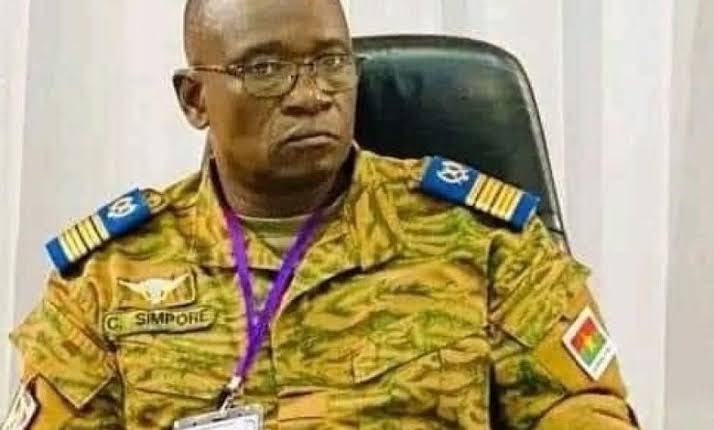
The Burkina Faso Defense Minister, General Célestin Simporé, took to national airwaves on RTB to sing the praises of Captain Ibrahim Traoré’s security record. Yet in a stunning rhetorical pivot, he blamed the country’s current security quagmire on a decades-old “poorly trained” military. What Simporé framed as a convenient political narrative uncovers a far grimmer truth: the “new” army, re-equipped and retrained in Moscow, is now failing where the supposedly inadequate force of the past held the line.
Public outrage has since crystallised into a single question: how did yesterday’s under-resourced force—ridiculed as incompetent—manage to contain the threat with far greater effectiveness than today’s heavily funded, Moscow-trained formation?
The rewriting of history that only the battlefield rejects
By insisting on RTB that Burkina Faso’s troops lacked tactical acumen and operational readiness before the 2022 transition, Simporé attempts to recast a decade of real-world resistance as mere historical deficiency. Yet the evidence refuses to comply with the script.
In the years preceding Captain Traoré’s ascent, despite chronic shortages in materiel and structural weaknesses, the military maintained territorial integrity and defended provincial capitals with coherent defensive lines. Today, after the transitional regime boasts of creating over thirty new battalions and making “military training the cornerstone of its strategy,” the state’s effective control has collapsed across more than 65 percent of Burkina Faso’s national territory.
Yesterday’s army was not broken by ideology or incompetence; it was constrained by resources. Today’s army, lavished with both Russian-style instruction and heavy firepower, is haemorrhaging territory at an unprecedented rate.
Russia’s training doctrine: a lethal mismatch for Burkina Faso’s war
The Traoré administration bet its security future on Moscow’s Africa Corps, dismantling the old training model in favour of a Russian-style doctrine built on frontal brutality and indiscriminate firepower. The results have been catastrophic:
- Human carnage: From the tragic loss of life in Mansila to the recent reversals in Centre-Nord, hastily formed units are paying a blood toll that eclipses anything seen in the previous decade.
- Failure against asymmetric warfare: Russian-style massed assaults and heavy-calibre bombardments are powerless against nimble terrorist cells riding motorcycles and deploying improvised explosive devices.
- Loss of popular trust: By trading trust-building intelligence networks for a scorched-earth approach, the new doctrine has alienated rural communities—the very source of real-time battlefield information needed to detect insurgent movements.
Insulting the sacrifice of the rank-and-file
Declaring on national television that Burkina Faso’s troops were “poorly trained” amounts to an affront to the memory of thousands of soldiers and gendarmes who fell in combat over the past ten years. With minimal resources and rationed supplies, they held the front lines against an emerging threat without ever abandoning entire regions—contrary to the so-called “tactical evacuations” that now define policy, as seen in disasters such as Boussouma.
Simporé’s RTB confession was supposed to justify the transitional regime’s security narrative. Instead, it exposed the emptiness of that narrative: it is not yesterday’s weapons that were ineffective, but today’s strategy that is collapsing under the weight of its own propaganda.
Beyond blame: charting a path out of battlefield oblivion
The lesson emerging from Simporé’s televised admission is clear: Burkina Faso’s security dilemma is not rooted in the past, but in the failed gamble of today’s Moscow-aligned doctrine. Restoring territorial control demands more than hardware and renamed battalions—it requires a return to intelligence-led, community-engaged operations that respect both the terrain and the people who live on it.
Until that pivot is made, the map of Burkina Faso will continue to bleed red, and the sacrifices of yesterday’s soldiers will remain unavenged by today’s political narrative.