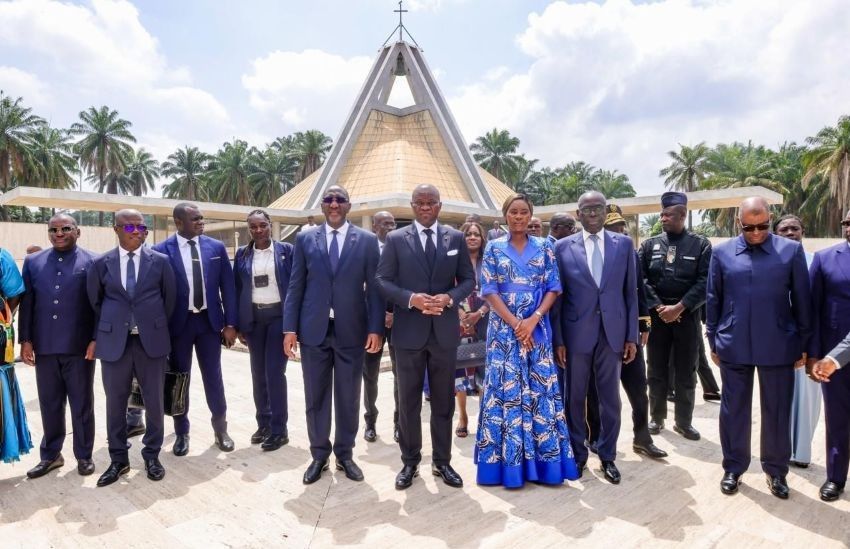
Gabon’s leader pays tribute in yamoussoukro, strengthening ties with Côte d’Ivoire
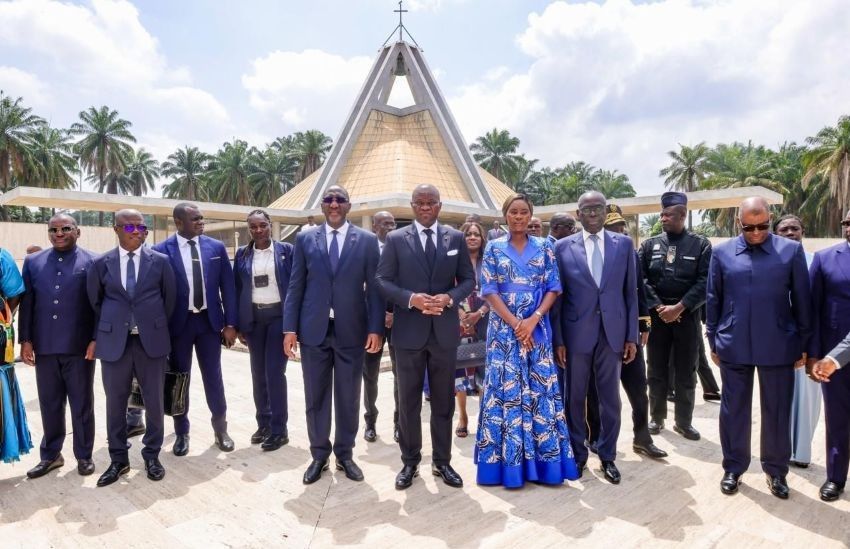
Libreville, August 6, 2026 — The visit of Gabonese President Brice Clotaire Oligui Nguema to Yamoussoukro has evolved beyond the bounds of a routine diplomatic mission. By paying respects at the tomb of Félix Houphouët-Boigny and visiting the Basilica of Our Lady of Peace, the leader has framed his stay in Côte d’Ivoire around themes of remembrance, unity, and the deep historical bonds between the two nations.
Arriving Tuesday, August 5, accompanied by First Lady Zita Oligui Nguema and a high-level delegation, the president was received by Ivorian officials, political figures, and traditional leaders. His timing coincided with Côte d’Ivoire’s preparations to mark the 66th anniversary of its independence, an event Gabon has been invited to attend at the invitation of President Alassane Ouattara.
The selection of Yamoussoukro was deliberate. The city holds the legacy of Félix Houphouët-Boigny, Ivory Coast’s founding president and a towering figure in African political history. Laying a wreath at the former leader’s mausoleum, President Oligui Nguema honored a statesman remembered for his nation-building vision and enduring commitment to peace. The gesture also underscored the long-standing ties between Libreville and Abidjan, rooted in decades of friendship, cooperation, and shared values.
Honoring a legacy that transcends borders
Speaking at the traditional leadership gathering in Yamoussoukro, the Gabonese president emphasized the broader significance of this tribute. Beyond its national context, the act highlighted an African vision of governance—one that values historical continuity, preserves collective memory, and upholds peace as a cornerstone of stability. The visit reflects Gabon’s broader diplomatic outreach, aimed at deepening continental partnerships and positioning the country as an active force in regional cooperation.
President Oligui Nguema also expressed gratitude to Alassane Ouattara for the invitation to the national celebrations on August 7. Gabon’s participation will carry both institutional and cultural weight. High-ranking military officers trained in Côte d’Ivoire will join the festivities alongside representatives of Gabon’s indigenous communities. This inclusion mirrors the country’s cultural diversity and reinforces its presence within the wider African community at a moment of continental convergence.
From memory to a shared vision of the future
The second defining moment of the day unfolded at the Basilica of Our Lady of Peace. Constructed between 1986 and 1989 and modeled after St. Peter’s Basilica in Rome, the site stands as one of Yamoussoukro’s most iconic landmarks. The Gabonese delegation toured the basilica before observing a moment of reflection.
In the guestbook, President Oligui Nguema wrote a message calling for unity, dialogue, and solidarity among African peoples, envisioning a continent that is strong, united, and prosperous. This choice of language tied together the themes of the visit: honoring a past leader whose legacy was peace, and invoking a spiritual and symbolic space dedicated to hope and dialogue.
This approach signals a diplomatic vision that extends beyond transactional politics or economic agreements. It leverages shared symbols, historical memory, and common values to foster deeper understanding and cooperation between peoples.
For both Libreville and Abidjan, this relationship is steeped in history. The challenge now is to convert this closeness into tangible progress across economic, diplomatic, cultural, security, and human dimensions. The visit to Yamoussoukro sends a clear political signal: that Gabon views Côte d’Ivoire not only as a partner of the past, but as a strategic ally in building a more ambitious, concrete, and forward-looking African cooperation.


More Stories
Behind the violence: how the M23’s control of DRC mines fuels a cycle of abuse
Unpacking the surge: why Nigeria’s farmer-herder clashes are driving 600 refugees into Cameroon’s Northwest
Why Paris Saint-Germain’s midfield dominance sank Marseille in Ligue 1