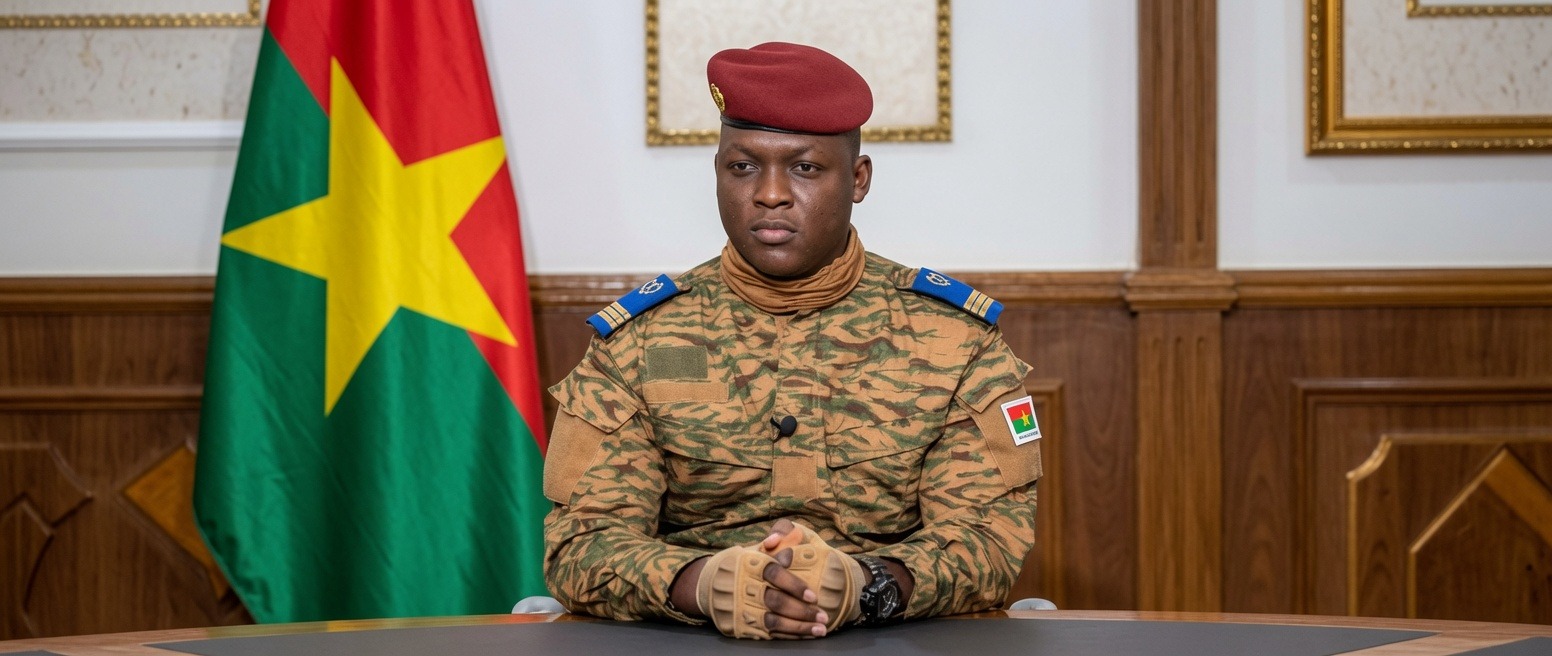
The announcement of Burkina Faso’s decision to reinstate the death penalty marks a pivotal moment in the West African nation’s political trajectory. With the transitional legislative assembly unanimously approving the revival of capital punishment—a penalty abolished in 2018—the military-led government under Captain Ibrahim Traoré has signaled an uncompromising stance. Behind the rhetoric of nationalism and state security, critics argue, lies a calculated strategy to neutralize threats from within, particularly former transitional leader Paul-Henri Sandaogo Damiba.
This sweeping legal overhaul, framed as a rejection of “sentimentalism,” introduces a penalty tailored for those accused of “high treason” and conspiring against state stability. Damiba, whose arrest on similar charges has already set legal proceedings in motion, now faces a trial that could carry the ultimate consequence. By eliminating avenues for clemency, the regime appears intent on making an example of its most prominent rival.
From revolutionary justice to authoritarian weapon
The resurgence of the death penalty in Burkina Faso raises urgent questions about the weaponization of law against political adversaries. While the government presents this shift as a bulwark against betrayal, detractors see it as a premeditated move to secure Traoré’s grip on power. The timing of the reform—coinciding with Damiba’s prosecution—further fuels speculation that justice is being repurposed as a political tool.
Damiba’s paradox: a victim of the ideology he once championed
The irony is stark: the man once hailed as a “savior” of Burkina Faso now faces execution for the very tactics that once justified his own rise. In a mirror image of history, Ibrahim Traoré’s ascent followed Damiba’s controversial 2022 coup, which itself ousted a democratically elected president. What was once framed as a patriotic uprising is now recast as a crime punishable by death.
Key parallels underscore the duplicity of Burkina Faso’s political landscape:
- Revolutionary symmetry: Both Damiba and Traoré seized power through force, each initially defended as a necessary intervention for national salvation.
- Legal hypocrisy: Damiba’s methods were lauded as a defense of the nation; Traoré now labels identical actions as treasonous and punishable by execution.
- Unyielding cycles: The reinstatement of capital punishment risks entrenching a culture of retribution, where today’s executioner may become tomorrow’s condemned.
The dangerous gamble on state terror
By rejecting clemency and embracing the death penalty, Ibrahim Traoré’s regime is betting heavily on fear as a tool for governance. Yet history suggests that such strategies rarely resolve crises—instead, they amplify them. Nations that normalize political executions often face escalating instability, as each act of vengeance begets another.
The message sent to Burkina Faso’s opposition and disillusioned military factions is unmistakable: dissent will not be tolerated. But the regime must also consider whether this gamble will ultimately backfire—or whether it will plunge the country deeper into a spiral of reprisals from which escape will prove impossible.
Can Burkina Faso break free from the cycle of coups and vengeance?
As the death penalty looms over Burkina Faso’s political future, the nation stands at a crossroads. Will the return of capital punishment breed the stability its architects promise, or will it deepen the fractures tearing at the country’s social and institutional fabric? One thing is clear: the path chosen today will shape Burkina Faso’s destiny for generations to come.