Major security shift: Washington raises travel advisories to maximum level
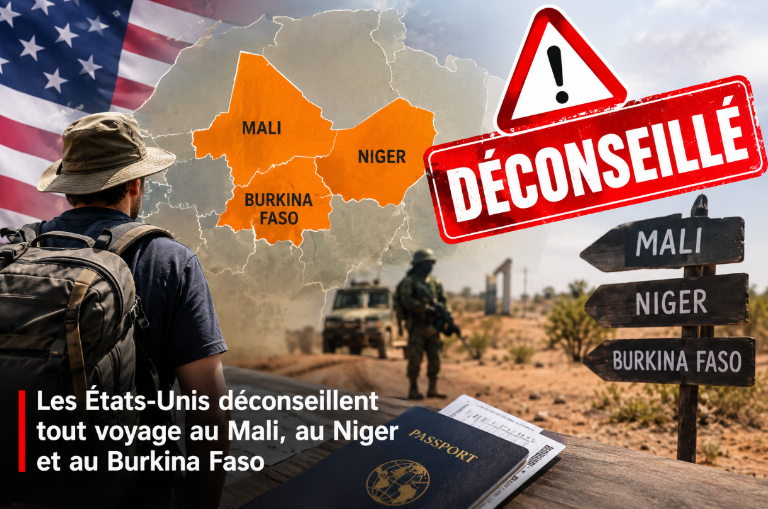
The United States has sent a clear warning to travelers considering trips to the Sahel in 2026. Mali, Niger, and Burkina Faso now occupy the highest alert level—Level 4—on the US State Department’s travel advisory system. This designation explicitly advises Americans and all travelers to avoid non-essential travel to these three West African nations.
The stark decision follows months of escalating violence, terrorist threats, and kidnapping risks that have destabilized the region. Official advisories issued in mid-2026 reflect growing concerns that security conditions remain too volatile for safe travel. From armed group attacks to public disorder, the threats are not only persistent but intensifying in several key areas.
Mali sees rising instability and limited safe routes
Mali remains one of the most concerning destinations in the Sahel. The US government has not only renewed its Level 4 warning but also imposed internal travel restrictions on its own diplomatic staff. American officials are now barred from traveling outside the capital, Bamako, without special authorization due to ongoing security risks.
The country faces persistent threats from armed groups, including those linked to Al-Qaeda and the Islamic State. These militants frequently target defense forces, ambush travelers on key roads, and threaten civilians in multiple regions. Outside Bamako, travel becomes increasingly risky, with kidnapping and violent crime posing serious dangers to foreigners.
Health risks, including limited medical infrastructure and disease outbreaks, further complicate any travel plans. Consular assistance for stranded travelers remains unreliable in many areas, making emergency response slow and uncertain.
Niger faces mounting threats across key zones
In Niger, the US has also maintained its highest-risk classification. The July 2026 advisory highlights terrorism, kidnapping, crime, and unstable conditions throughout the country. While Niamey remains relatively more stable, the US has severely restricted staff movement outside the capital—limiting emergency response capabilities and increasing risk for any traveler.
Regions near the borders—especially in the west and north—are particularly dangerous. Armed groups operate with growing boldness, targeting civilians, security personnel, and critical infrastructure. Travel restrictions and emergency measures are widespread, disrupting supply chains, aid operations, and business activities.
The lack of reliable consular support outside Niamey adds another layer of risk, leaving travelers vulnerable in the event of an emergency.
Burkina Faso grapples with worsening jihadist violence
Burkina Faso has become increasingly perilous for visitors and locals alike. The US State Department’s May 2026 advisory placed the country at Level 4, citing a surge in terrorist attacks, kidnappings, and violent crime. Jihadist groups have expanded their operations, striking across multiple regions and targeting not only civilians but also diplomatic sites, hotels, restaurants, and industrial facilities.
Even Ouagadougou, the capital, is not immune to risk. US government employees are prohibited from traveling outside the city center, underscoring the persistent threat of sudden violence. Kidnappings have become a major concern, with attacks occurring without warning in public spaces and transport hubs.
For humanitarian workers, journalists, and business travelers, the region’s instability has made essential operations nearly impossible. Road networks are frequently disrupted, and remote areas remain largely inaccessible.
Broader Sahel risks extend beyond the three main nations
While Mali, Niger, and Burkina Faso dominate the headlines, other African countries also face serious security challenges. Nigeria is classified as Level 3 nationwide but drops to Level 4 in the northeast and northwest due to terrorism and kidnapping. The Central African Republic and Chad are also placed at the highest alert level, reflecting regional instability.
Cameroon and Mozambique remain under targeted warnings, with specific high-risk areas identified. These advisories highlight that the Sahel’s crisis is part of a larger pattern of insecurity across central and West Africa, where armed groups and criminal networks exploit weak governance and porous borders.
What travelers and businesses must consider in 2026
For anyone planning to visit or operate in the Sahel, the US government’s Level 4 advisories should be taken seriously. These warnings signal that the risks are not just high—they are potentially life-threatening. The State Department urges travelers to review advisories regularly, avoid non-essential travel, and prepare contingency plans in case conditions deteriorate.
Businesses with operations in the region must reassess travel policies, especially for staff movement outside major cities. Humanitarian organizations face even greater challenges, with access to vulnerable populations increasingly restricted by violence and instability.
The situation in the Sahel is fluid. A region that seemed stable one month may become dangerous the next due to sudden attacks, political shifts, or new travel restrictions. Travelers and organizations alike must stay informed, adhere to local safety protocols, and recognize that the window for safe engagement may be closing.
Tough choices ahead: safety vs. necessity in the Sahel
Washington’s decision to keep Mali, Niger, and Burkina Faso at Level 4 sends a strong message: the risks in these countries are now too great to ignore. While the US cannot—and does not—ban travel outright, its advisories serve as a de facto deterrent for most individuals and organizations.
For those who must travel, the burden of proof lies with them. Every trip must be justified, planned with extreme caution, and backed by robust risk management strategies. The message is unmistakable: in the Sahel today, hesitation could mean danger, and prudence is not optional—it is essential.