Amid the escalating humanitarian and security crisis gripping Burkina Faso, the priorities of the transitional leadership have come under intense scrutiny. The stark disparity between official narratives and ground realities has never been more pronounced.
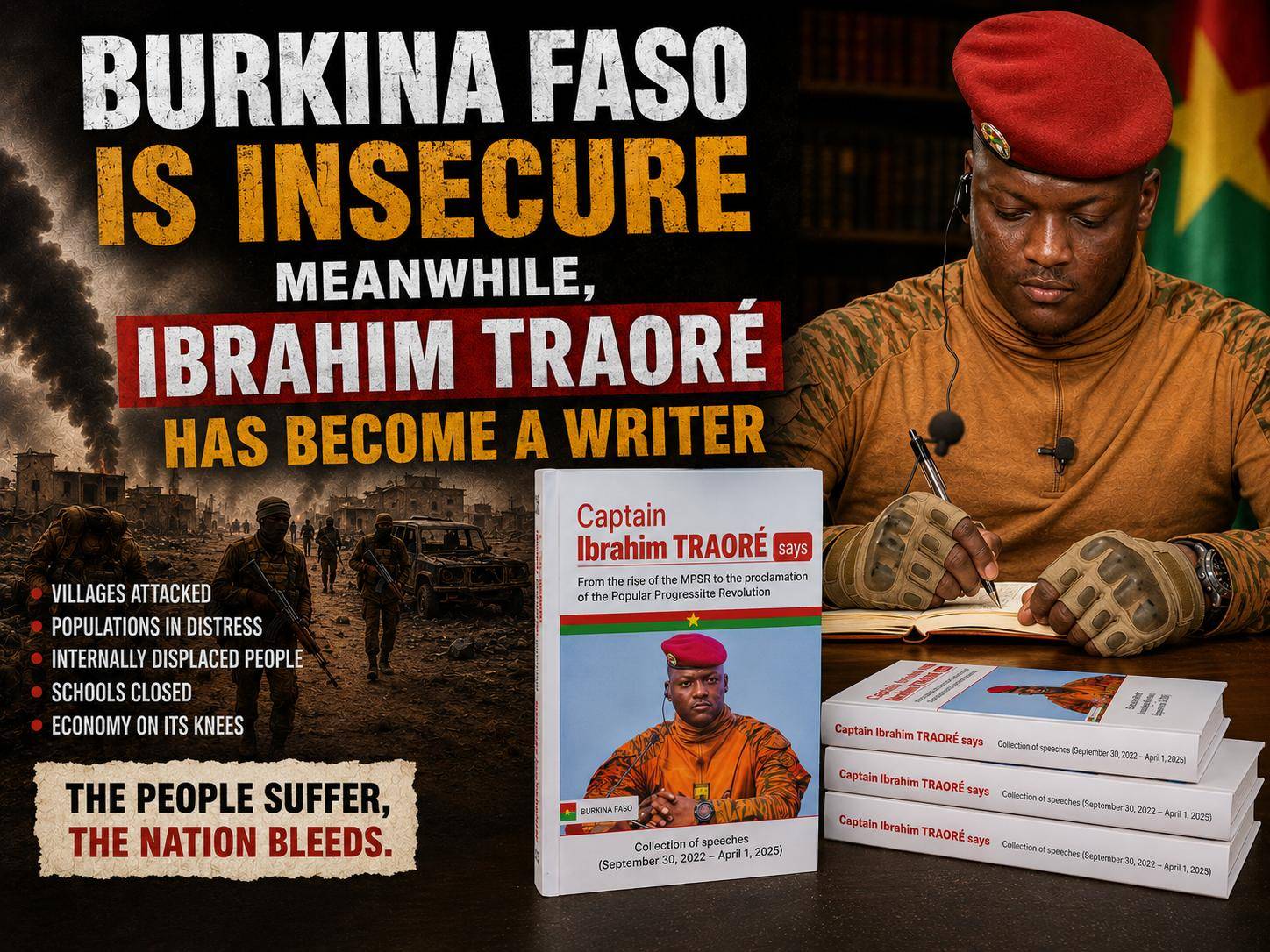
The contrast is stark—on one side, relentless reports of terrorist attacks, besieged villages, and thousands of internally displaced persons pleading for peace and territorial sovereignty with empty stomachs. On the other, the gilded halls of the presidency buzz with preparations to promote a book or propaganda narrative, as if words could replace action.
For many Burkinabè citizens, the conclusion is inescapable: the transitional presidency has morphed into little more than a vehicle for political self-promotion.
Words versus weapons: a dangerous imbalance
The recent release of a book attributed to Captain Ibrahim Traoré has done little to quell public discontent. In Ouagadougou and across the nation’s most remote regions, the message from ordinary citizens is crystal clear: they do not want books—they want security.
Allocating resources to publish and promote state-sponsored literature at a time when defense and security forces (FDS) and the Volunteers for the Homeland (VDP) struggle with critical logistical shortages reflects an alarming disconnect. A raging fire cannot be extinguished with printed pages, nor can lives be protected with hollow slogans.
« The people do not need stories—they need their homeland restored. » A civil society activist, speaking on condition of anonymity.
The erosion of a sacred trust
When Captain Ibrahim Traoré assumed power, he entered into an unspoken moral contract with the nation: to restore territorial integrity and deliver peace where his predecessors had failed. The trust placed in him rested solely on this pledge of military effectiveness.
Yet today, rhetoric has eclipsed strategy. By prioritizing personality cults and political marketing over tangible security measures, the regime risks igniting widespread unrest. Many citizens argue that the threshold of tolerance has long been crossed. Discontent is rising, and the public demand is increasingly uncompromising: if the primary mission—securing the nation—cannot be fulfilled, then leadership must step aside.
A crossroads for Burkina Faso
The transitional government now faces a pivotal moment. Continuing to manage the presidency as a public relations campaign rather than a crisis response will only deepen the rift between leadership and the people.
Burkina Faso does not need propagandists at its helm—it needs strategic commanders capable of restoring stability. Unless Captain Traoré refocuses immediately on the sole priority that truly matters—security—the historical record will remember his tenure as an illusion, written in ink while the nation burned.