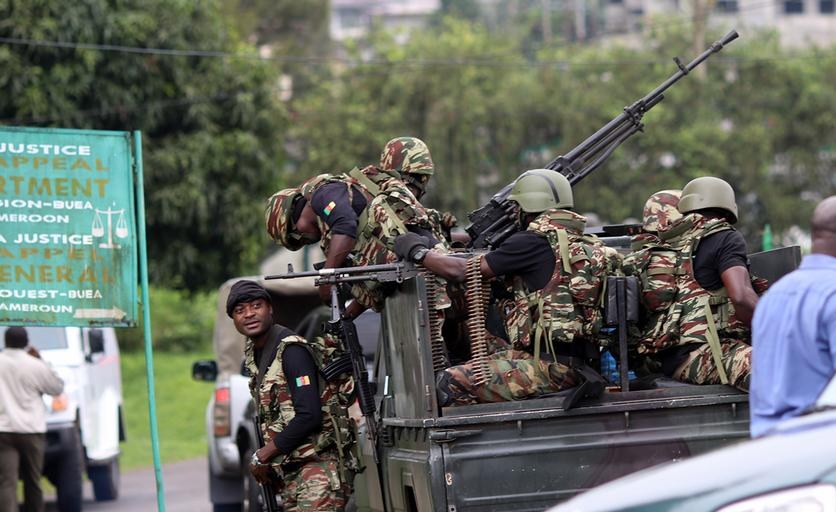
The absence of President Paul Biya, now stretching beyond 57 days, has plunged Cameroon into uncharted waters. While the head of state remains abroad in Geneva, a series of military appointments has ignited fears of an impending power struggle rooted in ethnic divisions.
An absence that fuels uncertainty
President Biya, Africa’s longest-serving leader at 93 years old, has not been seen in public since departing Yaoundé on June 7, 2026, for what was officially described as a « private stay » in Switzerland. Government statements insisting he remains in good health have done little to quell mounting concerns.
Rumors of a surgical procedure in early July—followed by complications—have only deepened skepticism. Opposition figures, including Roger Justin Noah of the Movement for the Renaissance of Cameroon (MRC), demand transparency: « Why conceal health issues from the nation? The people deserve clarity on the president’s condition. »
Military reshuffle raises alarm bells
On August 3, 2026, a presidential decree (n°2026/265) named General Beko’o Abondo Raymond Jean Charles as the new head of the Presidential Guard—a critical role responsible for protecting the head of state and the seat of power. The move was just the first in a sweeping overhaul of the security apparatus.
Additional appointments included:
- Five new brigadier generals
- Major General Ebaka Hippolyte as Chief of Staff of the Armed Forces
- Six territorial commanders across four of Cameroon’s five military regions
A retired colonel, speaking on condition of anonymity, emphasized the gravity of these changes: « Only the president can authorize such military appointments. Their timing, during his prolonged absence, raises serious questions about who truly holds authority. »
A constitutional void and clan rivalries
The power vacuum has intensified a behind-the-scenes battle between two dominant factions within the regime:
- The consanguineous clan: Led by Biya’s eldest son, Franck Biya, seen as the guarantor of the system’s continuity.
- The First Lady’s faction: Centered around Chantal Biya and Ferdinand Ngoh Ngoh, the powerful Secretary-General of the Presidency.
The stakes escalated in April 2026 when parliament reinstated the vice-presidency—a position intended to ensure a smooth transition in case of incapacity. Yet, the post remains vacant, leaving the succession mechanism in limbo. Analysts warn that this institutional paralysis is fueling instability.
Tribalization of power and historical parallels
Critics argue that the military reshuffle, combined with Biya’s absence, is accelerating a dangerous trend: the ethnicization of state institutions. The specter of Rwanda’s 1994 genocide looms large, where a fractured political transition and ethnic manipulation of the army led to catastrophic violence.
Jean-Pierre Bekolo, a prominent commentator, cautioned: « Cameroon is now sliding into both militarization and tribalization of power—a path with an uncertain and potentially devastating outcome. »
Opposition demands accountability
The Movement for the Renaissance of Cameroon (MRC), led by Maurice Kamto, has taken legal action, calling on the Constitutional Council to declare a power vacuum. Deputy Jean-Michel Nintcheu stated bluntly: « The Council must recognize the vacancy at the summit of the state. » Yet, without a vice-president, the constitutional process remains stalled.
The opposition’s frustration underscores a deeper crisis: the government’s refusal to address Biya’s prolonged absence transparently. Bekolo challenged officials: « If Paul Biya is returning soon, why proceed with such sensitive appointments in his absence? Why not wait for his return to make decisions that could destabilize the nation? »
Unverified decrees deepen distrust
Rumors of dubious decree signatures have circulated, with some questioning whether those signing knew Biya would not return. The government has dismissed such claims, yet skepticism persists. The longer the silence endures, the more the nation’s stability hangs in the balance.
Can Cameroon avert disaster?
Experts outline three critical steps to prevent further deterioration:
- Transparency: The government must disclose Biya’s health status and return timeline.
- National dialogue: A mediated conversation among political factions to address ethnic tensions.
- Vice-presidential appointment: Filling the vacant position to restore institutional trust.
As history has shown, silence and inaction can be as destructive as overt conflict. The coming days will determine whether Cameroon can pull back from the brink—or whether the shadows of tribalism and militarization will consume its fragile stability.
More Stories
Niger’s August crisis: how Tiani’s reliance on Russia exposed deeper fractures in the military
Burkina Faso’s military push raises urgent questions amid mass displacement crisis
Behind the three-day delay: what really delayed Senegal’s 2026 revised budget bill