Strategic goals were outlined under the Country Strategic Options Programme (COSOP) spanning 2019-2026.
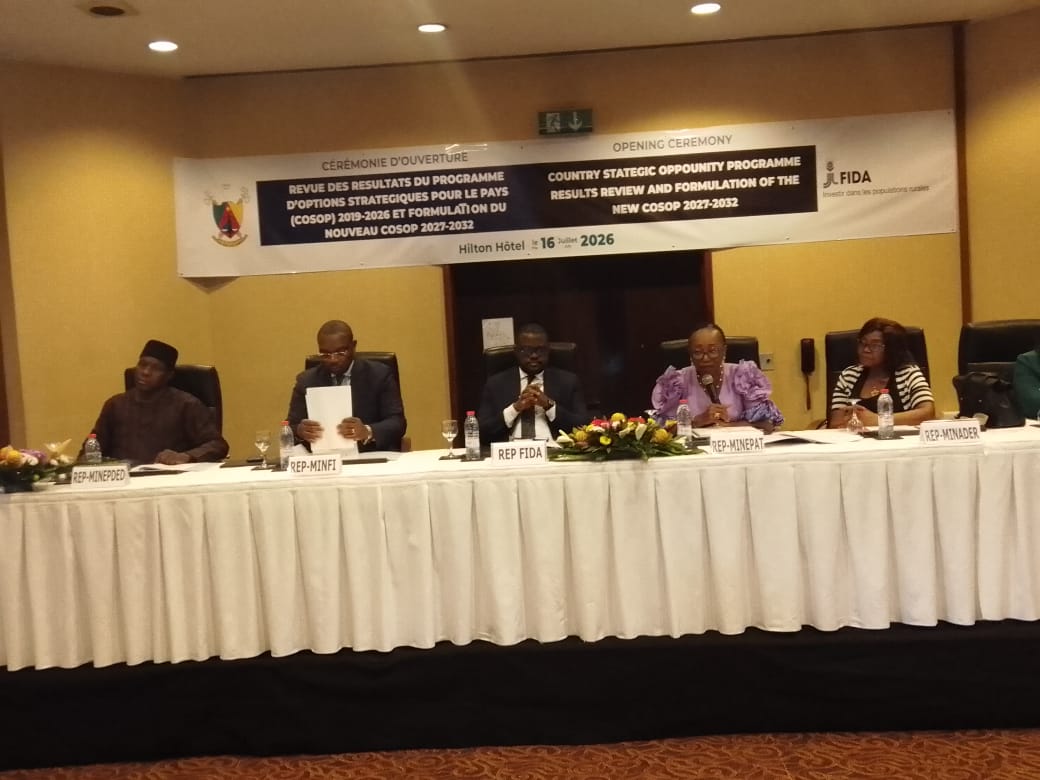
On July 16, 2026, an evaluation workshop jointly hosted by Cameroon’s government and the International Fund for Agricultural Development (IFAD) took place in Yaoundé. The event focused on reviewing the results of the 2019-2026 COSOP and laying the groundwork for the new 2027-2032 programme.
The COSOP framework guides IFAD’s priority investments to support impoverished rural communities in Cameroon, with special emphasis on empowering women and youth. Its overarching mission is to enhance living conditions in rural areas through sustainable agricultural development.
The workshop served to assess the implementation progress of the 2019-2026 programme, evaluate outcomes, and propose adjustments to better align interventions with national priorities. These efforts are in sync with Cameroon’s 2020-2030 National Development Strategy (SND30) and the United Nations Sustainable Development Cooperation Framework.
sustainable productivity gains in smallholder farming
A key achievement was recorded in the sustainable productivity boost for smallholder farms and rural enterprises pillar, where 98% of targets were met. A total of 139 cooperatives specializing in rice and onion value chains—comprising 10,505 producers—are now operational. Women lead 39% of these cooperatives, while young farmers account for 49%. The original 2024 target was to enroll at least 10,000 members, with women and youth presiding over at least half of the structures.
All projects were supported by environmental and social management plans. In the Youth Agropastoral Entrepreneurship Promotion Programme (PEA-Jeunes), 99% of targeted young farmers adopted the recommended techniques, exceeding the 50% projection. However, hydro-agricultural land development for rice and onion production reached only 649 hectares—43% of the planned 1,600 hectares.
agricultural yield improvements under PADFA II
Phase II of the Agricultural Value Chain Support Programme (PADFA II) saw remarkable progress in rice and onion production. Sixty percent of beneficiaries reported a nearly 50% increase in lowland rice yields, rising from 3.7 tonnes to 5.6 tonnes per hectare—74% of the target. Upland rice yields climbed from 2.5 tonnes to 4 tonnes per hectare, achieving 63% of the goal. Onion production reached 18 tonnes per hectare, representing 86% of the 21-tonne target.
Overall, PADFA II contributed to a significant rise in agricultural output: 52,996 tonnes of paddy rice were produced against a target of 74,750 tonnes (70.38%), while onion bulb production hit 45,000 tonnes compared to a 85,562-tonne goal (52.47%).
climate-resilient agricultural policies gain full adoption
The programme also achieved full adoption of ecosystem-based adaptation guidelines and climate-smart practices, fully supporting the national climate action plan. A strategic plan for 17 reforms was developed, alongside an early draft of a new agropastoral sector law. Additionally, three strategic frameworks were established to support bamboo restoration initiatives.
Cameroon and IFAD first approved the 2019-2024 COSOP in 2019, later extended to December 31, 2026, at the request of the Cameroonian government following a mid-term review in July 2021.