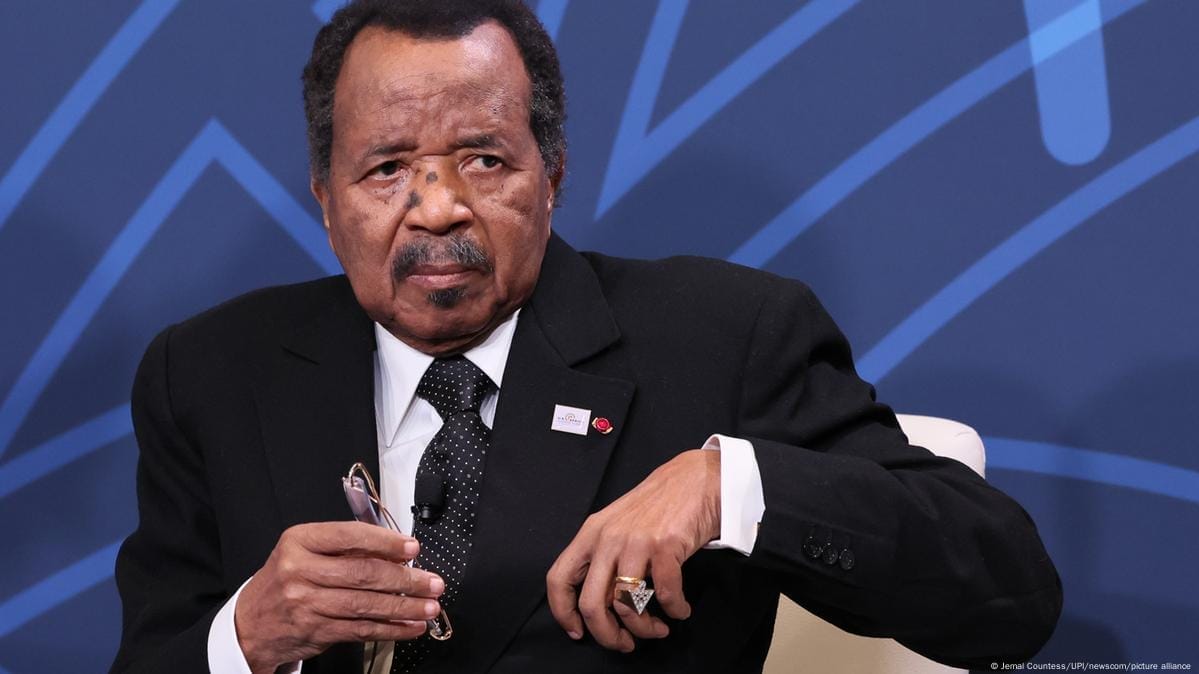
Paul Biya’s extended absence from Cameroon has plunged the nation into a period of uncertainty, with the 93-year-old president remaining abroad for 44 days after what was officially described as a brief private visit to Europe with his spouse. His prolonged stay outside the country has sparked intense public debate, amplifying concerns over his health and the stability of state institutions.
Rumors surrounding the president’s condition have circulated widely across social media and local news outlets, despite official efforts to downplay the situation. The silence from the highest office has left many citizens questioning the continuity of governance and the transparency of the administration.
Government pushes back against speculation
In response to growing unease, the ruling Rassemblement démocratique du peuple camerounais (RDPC) has taken steps to reassure the public. Christophe Mien Zok, the party’s propaganda director, emphasized in a July 15 editorial in L’Action that state institutions remain fully operational, dismissing claims of a power vacuum or governance by remote control.
« The power is not vacant. The Lion has not left », Zok stated, invoking a symbolic reference to the president’s nickname. While official channels continue to release routine messages attributed to Biya—including greetings to foreign leaders like French President Emmanuel Macron on Bastille Day—no public appearances or detailed updates about his activities have been provided.
Opposition demands clarity on presidential vacancy
The prolonged absence has reignited calls from opposition figures for greater transparency. Deputy Jean-Michel Nintcheu has formally petitioned the Constitutional Council to assess whether the situation constitutes a vacancy of power, a move that underscores the legal and political stakes involved.
The Union démocratique du Cameroun (UDC) has also weighed in, stressing that while Biya’s absence alone does not automatically trigger a vacancy, it raises critical questions about the continuity of state functions and the mechanisms in place for handling temporary incapacitation. The party advocates for clearer legal frameworks to address prolonged presidential absences and prevent institutional ambiguity.
Constitutional experts highlight legal gaps
Legal scholars point out that once the 45-day mark is surpassed, the Constitutional Council could be compelled to examine the situation. However, Cameroonian law currently lacks a definitive threshold for the maximum duration a president may remain outside the country without triggering formal review procedures.
The UDC further notes that the absence of a designated vice president—unchanged since constitutional reforms in April—exposes a structural weakness in the country’s governance model. The party argues that institutional reforms are urgently needed to ensure stability and prevent future uncertainties.
As the days of Biya’s absence continue to accumulate, the debate shows no signs of abating. While authorities insist that governance remains uninterrupted, critics argue that the lack of official clarity and the absence of a robust legal framework for such scenarios only deepen public distrust and institutional fragility.